Latest News
Positive stories from around the world · Good news by country
Showing 36697–36720 of 37342 articles

More aggressive cholesterol-lowering improves heart outcomes
A major medical study presented at the American College of Cardiology conference found that more aggressive use of cholesterol-lowering drugs significantly improved outcomes for patients with heart disease. Researchers targeted lower levels of LDL-C, often called "bad" cholesterol, and saw a one-third reduction in major cardiovascular events. The study focused on patients who already had atherosclerotic cardiovascular disease, a condition where fatty deposits narrow the arteries.

Your post-gym protein shake may get a taste upgrade: Manufacturing can improve whey protein drink palatability
Scientists have found a way to make protein shakes taste better by changing how whey protein is manufactured. The research team, working together across the University of Reading and Aberystwyth University in the UK alongside Arla Foods Ingredients, discovered that production method changes affect the texture of whey protein. Whey protein is the dairy ingredient commonly used in gym shakes and sports drinks. The findings were published in the International Dairy Journal.
Assessing health care workers attitudes about prenatal alcohol exposure and fetal alcohol spectrum disorders
A recent study examined how healthcare and social service providers think about prenatal alcohol exposure and fetal alcohol spectrum disorders. Researchers discovered that current assessment tools used to measure these attitudes have not been properly validated scientifically. They are now recommending improvements to these tools so future measurements will be more accurate. This evaluation is described as a first step toward creating reliable measures that can help improve care for affected families.

DASH diet grocery program delivers blood pressure and cholesterol benefits
Black adults with high blood pressure who received dietitian counseling and home grocery deliveries aligned with the DASH diet achieved a 7 mm Hg average blood pressure reduction at 3 months. Those who got only basic dietary guidance and a grocery stipend saw 5 mm Hg less improvement. The DASH diet focuses on fruits, vegetables, whole grains, low-fat dairy, nuts, seeds, legumes and lean proteins. This shows nutrition counseling combined with food access can improve heart health.

Scientists discover sleep switch that builds muscle, burns fat, and boosts brainpower
Scientists have uncovered the brain's 'sleep switch' that controls growth hormone. Deep sleep activates this system, fueling muscle growth, fat burning, and mental sharpness. The researchers mapped neural circuits forming a delicate feedback loop: sleep boosts growth hormone, and growth hormone helps regulate sleep. This discovery could lead to new ways to improve sleep quality and overall health.

How the solar wind really works
The sun never stops releasing charged particles into space in a phenomenon called the solar wind. These particles stream outward at hundreds of kilometers per second, far faster than any earthly wind. Though the name sounds gentle, the solar wind is actually a turbulent and complex force that shapes the entire solar system. Scientists continue to study how this stellar breath affects planets, spacecraft, and the delicate balance of space weather.

Lao academia explores pathways to embed Responsible Business Conduct into university teaching
Academics from Laos and the International Labour Organization (ILO) held a seminar to explore how to weave Responsible Business Conduct into university courses. The focus was on equipping future business leaders with knowledge about ethical and sustainable business practices. This effort aims to create a new generation of managers who consider environmental and social impacts in their decisions.

Responsible business gains ground in Lao People’s Democratic Republic as ILO’s initiative concludes
The International Labour Organization (ILO) has wrapped up an initiative in Laos that helped businesses operate more responsibly. The program united government agencies, employers' groups, workers' unions, and companies to improve how they work together. Partners focused on strengthening supply chains and building better business partnerships. This collaborative effort signals growing commitment to ethical business practices in the Southeast Asian nation.

How scientists prepare expeditions in remote environments
Scientists preparing for remote expeditions spend months in careful planning before collecting any data. In the Arctic, researchers work in extreme conditions facing real dangers. Anna, one such scientist, slept only three hours after her last sample collection. She carries a rifle and works with a guard dog for protection against polar bears, risking her life to gather data that could advance scientific knowledge.

Simple screening blood test could help identify undiagnosed heart failure in people living with diabetes
Many people living with diabetes may have heart failure without knowing it. A new trial called TARTAN-HF found that a simple blood test can spot this hidden problem. The test could help doctors diagnose heart failure much earlier. Early diagnosis means patients can start treatment sooner and avoid hospital stays.

Constipation is common, but with simple changes, you can manage and even prevent it
Constipation is one of the most common gastrointestinal complaints, affecting people of all ages and backgrounds. The article defines it as having fewer than three bowel movements per week, with stools that are hard and difficult to pass. It provides practical prevention and management strategies including dietary changes, increased water intake, and regular exercise. The goal is to help readers understand and address this widespread digestive health issue.

Spaceflight captures audiences when it centers on people because human space travel is hazardous
This article analyzes why space movies resonate with audiences. It highlights that films like Project Hail Mary, Armageddon, and Interstellar succeed when they center on human journeys rather than just technical spectacle. The piece notes that viewers connect with stories of ordinary people facing impossible missions to protect Earth. This reflects broader cultural interest in space themes when grounded in human drama and resilience.

What learning English means to migrants
Migrants in England and Wales share what learning English really means to them. The research shows it goes beyond just communication — it's about independence, making friends, finding work, and feeling at home. Yet census data reveals over 1 million residents still struggle with English. The report aims to help teachers and support services better understand these deeply personal motivations so they can offer more meaningful help.

Probiotic tablets in weeks 10 to 14 linked to fewer repeat preterm births
Researchers in Japan studied whether probiotic supplements taken early in pregnancy could reduce spontaneous preterm delivery risk. The intervention was given during weeks 10 to 14 of pregnancy. The study targeted women with a history of premature delivery, who face higher risks in subsequent pregnancies. Preterm birth is a leading cause of neonatal illness and death worldwide.

Human touch leaves chicks feeling happy, study finds
Researchers at the University of Bristol discovered that gentle human touch does more than just calm baby chicks — it actually makes them feel good. The study found that kind handling in early life prevents fear and triggers positive emotions in young farm animals. These findings could lead to better welfare practices for chicks and other farm animals raised for food or farming.

Speed friending: one cafe’s answer to America’s growing friendship recession
A Los Angeles cafe is hosting speed friending events to help combat America's growing loneliness problem. Research shows that the share of Americans reporting they have no close friends has jumped dramatically, from just 3% in 1990 to somewhere between 12 and 20% today. Psychologists at UCLA's Center for Friendship Research say structured events like speed friending can help people break the ice and form lasting friendships. The cafe's approach offers a simple, local answer to a nationwide problem.
New law shields California college students who seek help after overdosing
California has passed a law to protect college students during medical emergencies. Assembly Bill 602 was signed in October 2025 and takes effect July 2026. The law shields students from university punishment when they call for help during an overdose. It directly addresses situations where fear of consequences prevents people from getting emergency help.

From first kick to post-partum: Scientific research informs new UEFA breast health guide for footballers
Scientists at the University of Portsmouth in the UK teamed up with UEFA to launch the first-ever guide on breast health for female footballers. This resource specifically helps players during pregnancy and after childbirth. It gives players, parents and club staff easy-to-follow advice on breast health and choosing the right sports bra. The guide fills a gap that has existed for years in women's football.

Water flow in prairie watersheds is increasingly unpredictable—but AI could help
Prairie regions in Canada are seeing bigger swings between extremely wet and extremely dry years. This unpredictability makes it hard to prepare for floods and maintain water quality. Scientists are now testing AI tools that could learn from past weather data to predict future water flow patterns. If successful, these tools could help communities better prepare for both floods and droughts.

EEG during sleep reveals changing infant brain rhythms at 3 and 6 months
Scientists studied sleeping infants' brain activity at ages 3 and 6 months. They measured three types of brain waves: slow wave, theta, and sigma activity. The researchers found these brain signals change significantly as babies grow. This could help doctors identify potential developmental problems much earlier.

Research links travel to improved heart health, reduced stress and higher productivity
Researchers at Texas A&M University have cover that a new reason to book that trip. A study found that traveling can strengthen the art , reduce stress, and make people more productive at work. Led by Dr. James Petrick in the Hospitality and Tourism department, the research adds to growing evidence that at taking vacations and trips has real physical and mental health benefits. The findings suggest that even short getaways might help people feel tter and do their jobs ter.

Quantum twisting microscope reveals electron-electron interactions in graphene at room temperature
Scientists have built a quantum twisting microscope that can see electrons interacting inside graphene, a special two-dimensional material made of carbon. For the first time ever, they observed this at room temperature — normally this requires extreme cold. The discovery confirms a theory that physicists have held for decades. Led by Professor Dmitri Efetov at LMU München, the team published their findings in the journal Nano Letters.
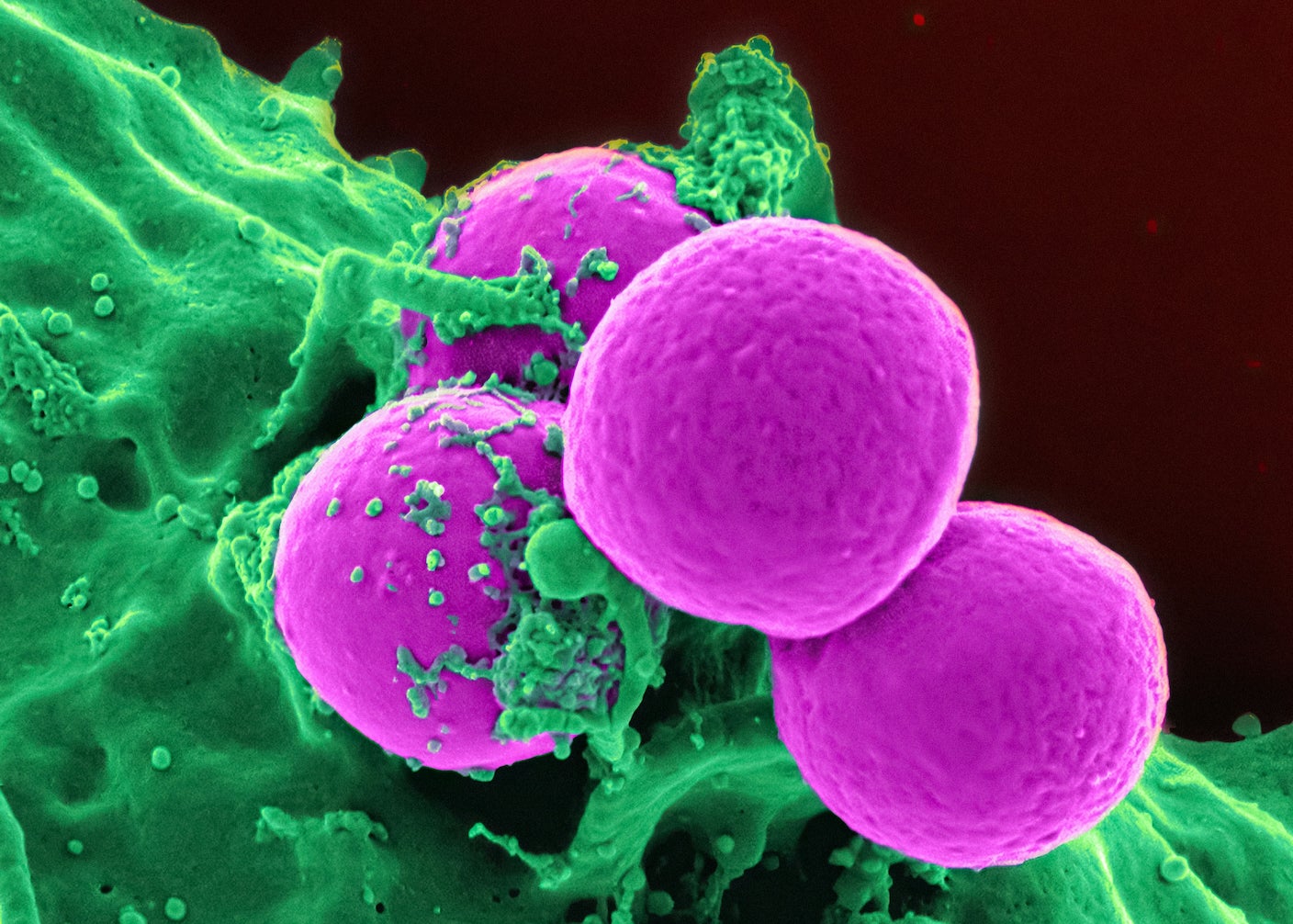
Forget Antibiotics: These Killer Cells Wipe Out Deadly Superbugs in a Day
Researchers have developed genetically engineered cells that can locate and eliminate antibiotic-resistant bacteria. Unlike traditional antibiotics, these engineered cells can be rewired to target different germs. A single dose proved capable of wiping out nearly an entire drug-resistant bacterial population within one day. Scientists say this approach could become a powerful new weapon as superbugs grow more common worldwide.

Image: NISAR's View of Mount Rainier
The U.S.-Indian satellite NISAR photographed Mount Rainier on November 10, 2025. The image covers Washington's Pacific Northwest region on a cloudy day. NISAR uses a type of radar called L-band SAR that can peer through cloud cover. The original image covers a much larger area than the cropped version released to the public.