Latest News
Positive stories from around the world · Good news by country
Showing 36769–36792 of 37342 articles

With help from AI, eye images offer window into cardiovascular risk
A new AI tool can estimate heart disease risk from photos of the retina, the light-sensitive layer at the back of the eye. Researchers found it worked nearly as well as traditional cardiovascular risk scoring methods. The system could let eye doctors flag patients who need heart checks during ordinary appointments. This may help catch heart risks earlier and get people into treatment faster.

New compound MF-8 may treat anxiety and memory loss with fewer side effects
Scientists at City University of Hong Kong have created a new drug compound called MF-8. The compound shows promise for treating several brain and mental health conditions including anxiety, depression and memory loss. Most importantly, MF-8 appears to cause fewer unwanted side effects than existing medications. The discovery could lead to safer treatment options for millions of patients worldwide.

Hera aces a massive engine burn on its way to Didymos
In September 2022, NASA deliberately crashed its DART spacecraft into Dimorphos, a tiny moonlet orbiting the larger asteroid Didymos. The goal was to test whether humans could nudge an asteroid's path through sheer kinetic force—and it worked beautifully. Dimorphos's orbit around Didymos shortened by 33 minutes. But DART was destroyed on impact, so scientists have only been able to study the aftermath using telescopes on Earth.

Cyclic catalysts use sunlight and air to regenerate during pharma ingredient synthesis
Scientists at KAIST in Daejeon, South Korea, created a new kind of catalyst that can regenerate itself using only sunlight and air. Catalysts are materials that speed up chemical reactions, but usually you had to choose between precise but disposable ones or less precise reusable ones. This new technology combines the best of both. It could lower the cost and environmental impact of making pharmaceutical ingredients.
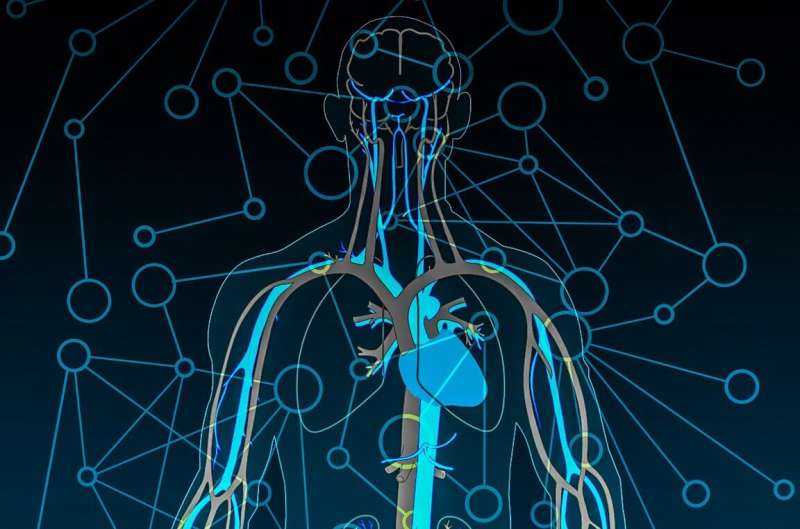
Direct comparison shows stroke protection devices during TAVR perform alike
A major cardiology conference showcased the first head-to-head comparison of stroke protection devices used during transcatheter aortic valve replacement. The Emboliner device, still under investigation, matched the performance of the Sentinel device, which already has FDA approval. This finding helps doctors understand how these devices compare when protecting patients from stroke during heart valve procedures. Both devices aim to catch debris that could otherwise travel to the brain during the procedure.

Nanoparticles can genetically modify several human cell types
Scientists at the University of Michigan have created tiny protein particles that can change genes inside human cells. This could make gene therapy safer. Current gene therapy uses viruses to deliver treatment, but viruses can cause unwanted side effects like cancer and immune system problems. The new nanoparticles offer a cleaner way to deliver gene therapy with fewer risks for patients with blood disorders like sickle cell disease and leukemia.

Study uncovers internal cell 'trade winds' that drive movement and repair
Scientists at Oregon Health & Science University in Portland, Oregon made a surprising discovery. They found that cells have their own internal "trade winds" that rapidly move essential proteins to the front of the cell. This system helps cells move around, which is crucial for wound healing. The findings could also help researchers understand how cancer cells spread through the body.

New analytical method reveals how drug combinations act in leukemia
Researchers have developed a powerful new tool called CoPISA to understand how cancer drug combinations work. AML is one of the toughest blood cancers to treat. Single drugs often fail, but combinations tend to work better — though scientists rarely understood why. CoPISA lets researchers study thousands of proteins at once to see exactly how drug pairs change cells. The method could help doctors design better treatment plans for leukemia patients faster.

Cover crops show the clearest gains in soil health across US long-term trials, study shows
Researchers examined soil health improvements across 21 long-term field trials in the United States. After studying multiple farming practices, the team found cover crops show the most consistent benefits to soil health. This research gives farmers clear evidence about which methods work best for keeping soil healthy and productive.

Including AI-derived heart fat measurement improves accuracy of cardiovascular disease risk prediction
Mayo Clinic researchers have developed a powerful new method to predict heart disease risk. By adding AI analysis of heart fat (pericardial fat) from standard CT scans, doctors can now identify high-risk patients earlier. Heart disease remains the leading cause of death worldwide, so any improvement in early detection could save many lives. The AI tool enhances a test that patients already receive during routine heart checkups.

Study pinpoints rare graft neurons that reconnect spinal walking circuits after injury
Scientists have found rare neurons that can reconnect broken spinal circuits and trigger leg muscle activity after spinal cord injury. These special neurons come from transplanted neural stem cells. They can integrate into the spinal cord's motor networks and relay signals to muscles used in walking. The discovery could help develop better stem-cell therapies for people with paralysis.
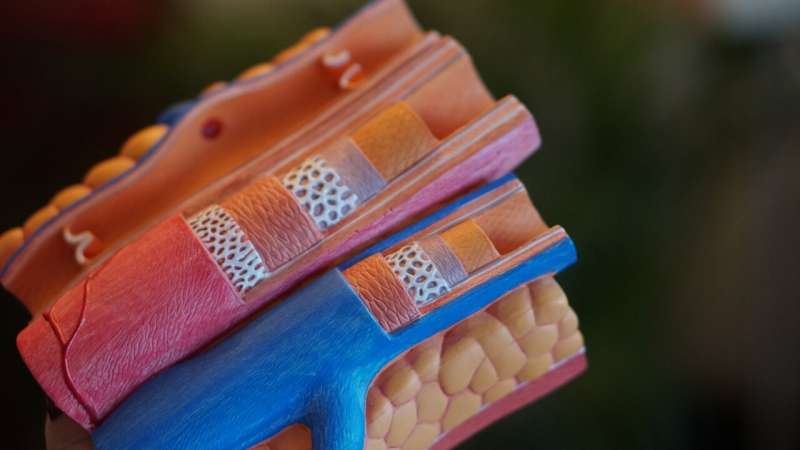
Dual imaging identifies cause of heart attack in patients without blocked arteries
When Ashley Perlow had a heart attack at age 36, doctors faced a puzzle: her arteries looked normal, yet blood tests confirmed heart damage. Now, new research from NYU Grossman School of Medicine shows that combining two heart imaging tests can identify the underlying cause in most of these cases. This diagnostic breakthrough helps patients who might otherwise never learn why their heart was injured, enabling better treatment and prevention.
TMS Debate: The State of English Women's Cricket
This BBC 'TMS Debate' episode features Mark Chapman and guests discussing what lies ahead for English women's cricket in the 2026 season. The programme appears to be part of BBC's cricket coverage offerings, likely available as an audio/podcast episode. It represents sports media content rather than reporting on specific positive developments or achievements.

Cornerstone model of evolutionary biology built on math flaw, study argues
Researchers at the University of Tennessee and the University of Illinois have uncovered a mathematical error in a widely used evolutionary model. The Inhibitory Cascade Model, published in 2006, predicts tooth size patterns in mammals using proportional relationships. The flaw involves an incorrect unit called "count" mixed into the formula's math. The researchers propose a corrected equation that properly handles the mathematical structure. Their findings appear in the journal Evolution.

Global trial shows targeted heart drug reduces obstructive hypertrophic cardiomyopathy in youth
A major clinical trial has shown that mavacamten—a heart drug already approved for adults—can safely and effectively help young people with hypertrophic cardiomyopathy (HCM). HCM is the most common inherited heart disease. For the first time, a phase 3 randomized controlled trial proved the medication improves blood flow through the heart in patients under 18. The research was published in the New England Journal of Medicine and involved The Hospital for Sick Children in Toronto among other global sites.

Why cells stick differently: New clues could inform skin and inflammatory disease research
Researchers discovered new ways cells in our bodies stick together. This cell adhesion process sometimes breaks down in diseases like skin conditions and inflammation. Scientists led by Professor Sergey Troyanovsky uncovered the intracellular mechanisms behind this process. The study, published in the Journal of Cell Biology, could help researchers develop new treatments for these diseases.

Placing battery tech directly on tissue to deliver lithium ions for targeted pain relief
Researchers at the University of Chicago are using lithium—the same material found in phone batteries—to create a new kind of pain treatment. Instead of swallowing lithium pills, which can affect the whole body and cause unwanted side effects, this new method puts lithium right where it's needed. The team's chemistry labs developed a way to place battery technology directly on tissues to deliver lithium ions only to specific areas. This targeted approach could change how doctors treat pain and other conditions linked to lithium in the body.
Changing the long search for rare disease diagnoses with new AI breakthrough
Diagnosing rare diseases often takes years and often ends with no answers. . A new AI tool can dramatically speed up this process. . It studies how genes evolved across many species to find hidden clues about which gene is causing a patient symptoms . This could help thousands of families finally get answers .

Pairs of atoms observed existing in two places at once for the first time
Quantum physicists at Australia's ANU have directly observed atoms existing in two places at once for the first time. The team measured a phenomenon called entanglement in motion, where linked particles influence each other instantly even when separated. Dr. Sean Hodgman noted that while textbooks describe this, actually seeing atoms in two places at once is "really weird." The observation confirms a key principle of quantum physics that was previously too delicate to measure.

Blocking NOX-1 enzyme may extend ketamine's antidepressant effects
Researchers in Japan have discovered a new way to extend ketamine's antidepressant effects. They found that the NOX-1 enzyme plays a key role in making the drug's benefits fade over time. By blocking this enzyme, ketamine's relief could last much longer. This offers hope for people with treatment-resistant depression who currently have few effective options.

Tasmanian tiger lives on in Arnhem Land rock art
Scientists have discovered ancient rock art in Arnhem Land, Australia showing Tasmanian tigers and Tasmanian devils for the first time. The artwork, published in the journal Archaeology in Oceania, provides fresh insights into the cultural importance of these iconic marsupials. Researchers say the discovery also helps reveal when the striped thylacine last roamed mainland Australia. This adds a new dimension to our understanding of Australia's unique wildlife history.

Two organs, one brain area: How fish orient themselves in the water
Scientists at Osaka Metropolitan University in Japan studied zebrafish to understand how fish sense light. They found that the tegmentum, a region in the fish's midbrain, combines light signals from both the fish's eyes and its pineal organ. The pineal organ is sometimes called the "third eye" because it also detects light. Fish use this merged information to orient themselves, swimming up or down depending on light wavelengths.

Wildlife-friendly landscapes dramatically boost biodiversity in fragmented forests, research reveals
A groundbreaking study challenges decades of ecological thinking by showing that wildlife-friendly landscapes surrounding forest fragments can dramatically boost bird species survival. For years, scientists relied on "island biogeography theory"—which predicted species richness based mainly on habitat size and isolation. This new research proves that the quality of surrounding areas—farmland, vegetation, and open spaces—matters just as much.

Limits of protein evolution could reshape ideas about early life
Scientists are studying the limits of protein evolution to understand why nature only uses a tiny slice of all possible proteins. They say known proteins are the only training ground for future protein design, which limits innovation. The research could help improve strategies for designing new proteins for medicines and materials. This fundamental biology study explores how representative our known proteins are of all possible proteins.