Latest News
Positive stories from around the world · Good news by country
Showing 1297–1320 of 37347 articles

Bouncing sand grains may explain planet-wide dust storms on Mars
Global dust storms cover the entire planet Mars every three or four years. For a long time, scientists could not explain why they start. An international team, including researchers at Aarhus University in Denmark, has now found the answer. Dust storms need the right mix of sand and dust, and a new computer model shows this clearly.

New guidance addresses GLP-1 medication use and eating disorders
Experts from around the world wrote new guidance on using GLP-1 medications safely for people with eating disorders. These drugs treat type 2 diabetes and help some people manage weight, but they can affect how much people eat. The panel of 45 experts and people with lived experience recommends screening patients before prescribing. It also calls for regular check-ins and therapy alongside medication.
Alcaraz continues winning run despite injury concern
Carlos Alcaraz beat Daniil Medvedev 6-2 6-4 at the ATP Finals, his 11th win in a row. The Spanish star is close to a place in the semi-finals. He felt a small hamstring problem during the match, but said he feels OK. Alcaraz missed four months this year with a wrist injury. Since returning in August, he has won three titles.

Study reveals CTE is rare in brain donors without documented contact sports
A new systematic review and meta-analysis, published in JAMA Network Open, combined results from many brain studies. CTE is a brain disease linked to repeated hits to the head. It was found in fewer than 1% of donated brains from people with no known contact sports history. The result helps doctors and families understand how common the disease really is.
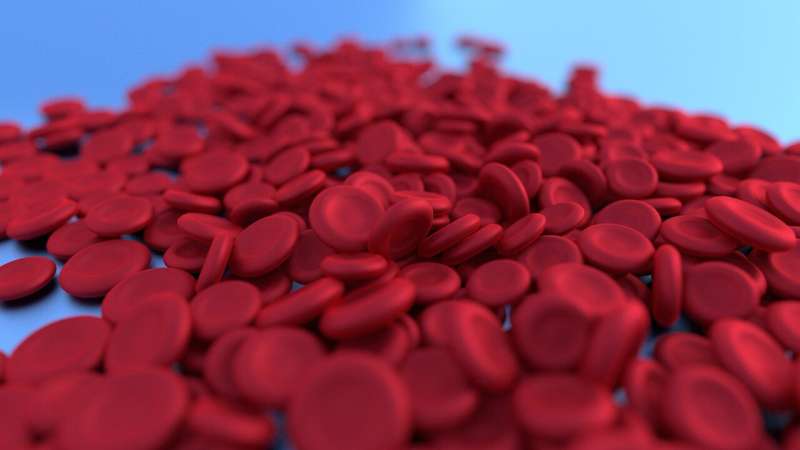
Anemia and iron deficiency linked to heart failure during pregnancy in India
Researchers at Oxford Population Health studied pregnant women in India. They found that anemia, a condition with too few healthy red blood cells, and iron deficiency raise the risk of sudden heart failure during pregnancy and after birth. The findings could help doctors spot danger early and prevent deaths that should not happen.

Quantum physics can verify a person's location, researchers show
Researchers have shown that quantum physics can verify a person's physical location. The idea could help companies confirm that a command, like a $50 million wire transfer, comes from a secure office. Today, hackers far away could otherwise pretend to be inside the building. The method uses the strange rules of quantum particles to check where a signal really comes from.

Ancient teeth confirm Homo erectus survived in southern China's dense tropical forests
Fossil teeth found in southern China suggest Homo erectus, an extinct early human relative, lived in dense tropical forests. Earlier research showed the species spread across Africa and Asia through grasslands. Homo erectus survived for nearly 2 million years, far longer than our own species has so far. Scientists still have much to learn about how it adapted and why it died out.

Two stars in the Andromeda galaxy merged before astronomers’ eyes
Astronomers saw two stars in the Andromeda galaxy combine into one. Andromeda is our nearest large neighbor galaxy, about 2.5 million light-years away. The stars merged in real time, which is rare to witness. The discovery gives clues about why some pairs of stars join while others stay separate.

NASA Data Clinches First-of-Its-Kind Stellar Merger
Astronomers watched a star slightly smaller than the Sun spiral into a puffy giant star in the Andromeda galaxy. The merged star was nicknamed Bao. NASA's James Webb Space Telescope saw it just 47 days after the eruption peaked, the earliest follow-up ever for this kind of event. The data showed how the two stars became one.

Cutting back on social media could ease depression, anxiety in young adults, study finds
A new study in the journal JAMA Pediatrics looked at young adults aged 18 to 24 who struggled with depression, anxiety, or stress. Those who switched to using social media only now and then saw their mental health get better. The results suggest that cutting back on social media may help young people feel calmer and happier.

Could locusts help detect difficult-to-treat bacterial infections?
Researchers are studying whether locusts could help detect bacterial infections that are hard to treat. Biofilms are communities of microbes that stick to surfaces, like plaque on teeth. They wrap themselves in a protective layer, which makes them tough to kill with normal medicine. The article is an early look at this idea, and the full study details are not included in the text provided.

AI and nanotechnology enable five-minute drug screening from a single drop of urine
Researchers combined artificial intelligence with tiny nanomaterials to test a single drop of urine for drugs. The test takes about five minutes. Current quick test kits can be wrong when there is too little sample or when drugs look alike, and lab tests take much longer. This new method aims to fix both problems.

How electrons find their way to diamond's quantum defects
Researchers from Germany, Lithuania and the United States explained how a diamond's NV center gets its missing electron back. The electron tunnels from a nearby nitrogen atom, passing through an energy barrier that classical physics says it should never cross. The nitrogen atom absorbs the energy released by the jump, which makes the transfer possible. The NV center is key to quantum computers and tiny magnetic sensors.

Voyager 1 spacecraft reaches one light-day milestone
NASA's Voyager 1 probe has reached a distance of one light-day from Earth. A light-day is how far light travels in 24 hours. The spacecraft, launched in 1977, is the most distant human-made object and still studies magnetic fields and gas between stars.

Ancient remains reveal Britain's first Roman capital was surprisingly diverse
Durham University researchers studied cremated remains from 22 burials in Roman Colchester, in southeast England. Three people had spent their childhoods in Mediterranean regions such as Italy, Spain or Lebanon. The team combined strontium and lead chemical markers, which survive the heat of a funeral fire, to trace their origins. The study was published in Royal Society Open Science.

Faster heating, stronger bonds for carbon composites
Researchers at the Korea Institute of Materials Science developed a new glue-like material for carbon composites. The material mixes carbon nanotubes, tiny magnetic iron oxide particles, and a plastic called PA6. When heated by induction, it melts evenly and bonds parts together. The method raised the starting heating speed by up to 94.6%, which can cut assembly time for cars and aircraft.

Common clay shows promise for reducing soybean pests and insecticide costs
Researchers in Arkansas and Mississippi tested kaolin clay on soybean crops in the Mississippi Delta. Kaolin is a fine white clay that is mixed with water and sprayed onto plants as a thin film. The spray kept some pests from laying eggs and made it hard for young insects to feed. Farmers who mixed the clay with half the usual insecticide got pest control similar to full doses.
Leukemia Vaccine Succeeds In Pivotal Trial - KFF Health News
A leukemia vaccine called galinpepimut-S (GPS) succeeded in a pivotal trial, which is a large final-stage test. Patients with acute myeloid leukemia, a fast-growing blood cancer, who got the vaccine had a 41% lower risk of death. The news was reported by The Washington Post.

Danish researchers find efficient solution to famous 174-year-old mathematical headache
Mathematicians have long known that any map can be colored using just four colors, so that no two neighboring regions match. But finding the actual coloring was slow for large maps. A team with two Danish professors from the University of Copenhagen and DTU has now found an efficient algorithm to do it. The work was published on arXiv and won a Best Paper Award at FOCS'26, a leading computer science conference.

The brain’s protective barrier also blocks medicine. This engineer wants a way through
Stanford University chemical engineer Rebecca Pinals built a small chip that copies the blood-brain barrier. This barrier is a wall of cells that keeps germs and harmful substances out of the brain. It also blocks many dementia drugs, so they struggle to reach the brain. The chip uses stem cells made from human skin, and it lets scientists study the barrier safely. Pinals plans to use it to test tiny particles that could carry medicine directly to the brain.

How a toxin helps African lungfish survive on land
Researchers at the University of New Mexico found how African lungfish survive on land during droughts. Lungfish use a natural toxin to remodel their skin when they move from water to land. The toxin makes tiny holes in cells, but lungfish cells have evolved to repair them. The study was published in the journal Cell and sheds light on how animals adapted to land.

DNA differences shape how cells respond to alcohol, nicotine and caffeine
Researchers at the University of Chicago and Johns Hopkins University studied how genes and surroundings work together. They looked at many cell types exposed to alcohol, nicotine and caffeine. Different people's DNA changed how their cells reacted. The team hopes this can one day predict how environmental factors affect a person's health.

Physical activity prepares the brain for psychotherapy in the treatment of depression
A new international clinical trial found that regular exercise can make talk therapy work better for mild to moderate depression. Volunteers trained for 12 weeks before starting cognitive behavioral therapy, a type of talk therapy. Their fitness improved, and their memory and learning got stronger during therapy. The researchers think exercise boosts a brain-protecting hormone called IGF-1.
Press remarks by Commissioner Zaharieva on the Advanced Materials for Europe Initiative
The European Commission announced a proposal called Advanced Materials for Europe in Brussels. Commissioner Zaharieva presented the details after a College meeting. The plan aims to support new materials that help European industry grow. Specific numbers were not included in the remarks.