Latest News
Positive stories from around the world · Good news by country
Showing 1249–1272 of 37347 articles

Brain model offers new explanation for memory formation and how dementia disrupts it
Scientists published a new framework in the journal Brain. It describes how the brain creates memories and experiences. It also shows how breakdowns in this process may point to Alzheimer's disease and other dementias. Better understanding could help doctors spot these diseases earlier.

As Americans gather for Thanksgiving, a centuries‑old Sikh tradition offers an expansive vision of hospitality
At Gurdwara Guru Nanaksar in Chapin, South Carolina, volunteers serve free meals every Sunday. Diners sit on the floor in rows while volunteers bring food down the line. This tradition, called langar, is a free communal meal served at Sikh houses of worship around the world. It offers a welcome to everyone, no matter who they are.

Novel compound eases paralysis and activates nerve repair pathways in multiple sclerosis mouse model
Researchers at the University of Illinois Urbana-Champaign worked with teams at Keio University and Chiba University in Japan. They made a new version of a natural compound. In a mouse model of multiple sclerosis, a disease that attacks the brain and spinal cord, the compound reduced symptoms. It also helped the central nervous system start its own repair processes.

Using light to switch molecular states in the smallest of spaces
Photochromic materials contain molecules that change their structure when they are hit by different colors of light. Until now, it was hard to control these changes in extremely small spaces, because ordinary light cannot be focused tightly enough. The research aims to make it possible to write and erase information with light at very small scales. This could help build future memory chips and electronics that run on light.

A vaccine for acne? Scientists are working on it
Acne affects around 85% of teens and can last into adulthood. Scientists are working on vaccines that target bacteria behind acne. A 2018 study and a 2023 study reduced inflammation in mice. Drugmaker Sanofi is now investigating a vaccine that uses mRNA technology, the same kind used in COVID shots.

AI-generated hospital discharge summaries earn higher clinical ratings than doctor-written versions
A new study found that AI-written discharge summaries can match, and sometimes beat, the notes doctors write. Discharge summaries are the reports that explain a patient's hospital stay and next steps. In a blinded test, 12 doctors reviewed 1,294 summaries from Imperial College Healthcare NHS Trust in London. The AI versions scored higher for accuracy, completeness, clarity and tone.

Migrating moth uses Earth's magnetic field as a compass
Every summer, the bogong moth flies more than 1,000 kilometers through the dark to reach cool caves in Australia's Snowy Mountains. A new study from Lund University shows the moth uses Earth's magnetic field as a compass, just like migrating birds. The moth reads the magnetic inclination angle, which is the slant of the field between Earth and the ground. Using this sense together with the stars gives the moth two ways to find its way.

MRI advance could help monitor fatty liver disease by revealing enzyme activity
Researchers in Japan developed a special molecular probe that lets an MRI scanner show how active a liver enzyme called paraoxonase is. This is the first time this enzyme has been seen working inside a living body this way. In mice with fatty liver disease, enzyme activity fell as the disease got worse. A scan took only about 20 seconds, so the method could one day help doctors track liver disease without surgery.

Crystal layers just 10 nanometers thick assemble into a tiny tunable grid
Researchers at the Technical University of Denmark (DTU) built two ultrathin crystal sheets and bonded them together. When the sheets were twisted, their atoms formed a square grid of defects at the meeting point. The grid can be tuned by changing the twist angle, and it may help future memory devices. Scientists say more research is needed before it can be used in real devices.

How poetry can offer a vital, humane response to dementia
A writer reads poems aloud in a Midlands nursing home in England, where many residents have dementia. When he reads John Masefield's "Sea-Fever", residents lift their heads, recite the words and share seaside memories. Research suggests shared reading can improve well-being, engagement and memory. Scientists are still studying why poems stay in the mind so well.
From kit boy to manager at 28 - Dumbarton appoint Fellowes
Martin Fellowes has been appointed manager of Dumbarton, a Scottish football club. He began his career as a kit boy, the person who looks after players' gear. At age 28, he is the youngest manager in the SPFL, Scotland's professional football league.

Cell division can redraw the map of cell fate
Scientists built a new math framework for the Waddington landscape, a classic picture of how cells pick their fate. The model links gene activity inside cells with how cells multiply across a tissue. It shows that cell division is not just about population size. It can reshape which cell states are stable. Under very fast growth, the landscape can even oscillate, or "breathe".

How a cut through a cell can change the sound of a material
This research paper studies metamaterials, which are engineered materials with unusual properties. The authors divide cells in a repeating pattern in different ways. They find that the angle and place of each cut control how elastic waves travel through the material. Cuts across the cell's long side keep cells compact and give a wide band of working frequencies.

A clock helped map the Pacific—and that changed whose world it was
A clock, a quadrant and a book of predicted star positions helped people navigate and survey land. Wade and Lussier use these objects to tell a less familiar story: measurement could advance science and colonial expansion at the same time. Their look at observatories on Maunakea shows this history still matters. It raises ongoing questions about Indigenous sovereignty, consent and care for the land. The paper asks who benefits when science maps places—and whose knowledge or authority is overlooked.
The water cycle may be powering more of the wind than we thought
A new physics study looks at how water moves through Earth's air. Water evaporates, rises, turns back into rain, and releases energy along the way. Using twelve years of satellite and weather data, the authors estimate this process supplies about 4.1 watts per square meter. They say it may help drive global wind, but the idea still needs a direct test.
Great Britain could cut power-system costs 36% by planning wires and storage together
Researchers built a computer model of Great Britain's electricity grid through 2050. They tested building power lines, batteries, or both together. Planning the two side by side cut expected power cuts by 97% and total system costs by 36%. The study is a preprint and has not yet been peer reviewed.

Robots can plan longer missions faster—if there aren’t too many of them
Robots often need a plan that says what each one should do and when. Researchers introduced a new planning method based on SMT, a type of math solver. In tests, it ran faster than the current best method on long missions, cutting planning time by 50 to 96 percent on one benchmark. The advantage shrinks when a mission has many robots.

Physicists send an unblockable message using gravity
Physicists at the University of Queensland in Australia sent a message using gravity alone. They moved a 1.8 metric ton elevator counterweight up and down to signal ones and zeros. A sensitive gravity sensor in a nearby bathroom picked up the changes and spelled out the word "Gravity." Gravity signals cannot be blocked by walls, unlike radio waves.
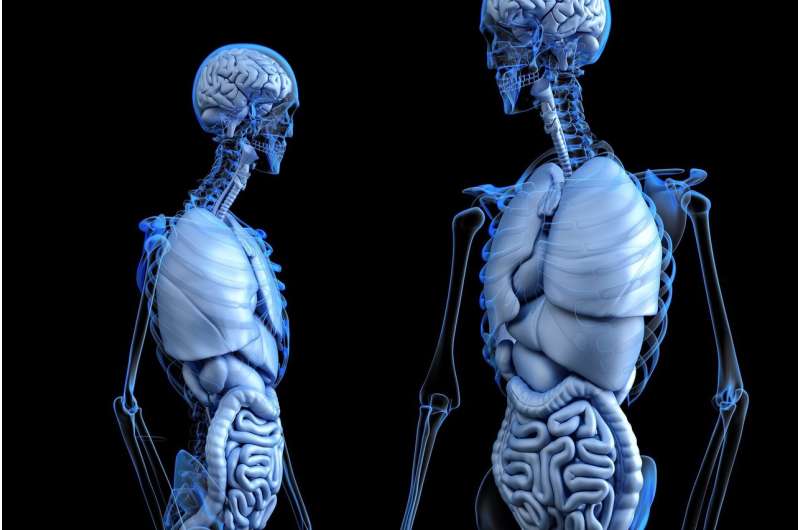
Silencing a liver gene may prevent brain damage from rare metabolic disease
Duke University researchers tested a new treatment for glutaric aciduria type I, a rare inherited disease that can damage the brain. The treatment uses small RNA molecules to silence a liver gene that makes harmful byproducts. All treated adult mice survived, and treated newborn mice lived longer than untreated ones. The team hopes to move the treatment into human clinical trials.

When is a risk worth taking? Hunger helps the brain decide
Researchers at the University of Birmingham mapped a brain circuit in fruit flies that weighs hunger, food smells and danger. Hungry flies crossed an electrified barrier to reach food, but only when they could sense a meal. Without food nearby, they kept avoiding the shock. The team says the fly brain region involved may share features with the human basal ganglia, which helps people choose between actions.
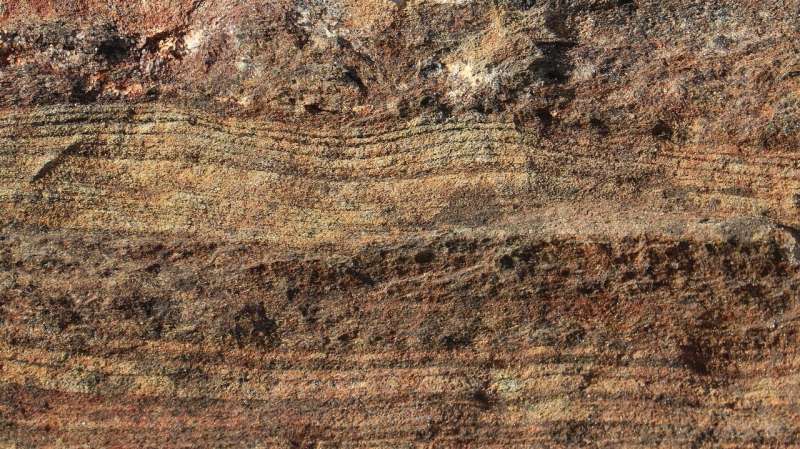
Damaged rocks may help explain why small earthquakes outnumber large ones
University of Michigan researchers built a new earthquake model. Older models only looked at slip along the main fault. The new model also counts rock next to the fault that gets damaged during quakes. This helps explain why small earthquakes happen far more often than large ones. The study was published in Science Advances.

Wearable patch could help detect silent heart injury after surgery
Researchers at McMaster University in Canada have built a wearable patch for heart monitoring. The patch uses tiny, painless needles that sample fluid just under the skin. It continuously tracks cardiac troponin, a protein released when the heart is hurt. This could catch silent heart injury in patients after surgery, even at home.

New ‘neighbourhood support teams’ to pave the way for national care service, Cooper announces
England will launch new neighbourhood support teams that bring NHS and social care staff together. By next April, about 566,000 vulnerable people, including frail older adults and people with dementia, will get personalised care. The programme is a first step toward a promised national care service. The aim is to keep people healthier at home and ease pressure on crowded hospitals.

Water purification method turns old batteries into magnetic pollutant traps
Researchers at TU Wien in Austria built a water cleaner from old alkaline and nickel-metal hydride batteries plus rusty scrap iron. The tiny particles grab dye pollution from water. A magnet then pulls them out, so no slow spinning step is needed. In a lab prototype, the water looked clear within 25 minutes.