Latest News
Positive stories from around the world · Good news by country
Showing 1513–1536 of 37354 articles

New findings reveal how rice blight spreads within plants and where it may stall
Researchers at Heinrich Heine University Düsseldorf in Germany studied how Xoo, a bacterium, infects rice plants. Xoo causes bacterial blight, a disease that cuts rice harvests. The team found the infection is unlikely to spread from roots to shoots through contaminated water. They also found the bacteria can form multicellular shapes that help them break into plant tissue, which may reveal where the spread can be stopped.

Newly identified Quebec wasp attacks leafhoppers that spread crop diseases
Researchers at Université Laval in Quebec, Canada, have described a new species of wasp. It is named Gonatopus quebecensis. The wasp lays its eggs on a leafhopper, a small insect that spreads plant diseases to farm crops. The findings were published in the open-access journal ZooKeys.

Mild respiratory infections do not permanently affect immune age
Researchers at the Leibniz Research Center in Dortmund, Germany, studied whether colds and COVID-19 make the immune system older. "Immune age" measures how old your immune system is compared to your real age. After full recovery, the study in Immunity & Ageing found no lasting increase. Any changes seen were only temporary.

Genome sequencing study suggests causes for recurrent miscarriage
About 1 in 20 women have more than one miscarriage in their lives. Couples who go through this often never learn why it happened. A new study used genome sequencing, a way of reading a person's full set of genetic instructions, to look for causes. The study suggests possible reasons for these losses, which may help future families get answers.

The color of uniformity: Far-red light effects on plant growth
Plants can sense their neighbors through special light receptors. When nearby plants block some red light, the plants stretch their stems to reach more sunlight. This shade-avoidance response helps explain why plants in a field often grow to similar heights.

Understanding how inflammation begins so scientists can end it
Chronic inflammation is a long-lasting body reaction linked to arthritis, type 2 diabetes, Alzheimer's disease and cancer. Researchers at UC Riverside built a new tool that lets them watch exactly how inflammation begins inside human cells. They studied cells lining the airways, because these meet inhaled pollutants first. The findings, published in Free Radical Biology and Medicine, could help scientists find ways to stop inflammation early.

Key immune driver of pancreatic cancer points to combination treatment for slowing progression
Researchers at The University of Texas MD Anderson Cancer Center found that a protein called IL-18 helps pancreatic tumors grow. The protein also helps these tumors avoid the body's immune system, which normally fights disease. Because of this, IL-18 could be a useful target for new treatments. The team suggests that combining treatments may help slow the disease.

Stellar pulsations reveal hidden 1.8-solar-mass companion
Some stars blink in a steady rhythm, like a natural clock. Astronomers used these steady pulses to spot a hidden object tugging on a nearby star. The hidden companion is about 1.8 times the mass of our Sun, yet it gives off little or no visible light.

Wildfire smoke damages the airway's defenses, blocking one signal can shield them
Wildfire smoke harms the airway, the tube that carries air into the lungs, by weakening its natural defenses. The smoke from the Palisades and Eaton fires in Los Angeles in January 2025 showed how bad air can get. Researchers found that blocking one specific signal in the body may shield these defenses. This could lead to new ways to protect people from smoke.

Team extends a qubit's lifetime, correcting errors without measuring them
A research team has found a way to help a qubit keep its quantum state for longer. A qubit is the basic unit of information in a quantum computer. Qubits are very easy to disturb, so they often make mistakes. The new method corrects these errors without measuring the qubit, which could make future quantum devices more reliable.

People with diabetes demand greater control over health data in new digital rights charter
An international group has launched a Diabetes Data Rights Charter. It calls for people with diabetes to have much more control over the health data their monitoring devices collect. These devices track blood sugar all day and night. The charter aims to protect privacy and give patients a say in how their information is used.

New theoretical framework free of ghostlike instabilities expands the possibilities of symmetry in particle physics
Researchers at Osaka Metropolitan University built a new theory of particle physics. It shows that a wider range of symmetries could exist without causing unstable "ghost" behavior. The work does not discover a new particle. The team plans next to test whether the model fits the rules of quantum physics.

Genetic 'dimmer switch' that can boost sepsis resistance discovered
Researchers at UC Santa Cruz found a molecule called Gaplinc that acts like a dimmer switch in immune cells. It controls how the body reacts during sepsis, a deadly overreaction to infection. In mice without Gaplinc, every animal survived a toxin dose that killed normal mice. The team says future treatments could adjust Gaplinc levels to help patients survive the shock.
England stars to help launch Moody MND challenge at All Blacks match
England rugby star Lewis Moody is launching a new challenge to raise money for motor neurone disease (MND) research. The England team is backing the campaign, called Front Up, with special training tops and painted boots. People can join walks on 12 June across 175 routes in England, Scotland and Wales. The goal is to raise more than £1 million for research.

Tirzepatide moves more than half of treated teens below obesity threshold, new clinical trial reports
A Phase III trial called SURMOUNT-ADOLESCENTS tested tirzepatide, a once-weekly injection, in 160 teenagers with obesity. The teens also received healthy lifestyle counseling. After 72 weeks, average BMI on the drug fell by 18.5%, while the placebo group rose by 0.5%. About 54% of teens on tirzepatide dropped below the obesity threshold, compared with 7% on placebo. The results were published in JAMA.

Study tracks RAMP3's role in breast cancer immunity in mice
Researchers at Shinshu University in Japan studied a protein called RAMP3 in mice with breast cancer. Mice without RAMP3 had smaller tumors and less spread to the lungs. They also lived longer and had more cancer-fighting immune cells in their tumors. The results are early and come from mice, so more research is needed.

Account suspension. Verify now: The language of phishing
Researchers at Griffith University compared scam text messages with real messages from organizations that scammers often copy. More than half of the scam texts used urgent phrases such as "immediately," "now" or "within 24 hours." None of the real messages did. The team says these patterns can help older adults and people who do not speak English as a first language spot scams.

Neptune Robotics to Test AI Hull Cleaning on Louis Dreyfus Vessels
Neptune Robotics plans to test its AI hull-cleaning robots on ships run by Louis Dreyfus. The hull is the outer body of a ship, and dirty hulls waste fuel and add pollution. Neptune says its robots can clean a full-size Capesize ship, one of the largest cargo ship types, within 24 hours. The robots work even in currents of up to four knots.

Employment nondiscrimination acts led to reductions in manufacturing waste
A new study led by Penn State researchers looked at 8,670 U.S. factories from 1987 to 2019. In states that passed employment nondiscrimination acts (ENDAs), which protect workers from bias, factory process waste dropped by nearly 10%. The researchers say workers felt safer speaking up, which led to more good ideas and smarter changes on the factory floor.
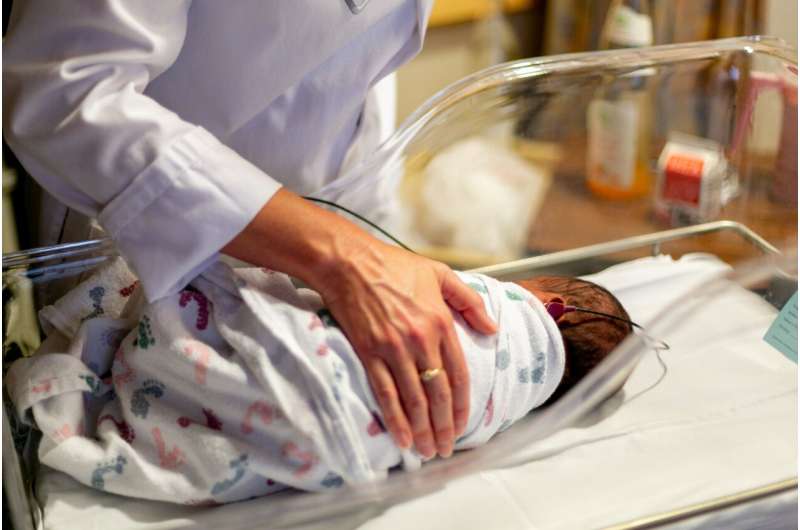
AI and new technology could make childbirth safer
Researchers from UCL and several universities say AI and new technology could make childbirth safer. Their ideas include smart sensors, advanced scans, and "digital twins," which are virtual copies of a mother and baby. The team is also building a sensor glove that shows how a baby is facing during labor. Each glove sensor costs less than $1, so it could help clinics with few resources.
Back from the Brink: Inside India’s Remarkable Tiger Comeback | News | Breaking Travel News
India's tiger population rose from 1,411 in 2006 to 3,682 in 2022. That is more than double in just 16 years. Government of India figures show the gain. Protecting forest homes and reducing clashes between people and tigers are still ongoing challenges.

Three-legged Persian leopard’s 150-mile journey highlights Caucasus border hazards
A Persian leopard named Aren, who has only three legs, walked 240 kilometers (150 miles) through the snowy Caucasus Mountains. The mountains cross Russia, Georgia, Armenia, and Azerbaijan. Aren crossed areas still holding minefields left over from old wars. His trip shows how border fences and mines can harm wild animals.

A mysterious twist in the universe’s oldest light could reveal new physics
Scientists have spotted hints that light from the early universe may be slowly rotating. This light is called the cosmic microwave background, and it is the oldest light we can see. If the twist is real, it could point to new physics and help explain dark matter and dark energy. A new technique from UC San Diego could help rule out telescope errors and show whether the signal is real.

Scientists tracked kids for 8 years. What they found about screen time was surprising
A long Finnish study followed children for eight years. Kids who spent more time on screens tended to have better cognitive processing skills, such as how quickly and well they think, as teenagers. Researchers say what kids do on screens may matter more than how long they use them. The results challenge the idea that screen time is always harmful.