Latest News
Positive stories from around the world · Good news by country
Showing 1561–1584 of 37354 articles
A material just one atom thick reveals a strange quantum secret
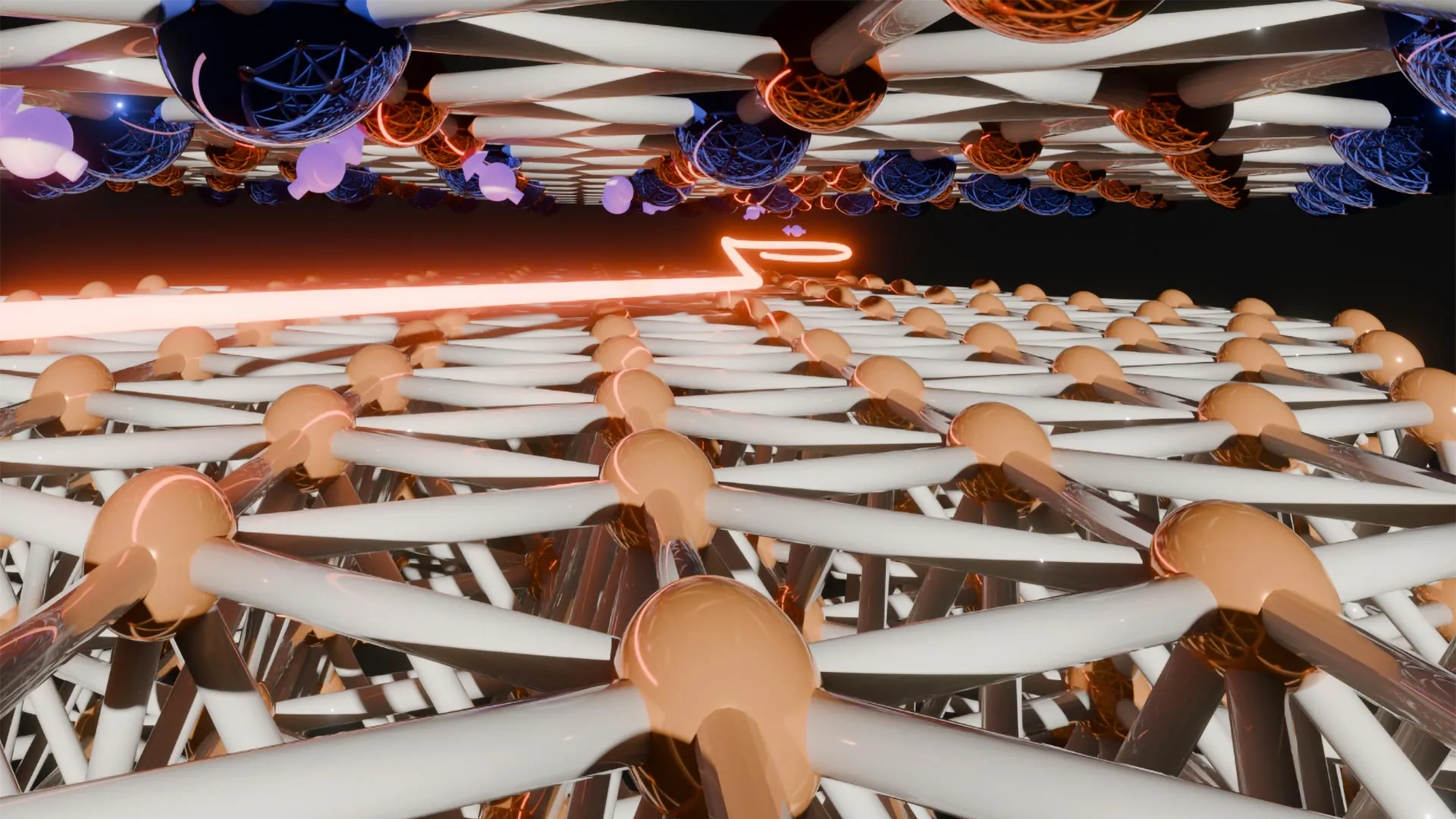
Researchers at the University of Osaka in Japan studied a material only one atom thick. They placed it on copper and saw electrons act as if they were unusually heavy. The team also found a state created by the layer and the copper together, which had never been seen before. The finding points to a new way to control strange quantum behavior.

Flat optics roadmap charts path toward smaller imaging and sensing systems
Optical systems have long depended on bulky lenses and mirrors that bend light through their shape. Scientists now use nanotechnology to build flat optical parts. These parts are smaller than the wavelength of light and control it with tiny patterns. A new roadmap outlines how this approach could lead to smaller cameras and sensors.

Daily iron supplements reduce iron deficiency anemia in children and adolescents
A large review of 114 studies looked at daily iron tablets for children and teens. The studies included more than 50,000 young people, many of them in Asia. Daily iron clearly lowers the risk of iron deficiency anemia, a condition where the blood lacks enough iron to carry oxygen. Side effects were mostly mild, such as darker stool, but some evidence is still uncertain.

'Kangaroo care' can save small babies, review finds
Kangaroo care means holding small or early babies skin-to-skin against a caregiver's chest. It includes frequent breastfeeding and going home from the hospital early when safe. A new Cochrane review of 49 trials with 7,724 babies found it probably reduces deaths and serious infections. The evidence is strongest in low- and middle-income countries.

Early black holes may have grown through productive chaos
Some black holes grew to billions of times the Sun's mass within the first 700 million years of the universe. Scientists have long struggled to explain how this happened so fast. A new study suggests a simple idea works: gas falling in from random directions keeps the black hole spinning slowly. A slow spin lets the black hole grow faster and turn less mass into light. The model fits the latest data without needing unusually large starting black holes.

'Buffer spaces' may help resolve workplace concerns
University of California, Santa Cruz researchers studied how workers report workplace concerns. They talked with 22 people, including 10 employees and 12 HR staff. Many found that talking informally or using formal complaint systems both fall short. The researchers suggest "buffer spaces," such as a dedicated Slack workspace or a trained chatbot, that sit in between.

AI could help speed up research ethics approvals
A University of Bristol study tested three AI language models on checking research ethics applications. The checks were done with the UK Health Research Authority's quality standards. Claude was the most accurate, correct on 87.9% of checks, and the fastest, taking about seven minutes per application. The researchers say AI can free up staff for human ethical judgment, but outputs still need checking.

Flip side: Upside-down atomic layers could steer heat in stacked computer chips
Stacking computer chips makes them faster but also makes them overheat. Researchers in Japan found that flipping ultra-thin material layers upside down can control heat flow. The layers carry heat well sideways but block it from moving up and down. The idea is still being tested in the lab.
Quantum computers are getting too powerful to check. Scientists have a solution
Quantum computers are becoming so powerful that regular computers can no longer check their work. Scientists have developed a new method to test whether quantum simulations can be trusted. The method measures uncertainty and gives clear error margins. It was shown working on a 51-qubit system, a quantum machine with 51 basic units of computing. This could help people use quantum computers to their full potential.

Tigers, zebras, quantum dots: Nanoparticles assemble into patterns
Cornell University engineers studied how tiny semiconductor crystals called quantum dots form striking patterns. The crystals were placed in droplets that shrink as they evaporate. The team now understands how the patterns form and can control them. This could help build better light and electronic devices from very small building blocks.

The Greek coastline cleanup that turned trash into a pollution map
The Typhoon Project has cleaned Greece's hard-to-reach coasts by boat since July 2019. Its crew of 20 has removed 1,140 tonnes of trash across more than 10,000 cleanups. Every item is logged, creating what the team calls the largest marine pollution database in the Mediterranean. A new land-based program, Cyclone, now tackles waste in lakes, rivers, and archaeological sites.

Animal welfare ballot measures had a strong night in the 2026 midterms
Voters in Washington, DC and Denver passed bans on selling foie gras, the fatty duck liver made by force-feeding birds. In Washington, 73 percent backed the ban, and in Denver, 66 percent did. In Colorado, about 55 percent of voters rejected a constitutional hunting amendment that critics said could have brought back banned traps and poisons.

Capping nanovials that trap cells and their secretions for analysis enables new bioscience experiments
UCLA researchers developed a technology called nanovials. A nanovial is a test tube that is only the size of a cell. Scientists use it to catch cells and the proteins they release. This has led to new findings about cancer, heart disease, and how genes push cells to make proteins.

Genetic 'dimmer switch' can protect against severe disease in rare muscular dystrophy
Researchers studied two siblings who carry the same rare muscle-wasting disease gene change. The sister stayed free of symptoms into her late 30s and had only mild effects. Her brother had weakness from his early teens and could barely walk by his 50s. The findings suggest a hidden genetic "dimmer switch" can turn down how severe the disease becomes.

Researchers are testing whether agrivoltaics can help farmers adapt to hotter, drier conditions
Researchers at UC Davis in California are testing agrivoltaics, which means growing crops under solar panels. The panels may shade plants from harsh summer sun. Scientists hope this helps farmers adapt to hotter, drier conditions. The article is an early look at the work.

China Focus: Shenzhen offers glimpse into Asia-Pacific energy cooperation - People's Daily Online
A waste plant in Shenzhen, China, burns about 2,300 tonnes of trash every day. That is roughly one-eighth of the city's daily waste. The heat it makes is turned into about 1.4 million kilowatt-hours of clean electricity each day. Engineers are now adjusting this method for Thailand and Malaysia, including recycling leftover ash into building bricks.
How measuring the state of nature can reverse biodiversity loss
A Nature article argues that governments, communities and businesses should work together. Their goal is to track how conservation and restoration efforts are doing. Measuring the state of nature helps people protect it. Healthy nature also provides services that people rely on.
Open up peer review to early-career researchers
Nature Portfolio, the publisher behind the journal Nature, has started an initiative to involve early-career researchers in peer review. Peer review is the process where scientists check each other's work before it is published. Today, many junior researchers are left out, even though they work closely with daily research. The change aims to make science fairer and stronger.
Meet the ‘celestial bodies of fathomless powerful darkness’
Astronomers have reported a rare pair of extremely bright black holes. They were feeding on gas less than one billion years after the Big Bang, the start of the universe. Finding them helps scientists understand how giant black holes grew so fast in the early universe.
Dinosaur’s rest break leaves a lasting impression
Scientists have found a fossilized print left by a young dinosaur. The print shows marks from its feet and its rear end. This suggests the animal sat down to rest. The young reptile stood about one metre tall at the hip.
Voyager 1 is about to achieve a cosmic first: one ‘light day’ from Earth
NASA's Voyager 1 probe is about to reach a new record. It will be one light day away from Earth, which is about 26 billion kilometres. Its power supply is weakening and most of its instruments are switched off. Even so, the probe is still gathering data from deep space.
BNDES garante R$ 808,5 mi para florestas - Ambiental Mercantil
Brazil's development bank BNDES announced it raised R$ 808.5 million (about US$ 147 million). The money comes from the World Bank and the Climate Investment Funds. It will pay for restoring forests across Brazil. The news was shared at the COP 31 climate conference in Antalya, Turkey.

Oregon Zoo’s Tula-Tu on the road to recovery after battling elephant herpesvirus | The Portland Tribune
Tula-Tu, a young Asian elephant at the Oregon Zoo in Portland, had a serious infection from elephant herpesvirus. The virus can be deadly for young elephants. She is responding well to treatment. Veterinary staff are still checking on her each day.

Euclid's H-alpha observations map where stars form in distant galaxies
The Euclid space telescope, launched in July 2023, studies dark matter and dark energy. Its first major data release covers about 1,900 square degrees of sky. That is around 14% of the area planned for its six-year mission. The data is a huge collection of visible and near-infrared light images.