Latest News
Positive stories from around the world · Good news by country
Showing 1585–1608 of 37354 articles

Tiny switch harnesses four electrical states, moving beyond simple on-off control
Most switches have only two states: on or off. Researchers at TU Wien in Vienna, Austria, built a tiny switch with four distinct states. It uses unusual materials that challenge standard ideas in materials physics. The work could lead to new ways to process and store information. The study was published in the journal Communications.

'Pink noise' can help revitalize enjoyable conversation
Many online chats and family talks today turn into arguments. Researchers at Dartmouth College in the United States found a way to steer conversations back to good ground. They call this method "pink noise." A new study in Science Advances says it may help people enjoy talking and feel more engaged.

Turning biomass into renewable fuels and chemicals using microorganisms
Texas A&M University researchers have built a new process that turns biomass into renewable fuels and chemicals. Biomass is plant material such as crop leftovers and wood waste. Professor Mark Holtzapple uses tiny living microorganisms to break the plant material down. The goal is to make these products cheaper and easier to produce.

Perseverance Update: The Ghostly Rocks of ‘Idubi’ — Bright Remnants of Aqueous Systems from Long Ago
NASA's Perseverance rover has found a group of unusually bright rocks at a site on Mars called Idubi. The SuperCam instrument showed the rocks are not volcanic. Instead, they are rich in hydrated silica, a mineral that forms in water. Scientists think these rocks could help reveal whether ancient Mars once had life, and a detailed study has started.

AI tool counts mosquito eggs in smartphone photos to aid surveillance
Researchers have built an artificial intelligence tool that works on a smartphone. It can find and count mosquito eggs in photos, even though the eggs are nearly too small to see. Health workers can use it to track where mosquitoes are breeding. This helps them act early against diseases that mosquitoes spread.

Sunspot dynamic fibrils linked to slow magnetoacoustic waves
Scientists at the Yunnan Observatories of the Chinese Academy of Sciences used the New Vacuum Solar Telescope to study the Sun. They looked at dynamic fibrils, which are thin, fast-moving jets of gas near a sunspot. The team found that slow magnetoacoustic waves, which are magnetic ripples moving through the Sun's atmosphere, help drive these jets. The study was published in The Astrophysical Journal.

Ultracold diamond microwave laser amplifies quantum signals 1,000-fold
Researchers at the Okinawa Institute of Science and Technology (OIST) in Japan built a new kind of microwave amplifier. It uses a diamond with tiny nitrogen flaws that hold electron spins. The device boosts weak microwave signals more than 1,000 times while adding very little noise. It can handle stronger signals and works in magnetic fields, which could help quantum computers read their qubits more reliably.

Why marine climate refugia matter for safeguarding the world's oceans
Scientists reviewed 798 studies published between 2021 and 2026. They selected 82 that identify or map marine climate refugia, which are ocean areas where harm from warming and other changes is milder. These areas can help marine life survive and recover. The researchers say protecting them can help meet the goal of protecting 30% of the ocean by 2030.

Two gorillas form a 'living ladder' to reach high branches
Researchers from Tel Aviv University watched two female gorillas at the Ramat Gan Safari in Israel solve a problem together. One gorilla stands on a rock while the other climbs onto her back to reach a branch about 4.5 meters high. The team saw this teamwork in 2021, 2024 and 2025. The study was published in the journal Primates.

Can AI replace college advisers? Research says not yet
Colleges use AI tools to predict which students need extra help. A Princeton study of a six-year trial at Georgia State University found that human advisers made the difference. In 67% of advising actions, advisers used information only humans could access, such as a student's health condition or career goals. The researchers say human relationships remain essential to student success.

3D model generates most detailed picture yet of what's going on beneath West Antarctica's melting ice
Researchers at CU Boulder built a detailed 3D model of the ground beneath West Antarctica. The model uses satellite data, a supercomputer, and years of seismic data. Some ground near the Thwaites and Pine Island glaciers has risen about 5 centimeters (2 inches) per year. The study, published in Science, could help scientists predict future sea level rise.
U.S. women take gold again with win over Canada in world hockey final
The U.S. women's hockey team won its 12th women's world championship title. They beat their rival Canada 6-2 in the final on Monday. It is a major win in a long rivalry between the two teams.

No oxygen? Chicken brain cells still survive
Brain cells usually die within minutes when they lack oxygen. A team led by Lara do Amaral-Silva at Wake Forest University found that chicken brain cells can survive more than two hours without it. Chickens do not hibernate or dive, so this result surprised the researchers. The work could lead to treatments that protect human brain cells during strokes and other conditions.

Measurements reveal link between quantum spin and sound-carrying vibrations in an ultrathin semiconductor
Researchers at UCLA and Auburn University measured tiny atomic vibrations that carry heat and sound. They linked these vibrations to electron spin, a kind of built-in magnetism, in an ultrathin semiconductor. The material is nickel phosphorus trisulfide, only a few atoms thick. The work may help build computers that waste less energy and produce less heat.

USA thrash Canada to win women’s hockey worlds and complete historic golden double | Ice hockey | The Guardian
The United States beat Canada 6-2 in the women's ice hockey world championship final. Hilary Knight and Kelly Pannek each scored twice. The win completes a historic double for the US team.

United States 6-2 Canada: women’s ice hockey world championship 2026 final – as it happened | Ice hockey | The Guardian
The United States beat Canada 6-2 in the women's ice hockey world championship final. The win completes a historic golden double for the US team. It shows how strong women's hockey has become around the world.

Wet climate may have helped corn reach Mexican highlands and crossbreed with wild grass
Researchers suggest a wet climate may have helped corn move from the lowlands to the high mountains of Mexico. The oldest known corn, more than 9,000 years old, was found in the Balsas River Valley in southwest Mexico. Early farmers there picked and planted seeds from the best wild teosinte grass. Over time, this grass became the corn we know today.
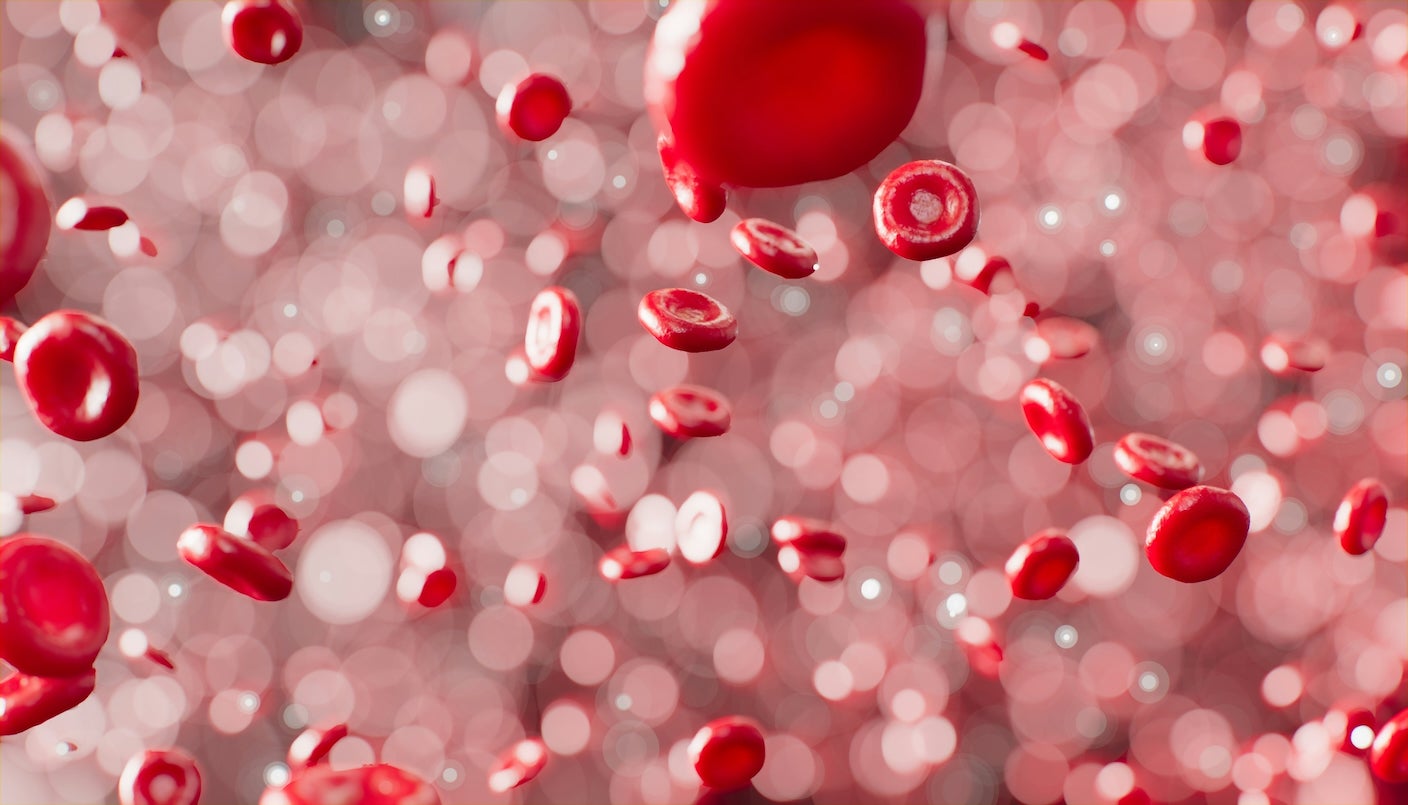
Tiny Magnetic Robots Help Dissolve Blood Clots Six Times Faster Than With Drugs Alone
ETH Zurich researchers in Switzerland built tiny magnetic robots, each about eight micrometers long. The bots roll along blood vessel walls and stir up stuck blood, which pushes clot-busting drugs toward the clot. In lab tests, clots dissolved six times faster than with drugs alone. In pig experiments, blood flow returned to an area twice as large after 30 minutes. The work is not yet peer reviewed, and human trials are still far off.

Chiral electronics: Researchers discover a disruptive interlayer in a promising material system
Antiferromagnets are materials that could power next-generation electronics. They are hard to measure precisely. A team from Martin Luther University Halle-Wittenberg and the Max Planck Institute for Microstructure Physics has found out why. Their work was done as part of the Center for Chiral Electronics in Germany.
Elephant Tula-Tu improving at Oregon Zoo after EEHV diagnosis | Regional | kdrv.com
A young Asian elephant named Tula-Tu is getting better at the Oregon Zoo in Portland. She has passed the worst of a serious virus called EEHV. EEHV is an elephant herpes virus that can be deadly for young elephants. Her care team has treated her and she is showing strong signs of recovery.

The power of the paddy: Japan looks to rice fields to help mitigate flooding
Osaki, a farming town in northeast Japan, has flooded several times, including in 2015, 2019 and 2022. Heavy rain broke river banks each time. Local farmers and the city government responded by building more than 5,000 small earthen dams in the rice fields around the town. The dams aim to hold extra water inside the fields and reduce flooding.

USA routs Canada to win 2026 Women’s Worlds gold medal - Daily Faceoff
The United States women's hockey team beat Canada to win gold at the 2026 Women's Worlds. It is back-to-back world titles for the Americans, which they have not done since 2019. The win also gives the team their 12th world gold medal. The Americans also won the Olympics, making them the first team to sweep both events.
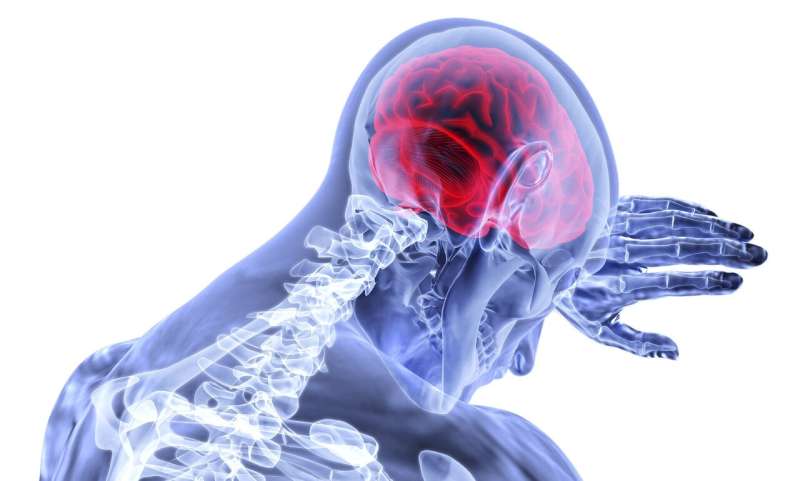
Researchers find potential way to protect the brain from HIV and opioid damage
People with HIV often have memory loss, trouble focusing, and poor decision-making. These problems can be worse for patients who also use opioids, a type of strong pain medicine. Researchers have now found a potential way to protect the brain from this damage.

Two transcription factors reproduce the beneficial side of a 'Jekyll and Hyde' viral protein
Scientists at Hiroshima University studied LMP1, a protein from the Epstein-Barr virus. This protein can help cancer grow, but it can also help the immune system fight tumors. The team traced the helpful effects to two transcription factors, called Spi-B and IRF1. Transcription factors are proteins that switch genes on or off. When both were added to tumor cells, the immune system could better recognize them and activate CD8+ T cells, without using the viral protein itself.