Latest News
Positive stories from around the world · Good news by country
Showing 145–168 of 37342 articles

DESTINY model tracks molecular chemistry on uneven, ice-covered grains in interstellar space
Space is full of chemical reactions. Molecules form in gas and also on tiny dust grains covered in ice. Researchers at the University of Liège built a new model, called DESTINY, to track these reactions more accurately. It uses a math method called Markov chains, which has not been used in this field before. The paper appears in the journal Astronomy & Astrophysics.
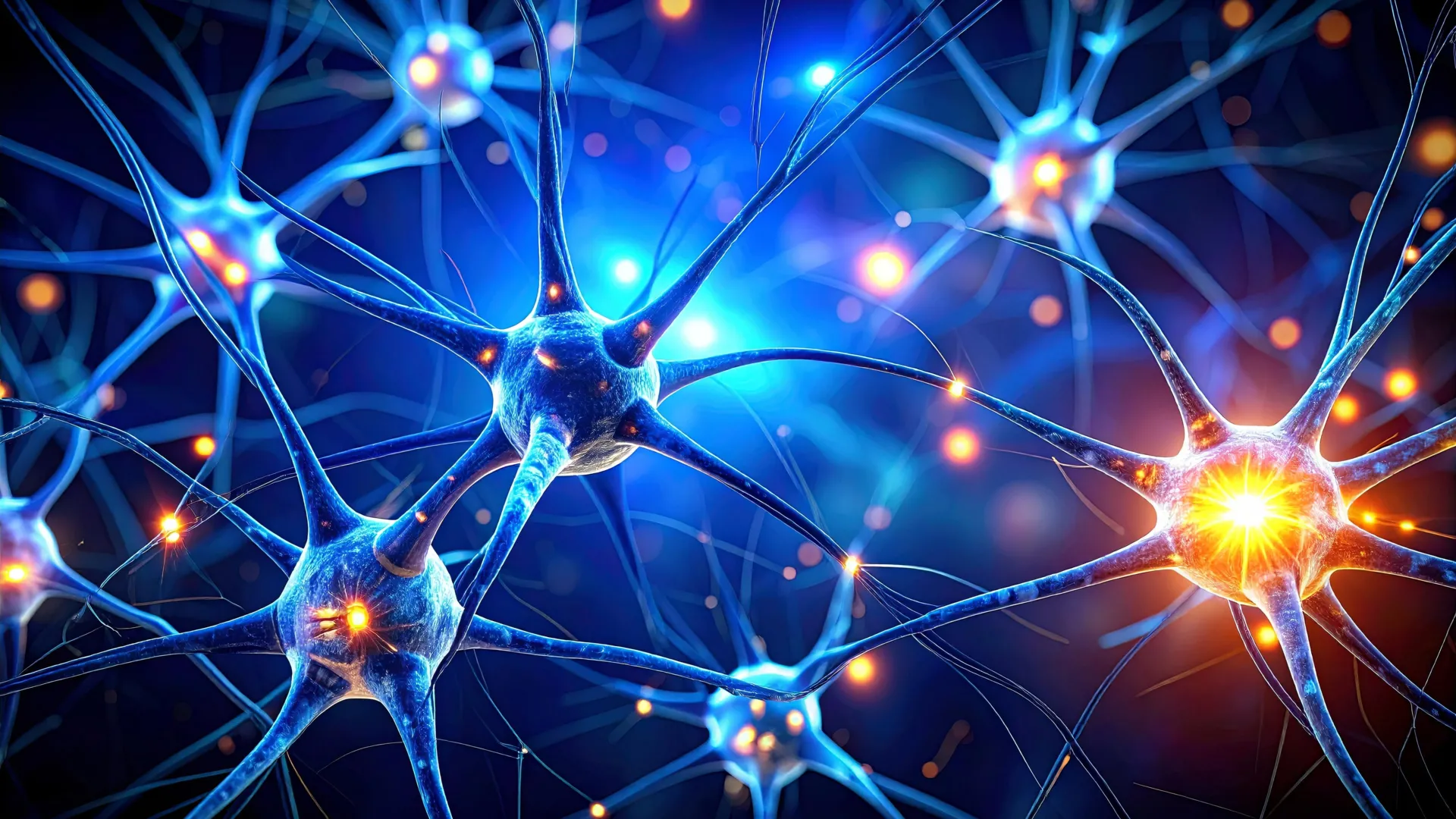
For decades, scientists may have misunderstood how brain cells work
A major new study challenges an old belief about how the brain works. Scientists recorded activity in 43 regions of the mouse brain. They found that most brain cells, called neurons, respond to many kinds of information. Only some neurons are dedicated to a single task.

Community forests offer hope for conservation in DRC, but major hurdles remain
The Democratic Republic of Congo is working to give community forestry land titles for 7.1 million hectares. That is about 17.5 million acres, roughly the size of Ireland. The plan aims to protect the country's wildlife while recognizing the customary rights of local communities over their land. The article also notes that major hurdles remain.

JWST studies a tiny, metal-poor galaxy with just a fraction of the sun's oxygen abundance
The James Webb Space Telescope studied LAP2, a tiny galaxy seen as it looked about 12.2 billion years ago. A giant galaxy cluster magnifies its light about 50 times, which helps astronomers see it clearly. The team found almost no oxygen, with less than about 0.5% of the Sun's amount. This makes LAP2 one of the most metal-poor galaxies ever measured.

A safety filter that knows the actuator is moving faster than the robot
Engineers built a new safety method for robots and similar machines. Robots often use simple models, and those models can miss how fast parts really move. The new method adds a safety buffer to cover these gaps. It was tested in computer simulations, including a wheeled robot that avoids obstacles.

A syringe-reuse model finds behavior matters—but not enough alone
Researchers built a new math model of hepatitis C spread among people who inject drugs. It treats syringe reuse as a habit people can start and stop. The results show that stopping reuse matters, but other steps are also needed to control the disease.

A 1,452-state vibration model shrank to 834 without losing much accuracy
Researchers released MIMOS, a free open-source tool for MATLAB, a common engineering software. It turns measured vibration data into simple physical models of complex machines. In one test on a vibration isolation benchmark, a model shrank from 1,452 states to 834 with little loss of accuracy. A second test on a prototype wafer stage, a precision chip-making part, also worked well.
A safety net for self-driving cars—without replacing the driver in the code
Self-driving cars run on neural networks, which are computer models that learn from data. These models can make unsafe choices, and they offer no firm safety promise. The new method watches for risky situations and corrects the car's actions only there, then hands control back once the car is safe again. In closed-loop tests on nuPlan city driving scenarios, safety incidents fell by 48% while driving performance stayed largely the same.

A microscope’s new job: measuring the spaces inside next-generation transistors
Computer chips rely on tiny switches called transistors. As these get more complex, they are harder to inspect. This research shows an atomic force microscope, a tool that feels surfaces with a tiny probe, can measure their inner gaps clearly. The study also offers a statistical look at key sizes, though the abstract does not list the exact results.

A system-identification method that learns the noise instead of guessing it
Engineers often measure signals that are messy, with random noise and occasional wild outliers. Standard methods like least squares can be thrown off by this noise. The new approach uses kernel density estimation to learn the shape of the noise from the leftover errors. Simulations show it beats classic methods and often matches a method that knows the true noise.

Wave-like displays in animal groups may have evolved to deceive predators
Some animal groups form pulsing, wave-like patterns when a predator comes near. Researchers Eduardo Sampaio and Iain Couzin argue these patterns may be more than a side effect of living in groups. They may have evolved as a way to deceive predators. Their view appears in a Perspectives piece in the journal Science.

Novel platform reveals new metabolic targets for cancer treatment
Scientists at Rockefeller University built a new tool that looks inside cancer cells in living animals. It isolates the energy hubs of tumor cells in minutes, not hours. The team used it to study six genetically distinct liver tumors. They found metabolic weak spots that could lead to more personalized treatments.

An engineered 'glue' for aged eggs could prevent premature chromosome separation
Eggs from older women are more likely to have errors, partly because chromosome halves separate too early. Scientists led by Melina Schuh at the Max Planck Institute in Göttingen, Germany, built an artificial glue called TALhesin. It holds chromatids together in aged mouse eggs. In early tests, it also bound to human egg chromosomes and showed first signs of holding them together. The work is a first step toward possible fertility treatments.

Oral nutrition supplement interventions show short-term benefits in patient outcomes at low cost for older adults
A review of 12 studies looked at oral nutrition supplements for older adults who are at risk of malnutrition. Malnutrition means the body is not getting enough of the nutrients it needs. Most studies showed small short-term health gains. Seven studies found the supplements saved money, mostly by reducing hospital visits.

Runaway pulsar escapes the remnant of its own supernova
Astronomers have spotted a rare pulsar, a dense spinning star left after a supernova. It has flown away from the cloud of debris its explosion created. The team, led by Rohit Dokara, found it by chance. Only a handful of cases like this are known.

America's Cup wins two Golds at Best Event Awards 2026 · Live Sail Die
The Louis Vuitton 38th America's Cup sailing project won two Gold awards at Italy's 2026 Best Event Awards in Venice. The awards honour well-run events across Italy. Preparations for the Naples 2027 race are moving forward.

A protein that teaches cells to tolerate DNA damage points to a new vulnerability in cancer
Cells copy their DNA every time they divide into two. Researchers at the Spanish National Cancer Research Centre (CNIO) and Stanford University have found a new part of this copying process. A protein helps cells tolerate DNA damage, which may reveal a new weakness in cancer. The work is early but could guide future cancer research.

Experimental drug shows promise in overcoming treatment resistance in aggressive acute myeloid leukemia
Researchers at Johns Hopkins found an experimental drug called PHI-101 may help treat a hard-to-beat blood cancer, acute myeloid leukemia (AML). Some patients' cancer stops responding to FLT3 drugs because of gene changes. PHI-101 kept working against these resistant cells in lab dishes and in mice. In mice with a resistant form, it roughly doubled survival time compared with an approved drug. The drug still needs human clinical trials before it can be used in patients.

God-faced rings may have identified Mesoamerica's long-distance merchants
Over 1,000 years ago, a traveler in ancient Mesoamerica may have worn a ring showing a god's face. Researchers now think these rings may have identified long-distance merchants. The rings suggest that trade reached foreign lands far from home. The findings shed light on how ancient travelers used symbols to show who they were.
Irish runner Beggs wins award for Boston fair play
Aaron Beggs, a runner from Northern Ireland, has been given an International Fair Play award. He and one other runner stepped in to help a fellow competitor reach the finish line at the Boston Marathon. The award honours acts of kindness and good sportsmanship in sport.
Skupski and Patten win to send GB into Davis Cup semi-finals
Neal Skupski and Henry Patten won the deciding doubles match against Germany's Kevin Krawietz and Tim Puetz. The win puts Great Britain into the semi-finals of the Davis Cup, a major team tennis event. It is the first time Britain has reached this stage since 2019.

Protein redesign boosts DNA insertion activity and reveals how molecular machinery selects targets
Scientists at St. Jude Children's Research Hospital studied a gene-editing tool called a CAST, which can insert DNA into a precise spot in the genome. Using microscope imaging and computer-based protein design, they saw how its parts lock together at the right target. They then made the tool's activity 100 times stronger without losing its accuracy. The team hopes this could lead to gene therapies that swap a faulty gene for a working copy.
GB win decider to reach Davis Cup semis for first time since 2019
Great Britain reached the Davis Cup semi-finals for the first time since 2019. Henry Patten and Neal Skupski won the deciding doubles match against Germany in Bologna, Italy. Cameron Norrie had earlier won his singles match to keep the tie alive. Great Britain will play in the semi-final on Saturday.

Do all groups drift toward rule by the few? Not when time is on their side
Researchers at UC Merced ran computer simulations of group decision-making. They found that a small elite takes over when speed is rewarded. When quality matters more than speed, groups grow more equal and share influence. The authors say this suggests fair institutions can grow where resources are steady and groups can afford to take their time.