Latest News
Positive stories from around the world · Good news by country
Showing 193–216 of 37342 articles
Bearman to continue with Haas in 2027
Oliver Bearman will keep racing for the Haas Formula 1 team in 2027. His contract had been delayed, as he had worried about a future seat at Ferrari. Team boss Ayao Komatsu praised his hard work and growth. Rafael Camara will be his teammate next season.

The Portlanders Turning Rescued Food Into Restaurant-Quality Meals
Urban Gleaners is a nonprofit in Portland, Oregon that rescues food before it is thrown away. Chefs turn donated ingredients into full, restaurant-style meals. The group delivers about 100,000 pounds of food each month to roughly 50 places, including schools, community centers and housing complexes. Its park markets give free food to people who need it.

How Uttarakhand’s women farmers are reviving endangered Himalayan medicinal plants
Women farmers in Uttarakhand, India, are growing rare Himalayan medicinal herbs such as kutki. People once dug these plants from wild alpine meadows until they became scarce. Now farmers grow saplings at high altitude, which lowers pressure on wild plants. The work also earns money for families and children's schooling.

Why frog chromosome shape may steer where male recombination happens
Researchers reviewed 97 amphibian species to study how males mix their genes when making sperm. In these animals, male gene swapping often happens near the ends of chromosomes, while females mix genes along the whole length. The strongest factor linked to this pattern was chromosome shape, not genome size or sex chromosome type. The findings may help explain how genes get passed on and how species change over time.

A 32-number climate state can see El Niño coming—and keep its workings visible
Researchers built LatENSO, a machine-learning forecast system for El Niño, a warming of the Pacific Ocean that shifts weather worldwide. The system compresses ocean and air data from the tropical Pacific into just 32 numbers. It predicts El Niño about as well as models that also use data from distant ocean basins. All its code, model weights and data are openly available to anyone.
A land model that can learn from its own mistakes
Researchers rebuilt the Community Land Model, a tool that simulates land, water, and plants on Earth, in Python. The new version, called CLM-JAX, runs on graphics chips (GPUs) and matches the old Fortran code over five years of simulation. It runs about 4 times faster than the old version on 64 CPU cores. It can also learn from its mistakes, because it can trace how a change in starting temperature affects later results.

A food web can look stable—and still be one bad fluctuation from collapse
Researchers studied food webs, the networks of who eats whom in nature. Even a stable web can collapse when random population swings push a species to extinction. The team mapped how these collapses can happen and how long they take. They also showed how removing one feeding link changes the risk.
A map of cell populations can reveal how they change—even when no cell is followed
Biologists can only take snapshots of cells, not a continuous film. This paper extends a mathematical tool called unbalanced optimal transport to work with cell types instead of individual cells. The authors also offer a faster approximation for very large sets of cell types. Tests on real biological data suggest the reconstructed changes are plausible.
When cleared land speeds up—or blocks—the spread of tsetse flies
Researchers built a math model of tsetse flies, which spread sleeping sickness, and wild animals. The model uses districts of Campo, Nyé'été, and Ma'an in Cameroon. It shows that cleared land can either speed up or slow down how far flies spread. The authors say more data on animal movement is needed.

APOD: 2026 November 26 – Eye in the Sky: The Milky Way over Lençóis
NASA's Astronomy Picture of the Day features a photo of the Milky Way over Lençóis, a town in Brazil. The bright band of our galaxy stretches across the night sky. Each day, NASA shares a new space picture with a short explanation from an astronomer.
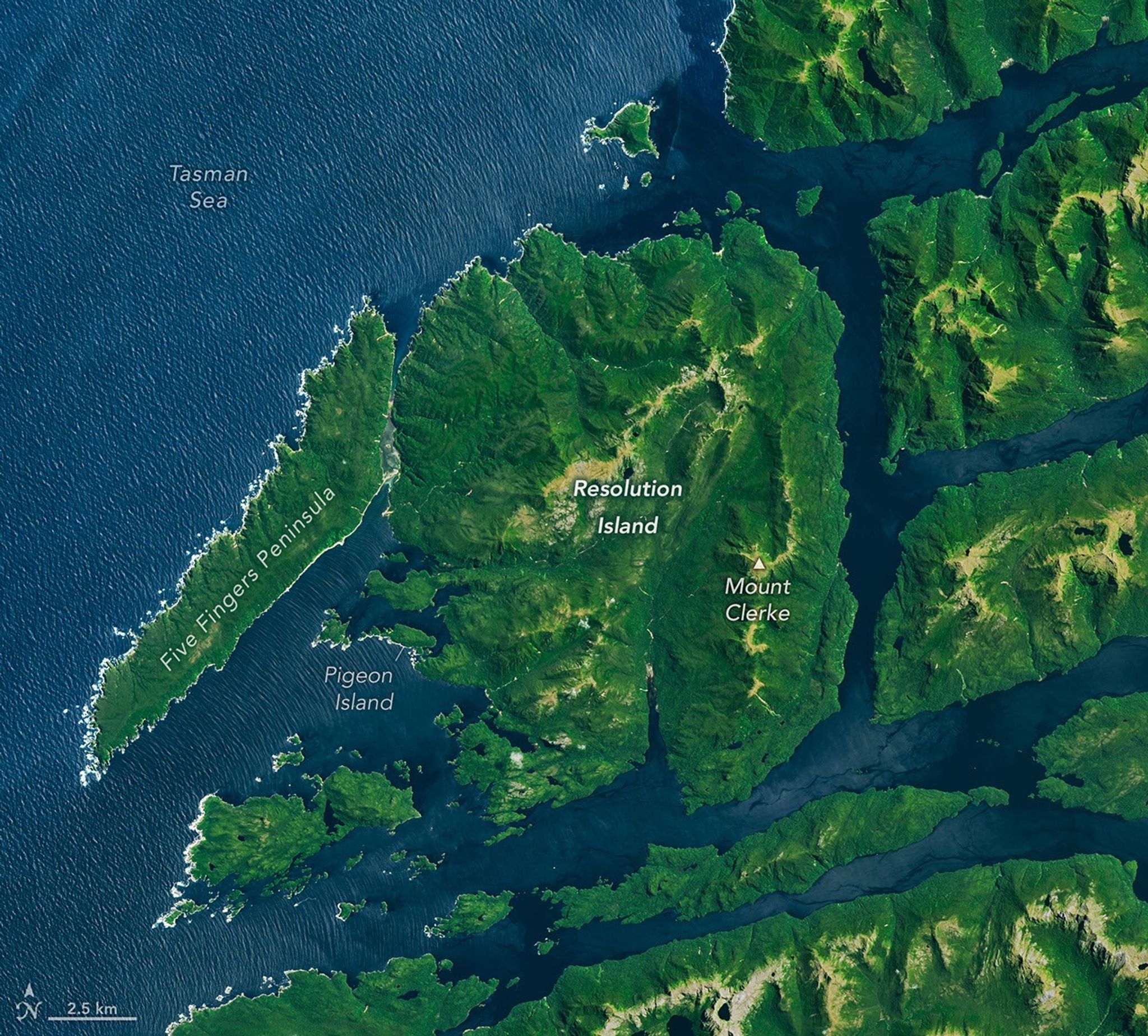
Seeking Refuge on Resolution Island
Resolution Island sits off the coast of Nunavut in northern Canada. In the late 1800s, wildlife conservationists worked to protect the island as a safe place for animals. NASA's Earth Observatory uses satellite pictures to show how the island still serves as a refuge for wildlife today.

World's fastest animal could nearly double its livable territory by 2080 in the UK due to climate change
A new study from the University of Nottingham predicts that the area in the UK suitable for peregrine falcons could grow by 74% by 2080 under a high-emissions climate scenario. Peregrines are the fastest animal on Earth. Warmer weather could also help hen harriers, which may see their suitable area rise by 41%. The author warns that more habitat does not automatically mean more birds, so conservation work is still needed. Some other raptors, like white-tailed eagles, may lose much of their habitat.
Ho Chi Minh City to launch three-day marine conservation drive in Con Dao – Asia News Network
Ho Chi Minh City is launching a three-day campaign to protect the sea around Côn Đảo, an island zone in Vietnam. It runs from November 27 to 29. The work includes planting coral underwater to help damaged reefs recover. Crews will also clean beaches and share information with local people.

New eyes in the sky make timber harvesting and forest conservation easier and more efficient
Pilots now fly over northern and eastern Maine to check forests. They search for illegal trash dumping and watch over wildlife. The surveys cover the 760,000-acre Pingree Easement and 335,000 acres in Washington County. The Pingree Easement is home to the state's most productive peregrine falcon nesting area.
2027 Women's World Cup first to turn profit, says FIFA's Jill Ellis - ESPN
FIFA expects the 2027 Women's World Cup, to be held in South America, to be the first of its kind to make a profit. Jill Ellis, FIFA's women's football chief, says the tournament could be a turning point. She hopes women across the region will be seen as the centerpiece of the world's attention.
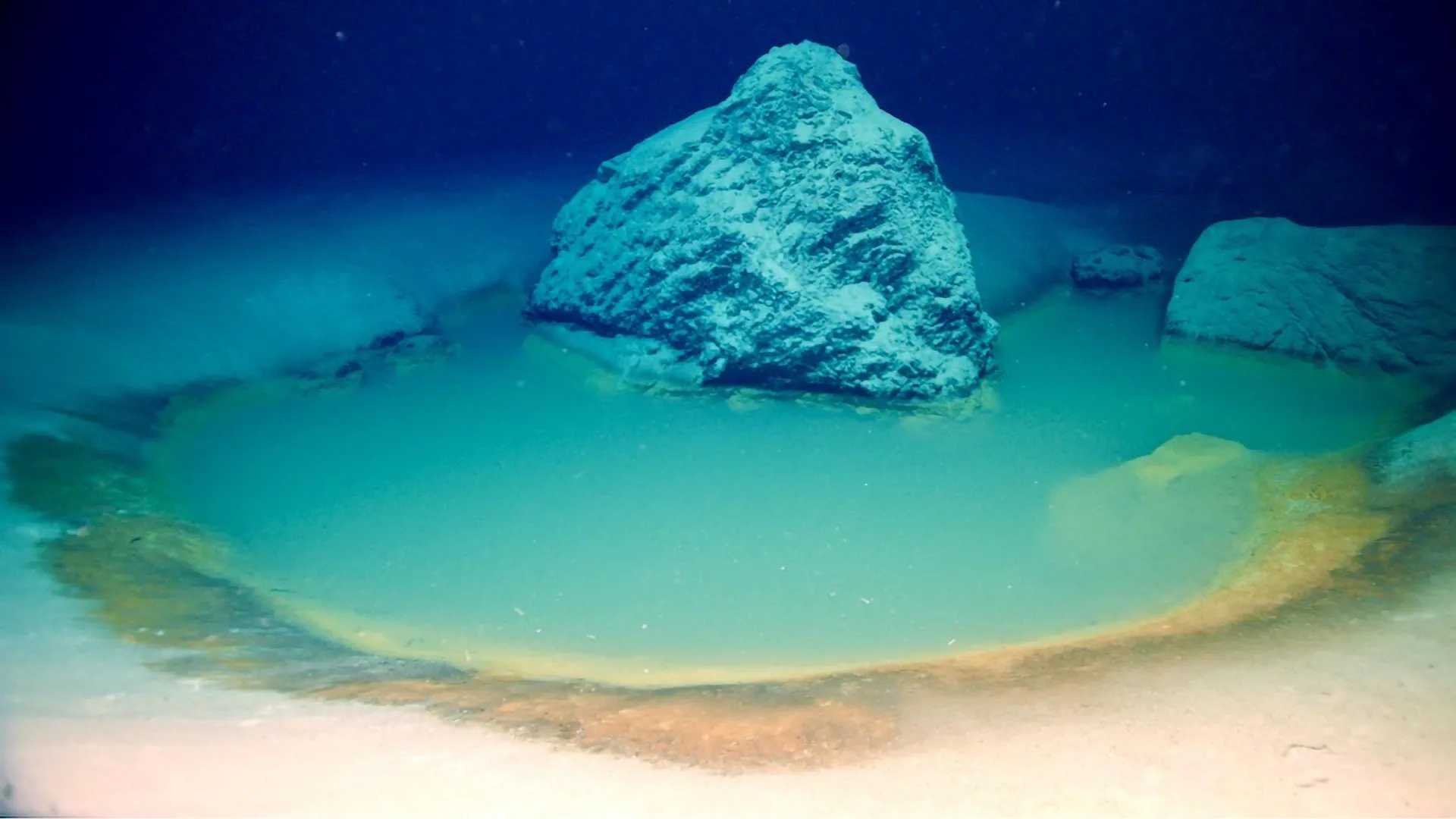
Scientists discover mysterious lakes more than a mile beneath the Red Sea
Scientists from the University of Miami found rare brine pools more than a mile deep in the Gulf of Aqaba, part of the Red Sea. These pools are very salty and have no oxygen, yet they hold many tiny living microbes. The pools may also help scientists understand early Earth and where life could exist on other planets.

2000 to 2024 saw decrease in age-adjusted stroke death rate in U.S.
Stroke death rates among U.S. adults dropped a lot from 2000 to 2024. The rate fell from 81.4 to 51.9 deaths per 100,000 people. Rates fell for every age group, sex, and region, though a few groups saw increases recently.

The night watchmen guarding Malaysia’s critically endangered river terrapins
Volunteers known as the Terrapin Guardians, or Geng Tuntung, watch a river in Kemaman, Terengganu state, on Malaysia's east coast. They work from 10 p.m. until dawn during nesting season, from January to March. Their night patrols help protect critically endangered river turtles as they lay eggs.

Astronomers may have discovered a black hole born before the first stars
In December 2019, astronomers saw a star in the Large Magellanic Cloud brighten for about one hour. The change was caused by an unseen object they named Phoebe, which bent the star's light as it passed in front. Researchers think Phoebe may be a primordial black hole, a very old object from the early universe. If so, it could offer clues about dark matter.

One body, two systems: Integrating dental and medical care dramatically improves dental follow-up
Dental and medical care are often run as separate systems, so patients can fall through the cracks. A new study found that putting both under one roof greatly improves dental follow-up visits. When teeth and body care are linked, more people get the checkups they need.

Multidisciplinary intervention improves fatigue for lymphoma survivors
Many people who beat lymphoma, a type of blood cancer, still feel very tired for a long time. A new study tested a program that brings several kinds of experts together to help them. The program reduced fatigue, and the benefit still held six months later. The study was published online on November 20 in the Journal of Clinical Oncology.

Ecuadorian plant shows potential to control bacteria in food
A plant used for generations by Indigenous communities in Ecuador may help keep food safe. Scientists tested extracts of Piper carpunya, locally called guaviduca, in a chilled risotto model. The extracts reduced Clostridium perfringens, a bacterium that can make people sick. The study was published in the journal Foods.

Culturally relevant nutrition interventions can engage Black adults more effectively
Researchers interviewed 30 Black adults with high blood pressure. They asked about a digital nutrition program and how to recruit people for studies. Participants said culturally relevant materials and trusted spaces, like churches and social media, would help. The findings aim to bring more Black adults into nutrition research.

Dinosaurs likely tore meat like birds of prey
Meat-eating dinosaurs probably fed by pulling their teeth backward through flesh, like a saw. Researchers built a machine called DinoSAW to test replica teeth from an allosaur. Pulling at an angle needed about a third less force than biting straight down. The study was published in the journal Palaeontology.