Latest News
Positive stories from around the world · Good news by country
Showing 2305–2328 of 37359 articles

Overlooked bushland remnants serve as 'stepping stones' for endangered Carnaby's cockatoos
Researchers from Murdoch University tracked 18 Carnaby's cockatoos at five inland breeding sites in Western Australia's Wheatbelt. Birds in heavily fragmented landscapes traveled three times farther each day to find food. Even small, degraded vegetation patches helped them move between larger habitat areas. The findings suggest conservation rules should better protect these overlooked patches.

Study identifies potential strategy to reduce breast reconstruction complications after proton therapy
Researchers at Mayo Clinic studied 145 breast cancer patients treated with proton therapy after mastectomy and implant reconstruction. Eight developed serious scar tissue tightening around the implant. Their treatment plans showed that areas with both higher radiation dose and concentrated proton energy were linked to the problem. Larger studies must confirm whether adjusting plans can lower this risk.

‘Make or bake time’: Guterres urges climate justice pact as leaders gather at COP31
António Guterres urged world leaders at COP31 in Antalya to create a global climate justice pact. He said fossil fuel companies should be taxed to support countries facing the worst climate damage. Climate finance and the future of fossil fuels remain unresolved.

Light is hard to block from every direction. This physicist found a way
Physicist Stefano Martiniani used a computer algorithm to design materials that control how light moves. Blocking light from many directions is difficult. The new approach could help researchers build light-based computers, which use light instead of electrical signals to process information. The article does not give a specific lab location or numerical results.

LIFE: at the heart of creating green, climate-resilient cities
An EU-funded LIFE project aims to help cities cope with climate change. Plans cover 307 km of riverbed across 3 Spanish regions and 56 towns and cities. The project will directly benefit over 22,000 local residents. Similar steps could reach up to 1 million people.

Kenya’s last Ebola patient goes home as 42-day countdown begins | WHO | Regional Office for Africa
Kenya discharged its last Ebola patient on 11 November 2026, and its final 11 monitored contacts also went home healthy. The country has had no new case since 19 October. A 42-day countdown began on 12 November; if no cases appear, Kenya can be declared free of Ebola on 23 December. Health teams will remain on alert and continue supporting survivors.
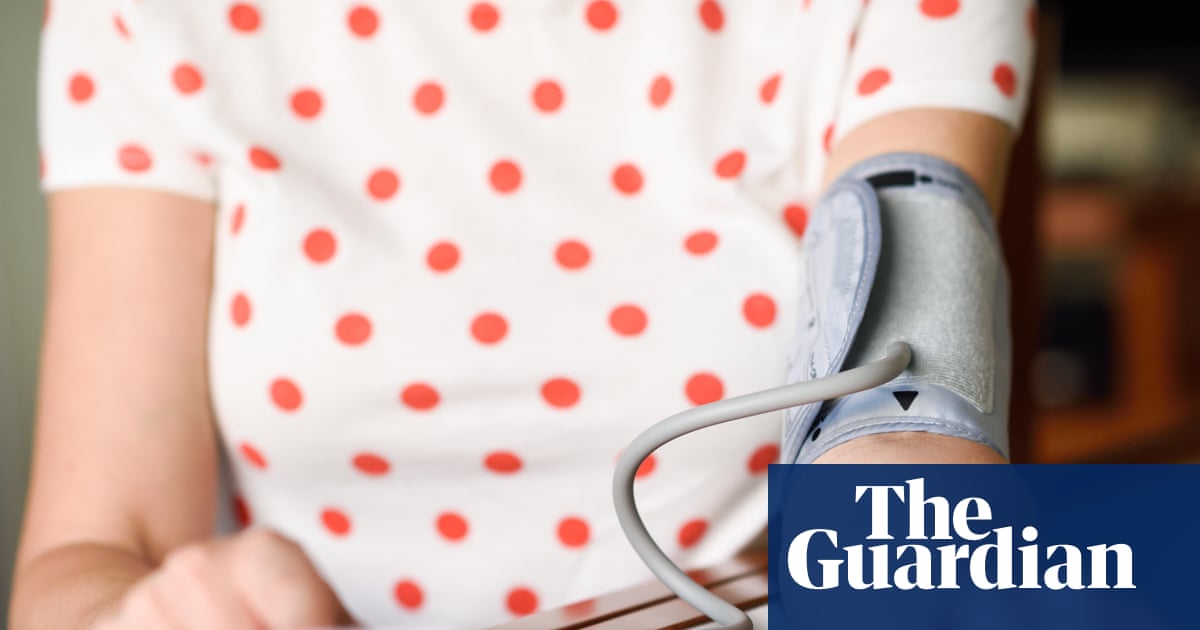
New drug could be cure for common cause of high blood pressure | High blood pressure | The Guardian
Researchers are testing a new drug called baxdrostat for high blood pressure. It targets a common cause of the condition. Surprisingly, its benefits were found to last up to two years after patients stop taking it. This could help many people who struggle to keep their blood pressure under control.

Weird and wonderful wildlife revealed in underexplored mountains
A long-term camera trap study found a wide variety of wildlife in the Annamite Mountains. The range runs through Laos, Vietnam, and Cambodia and is known as the “Amazon of Asia.” Hunting and forest loss threaten its animals and habitats. Conservationists are working on a plan to protect the region.
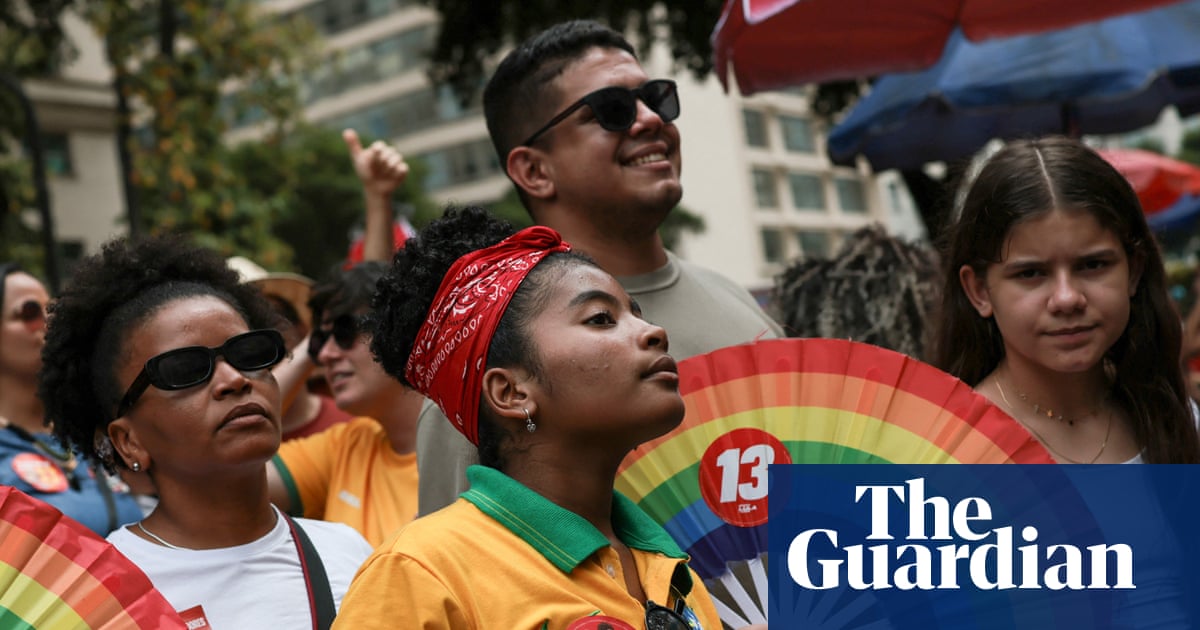
Election results in Brazil, Serbia, Israel and US renew faith in resilience of democracy | The far right | The Guardian
Elections in Brazil, Serbia, Israel and the United States were held in the past two weeks. Each one showed that democracy can resist strong leaders who want more power. Ordinary people, including students, rallied and campaigned to defend voting and free rights. The article says these results renew faith in democracy.

Brazil publishes first global ‘roadmap’ for phasing out fossil fuels | Cop30 | The Guardian
Brazil has published what it calls the first global roadmap for moving away from fossil fuels. The brief article also highlights the Tropical Forest Forever Facility, launched at COP30 to help preserve forests. It raised about $7 billion from several countries, including a £400 million UK loan.
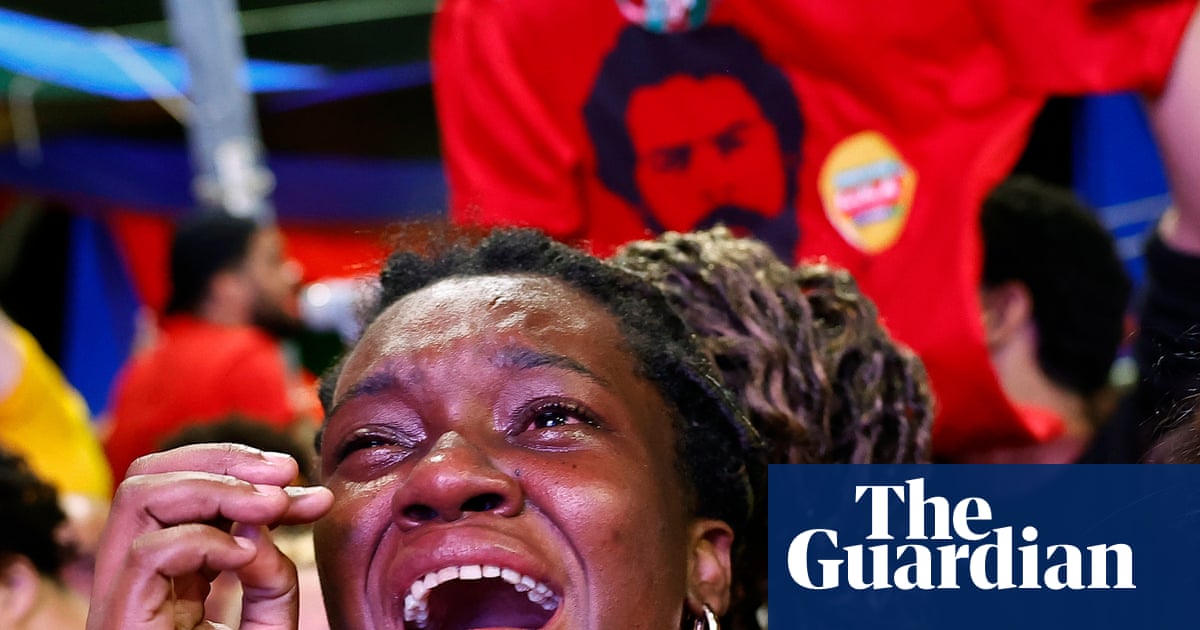
Brazil’s victory for the planet and democracy: seven lessons from Lula’s win | Brazil | The Guardian
Lula won Brazil's presidential election after winning an extra 10 million votes over three weeks. Social movements, including groups from the forests, drove the push with large rallies in cities. The Guardian article shares seven lessons on how this win matters for the planet and democracy.

Finding new life in old chemicals for pharmaceuticals using light-driven chemistry
A Penn State-led team found a way to convert sulfonamides into anilines using visible light and potassium phosphate. Anilines are chemical building blocks used in some medicines, including cancer drugs. A partner company's analysis suggested the method could work on more than 90% of commercially available sulfonamides, giving drug researchers more compounds to explore.

Five-year survival from pediatric cancer rises to nearly 90% overall, but disparities by race and cancer type remain
A study of more than 100,000 U.S. patients found that overall five-year cancer survival for children and teens rose from about 60% in 1975 to nearly 90% by 2017. Survival for acute lymphoblastic leukemia reached 95%, while rates remained about 72% for acute myeloid leukemia and 74% for sarcomas. Black patients had lower survival than other groups across most cancer types. Some survivors also face health risks decades after treatment.

Deeper dives are linked to longer surface recovery in sea lions
Researchers analyzed more than 800,000 dives by 374 sea lions from five species and 18 colonies. They found that dive depth was linked to how long sea lions rested at the surface, while dive duration alone did not explain longer recovery. The records span marine environments from tropical to subpolar waters and were collected over 22 years.

In north India, women protect native bees in traditional home walls
For generations, women in Uttarakhand have cared for Indian honey bees in cavities built into mud house walls. These hives protect colonies from cold, storms and rain. But cement homes offer no nesting spaces, and changing weather is cutting honey harvests. A local study found traditional homes became far less common over recent decades.
Wales boss Bellamy praises Liverpool's handling of Koumas
Craig Bellamy praised Liverpool for balancing Lewis Koumas's development with chances at the top level. The 21-year-old has made nine appearances for Liverpool this season. He has also scored for Wales and netted his first Champions League goal. Bellamy says his pace and effort can help Wales.
Parliament ratifies European Investment Bank agreement for 100 million euros for social housing | Межа
Ukraine's parliament approved a 100 million euro European Investment Bank package for social housing. Half is a loan and half is a grant. The plan aims to house vulnerable people and build lasting ways to fund homes. Ukraine also plans a housing register for internally displaced people in 2027, with local communities making allocation decisions.
Opening remarks by Commissioner Hansen at the first in-person meeting of the Women in Farming Platform
Commissioner Hansen gave opening remarks at the Women in Farming Platform's first in-person meeting in Brussels on November 11, 2026. Women farmers and entrepreneurs met with representatives of the European Investment Bank and national financial institutions. The event focuses on women's role in farming and access to support. The supplied excerpt does not describe specific outcomes.
Remarks by Executive Vice-President Virkkunen and Commissioner McGrath on the Digital Fairness Act and a Consumer enforcement initiative
The European Commission announced a Consumer Package in Brussels on 11 November 2026. The package has two proposals, including a Digital Fairness Act and a consumer enforcement initiative. These plans aim to strengthen protections for people using digital services and buying goods. The excerpt does not give further details on the proposals.
Kenya discharges last Ebola patient, beginning countdown to Ebola-free declaration - The Washington Post
Kenya has discharged its last Ebola patient. This starts a countdown to an official declaration that the country is free of the virus. Health workers checked travelers at the Uganda border to stop the spread. The outbreak spread through the region, including Congo and Uganda.

Bomas Complex Installs 3.5 MW Rooftop Solar System with Energy Storage In Kenya - SolarQuarter
Bomas Complex in Nairobi, Kenya, is installing a 3.5 megawatt (MW) rooftop solar system. A megawatt is one million watts, enough to power many buildings at once. The system includes energy storage, which saves extra power for later use. The goal is to improve energy security, cut costs, and reduce emissions.

A Museum’s ‘Wanted’ Poster Campaign Brings Looted Painting Back to France - The New York Times
The Orléans Fine Arts Museum in France is searching for hundreds of works stolen during World War II. Its director asked the public for help. A "wanted" poster campaign has already helped bring one looted painting back to France. The effort aims to return more art to its rightful owners.
Why land—a scarce resource—is so important for climate protection
Researchers at the Potsdam Institute for Climate Impact Research modeled how land use and fossil fuel cuts can work together. For a 1.7°C target, using every land-based measure could lower the carbon price to $130 per ton and limit lost consumption to 1.3%. But growing climate crops could require 66 million to more than 300 million hectares by 2050. The team recommends a cautious mix that protects food supplies and nature.

Experiences reshape brain cell connections, synapse mapping reveals
Researchers used a new tool to map billions of brain-cell connections, called synapses. In mice, an enriched environment changed different groups of synapses across many brain regions. These links help nerve cells communicate and shape brain activity. The finding offers new insight into how experience can affect the brain.