Latest News
Positive stories from around the world · Good news by country
Showing 2353–2376 of 37359 articles

Simplified framework could make products' environmental impacts easier to assess
A life cycle assessment estimates the environmental effects of a product from its supply chain and production. Researchers at the Paul Scherrer Institute found that four established hybrid methods can be reduced to two. They also suggest when to use each method. The work could help make future open-source tools easier for people without advanced math training.

Mental health app may help unemployed people find jobs, six-week trial suggests
In a six-week U.S. trial, 68.3% of people using the DRIVEN app found work, compared with 50.8% given standard job-search advice. The app paired job tips and coach videos with exercises to support mood and motivation. Participants also reported improved mood and fewer depressive symptoms. Researchers are exploring how to offer the app more widely.

Tanzania: Boost Programme Boosts 140pc Performance in Primary Education Overhaul - allAfrica.com
Tanzania's Boost programme has finished its work in primary schools. It reached 140 percent of its performance target. The project spent about 1.15 trillion shillings and ends on December 30 this year.
Tanzania: How Smart Classrooms, Smartboards Are Smartly Connecting Schools - allAfrica.com
Tanzanian schools are getting smart classrooms and smartboards. Officials say a project is bringing better buildings and technology to the education sector. Samia Primary School is one of the schools that received a smart classroom. The headmaster says the new tools are helping students learn.
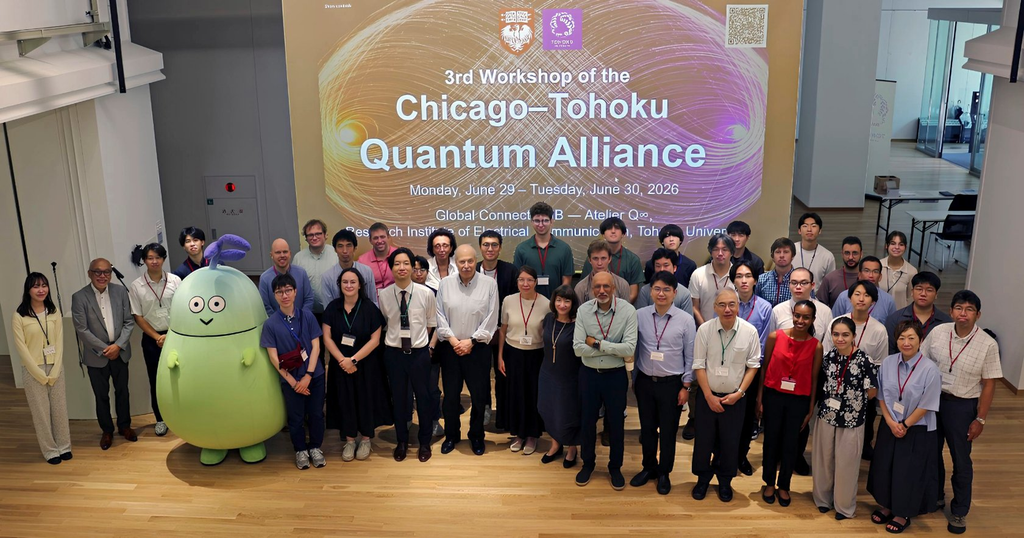
University of Chicago and Tohoku University Establish Joint Quantum Materials Hub in Japan - Quantum Computing Report
The University of Chicago and Tohoku University launched a five-year research hub at Tohoku's institute in Sendai, Japan. Two shared labs will support quantum materials fabrication and testing. Researchers will also use NanoTerasu, a 3 GeV X-ray facility, to study candidate materials. The program includes student exchanges and plans for a quantum startup incubator.

A new tool makes biodiversity conservation planning more efficient and reproducible
ZonationR is a new tool built to simplify the use of Zonation, a system for finding priority areas for biodiversity conservation. It combines the steps of an analysis into one automated workflow that others can repeat. Users can also compare different conservation plans more systematically. The report gives no named place or numerical results.

How conversations shape decisions about dementia care
Researchers at the University of Sheffield studied how care choices are discussed in memory clinics. People with dementia and companions declined 54% of non-drug intervention offers, compared with 19% of medication offers. Non-drug options were often explained with less detail and follow-up. The team says clear information and confident recommendations can help people make informed choices.
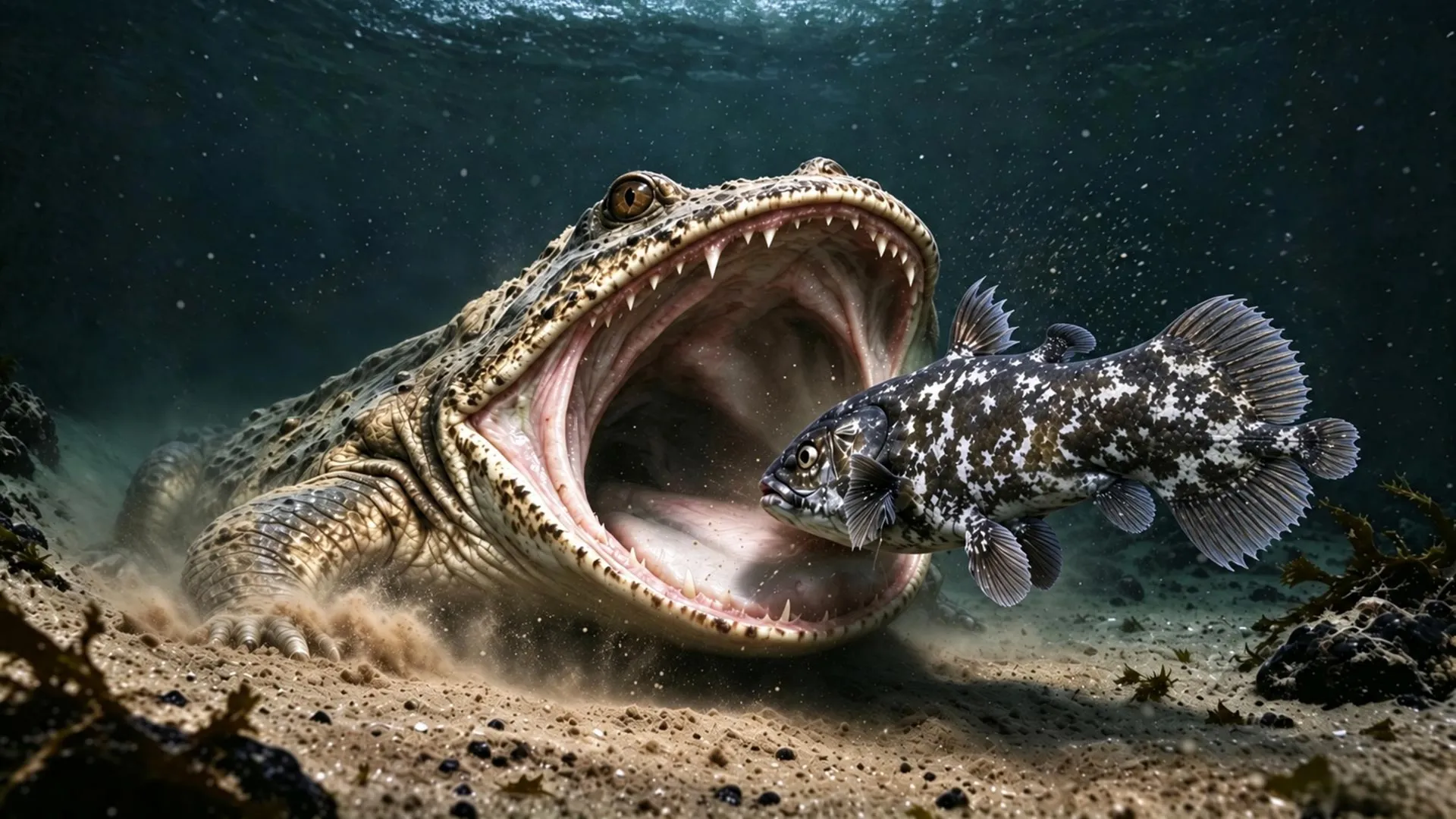
237-million-year-old fossils reveal a bizarre armored sea amphibian
Researchers found fossils in China of a heavily armored amphibian from 237 million years ago. The creature was about the size of a giant salamander and lived in the ocean. It may be the first known amphibian adapted to a fully marine life, unlike modern amphibians, which cannot live entirely in saltwater.

How ripples in space-time can reveal new exoplanets
LISA is a planned space observatory designed to detect gravitational waves, tiny ripples in space-time. Two studies led by NASA astrophysicists describe how it could use these signals to find a new population of planets beyond our solar system. The work points to a new way to study planets across our galaxy.

Repurposing the internet's backbone to advance whale monitoring
Léa Bouffaut, a researcher at Cornell's K. Lisa Yang Center for Conservation Bioacoustics, is studying whale sounds through fiber-optic cables on the ocean floor. The cables can act like long underwater listening devices. This approach may help scientists track marine mammals without placing many microphones in the sea. The article does not give a specific study result or measurement.
Vinícius Jr sends message to Sudan boy who received prosthetic legs after BBC report sparks appeal
Zaher, a boy in Sudan who lost both legs, told the BBC he dreamed of walking again and admired footballer Vinícius Jr. The report helped spark an appeal, and Zaher received prosthetic legs. Vinícius also sent him a message, bringing encouragement from his favorite player.

Victory for future Generations: Supreme Court of Appeal Rules on #CancelCoal - groundWork
South Africa's Supreme Court of Appeal ruled on 30 October 2026 in a youth-led case called #CancelCoal. The young people challenged the government's plans for new coal power. The court's decision is a win for future generations. Coal is a fuel that causes large amounts of pollution and climate change.

Ancient rocks reveal when Earth's tectonic engine 'switched on'
Researchers at Curtin University studied thousands of rocks from around the world. They found an ancient chemical fingerprint in rocks older than 2.5 billion years, but not in younger ones. This suggests Earth's crust began moving and recycling on a much larger scale around that time. The finding offers a new clue to when modern-style plate tectonics began.

Going to the park at least once a week can improve children's mental health
Researchers at the University of Exeter studied 4,219 children in the United Kingdom. Children who visited parks at least once a week scored 16.5% higher on average in mental health assessments. More frequent visits also linked with stronger social and emotional skills. The researchers say safe, welcoming parks could help more families support children's well-being.
Prince Bashangezi turned personal loss into peer tutoring for refugee students
School closures interrupted Prince Bashangezi’s A-Level studies at Tongogara Refugee Camp in Zimbabwe. He responded by organizing peer tutoring for other refugee students. The camp is home to more than 17,000 people displaced by conflict. The excerpt does not say how many students joined or what results they achieved.

Brazil releases the world’s first fossil fuel phaseout roadmap
Brazil released a global roadmap for phasing out coal, oil and gas on November 3. It is described as the world’s first plan of its kind. The document does not legally bind countries, but it puts a fossil fuel transition plan in writing.
Engineered bacteria are weaning farms away from synthetic fertilizers
Researchers are engineering microbes to supply more nitrogen to staple crops. This could reduce farms' need for synthetic fertilizers, whose production and use can harm the climate and environment. The provided article excerpt does not name a country, crop, or measured result.
Validation of clinical and preclinical obesity across global cohorts
Researchers tested the Lancet Commission’s obesity diagnosis framework across global cohorts. It combines BMI with measures such as waist size and organ function. The analysis found it more useful than BMI alone for classifying obesity. This could help clinicians better identify people facing health risks.
Domain-alteration chimeras rewire oncogenic complexes in prostate cancer
A Nature report describes a method that forces the androgen receptor to interact with p300/CBP proteins in an unusual way. This collapses gene activity that helps prostate cancer grow. The researchers say it strongly suppresses metastatic cancer in preclinical work, but the supplied text does not report human trials or patient outcomes.
Move over BMI: new obesity definition is better for predicting your health
A proposed way to define obesity looks beyond weight and height. It also measures waist circumference, which can better reflect health risks. The approach aims to classify people more accurately than body mass index, or BMI, alone. The report does not name a study location or provide results figures.
Flexible rubber blades for tidal turbines
Researchers reported flexible tidal turbine blades that bend passively at the trailing edge. The blades matched the energy yield of blades that actively change pitch. They also reduced load fluctuations that can cause fatigue by up to one-third. This could make tidal turbines simpler and less costly to maintain.
Efficient catalyst-controlled C–H arylation of arenes
A Nature paper describes catalyst-controlled C–H arylation of arenes, a way to connect aromatic molecules by replacing a hydrogen atom. The catalyst helps steer where the new bond forms. The title points to a more efficient reaction, but the provided text gives no results, applications, or measured performance.
Iconic first image of black hole holds up to scrutiny
Researchers reanalyzed the data used to make the first-ever image of a black hole. Their new picture shows the same ring-like shape. That match supports the original finding, though the short report gives no further details.
Epigenetic heterogeneity in breast tumours informs diagnosis and prognosis
Single-cell tests found a shared epigenetic pattern in breast tumours from different patients. Epigenetics means chemical marks that affect how genes work. The pattern may help doctors identify people at greater risk of relapse. More research is needed to show how it could guide care.