Pakistan's Grid Transformation
In a dusty Karachi suburb, a family that once relied on diesel generators for evening power now watches their rooftop panels feed a national grid that has, for the first time, reached the global average for electrification. That's the story behind a staggering statistic: Pakistan's electricity demand surged 21% in just two years—driven almost entirely by distributed solar.
A groundbreaking report from Ember and Renewables First reveals that distributed solar added 36 terawatt-hours of generation while total electricity demand rose by 33 TWh from fiscal years 2023 to 2025. The math is remarkable: solar didn't just meet new demand, it created demand by making electricity accessible where it wasn't before.
The Sun Powers More Than Just the Day
But here's the catch that policymakers keep missing: the sun sets. In New York, small-scale solar has grown by 2.8 GW since 2018—but utility meters don't capture it. The result? Midday demand on the New York ISO grid is actually dropping during solar peak hours, with a steeper climb in evening demand as households fire up after the panels go dark.
This is where storage becomes the hero. At InterSolar Europe 2026 in Munich, one takeaway dominated every conversation: the future of solar is battery storage. Energy storage systems are no longer optional add-ons—they're the backbone of cost-effective, stable grids. Meanwhile in the US, sodium-ion battery makers are forming coalitions to push past political headwinds, proving that storage technology is "the great equalizer," as one CleanTechnica analysis put it, regardless of administration in power.
Solar Gets Efficient
Back in California, Aptera just validated what seemed impossible: a three-wheeled electric vehicle that recharges itself from built-in solar cells, hitting 4.6 kWh on a sunny day. But founder Chris Anthony is quick to note that generation is only half the equation. To deliver the promised 40 miles of daily solar range, Aptera's vehicle must achieve an efficiency of 100 watt-hours per mile—roughly three times more efficient than typical EVs.
"Pulling in power from the sun is only half the math equation," the CleanTechnica analysis noted. The other half is aerodynamics, weight, and rolling resistance.
Robotaxis And The Roads Ahead
On the autonomous vehicle front, Waymo just released safety data covering 220 million fully autonomous miles—the equivalent of 250 human lifetimes behind the wheel. The results: 94% fewer crashes causing serious or fatal injuries compared to human drivers, 93% fewer injury-causing crashes with pedestrians, and 84% fewer involving cyclists. Zoox, the Amazon-backed underdog, launched its next-generation robotaxi with a focus on passenger comfort—purpose-built from the ground up for riders, not drivers.
Building A Cleaner Foundation
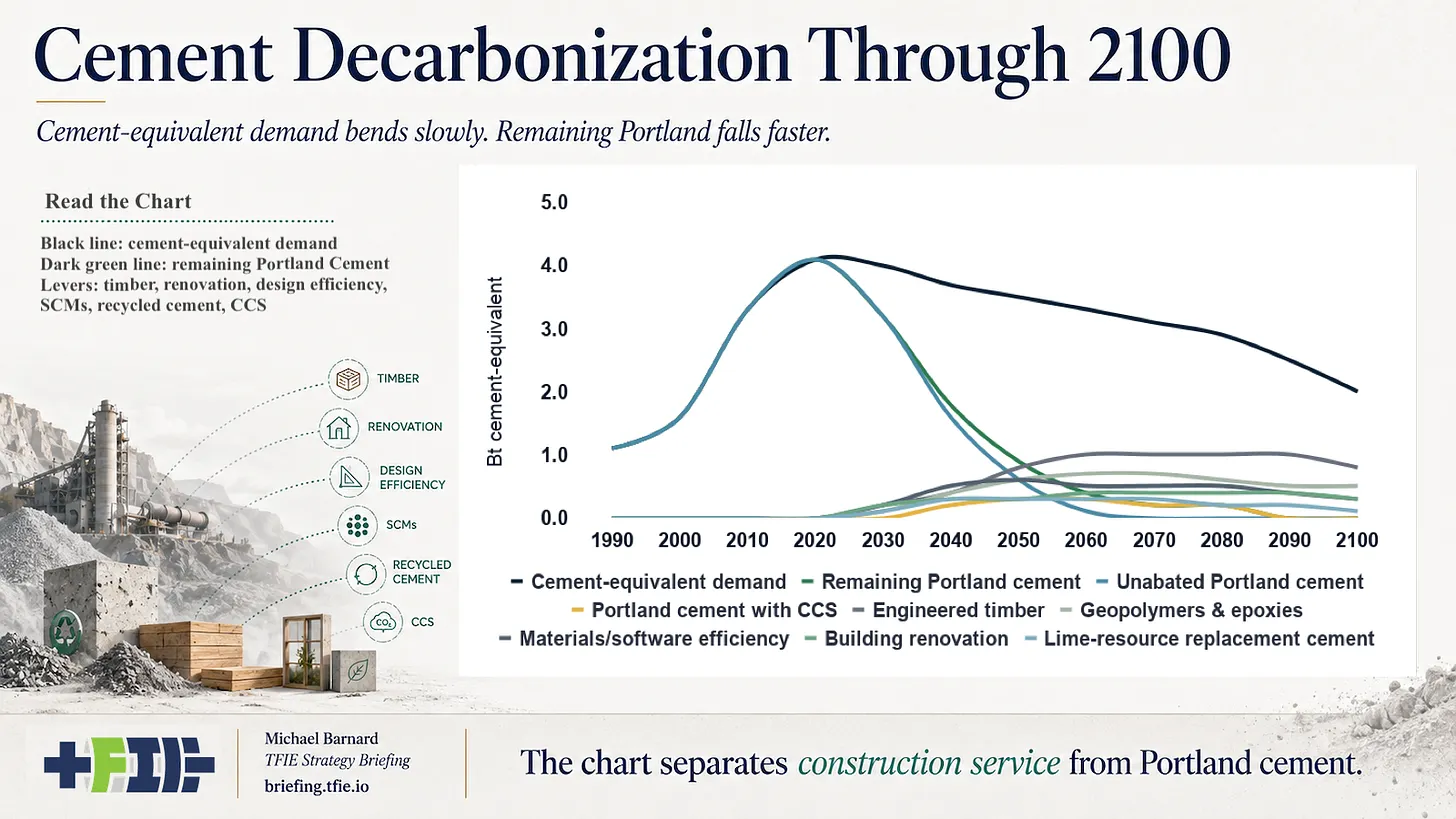
But clean energy isn't just about electricity. The cement industry accounts for roughly 8% of global emissions—and there's no one magic solution. According to researchers, the path forward is layered: less Portland cement, lower clinker ratios, supplementary materials, better design, and selective carbon capture. "The sector will not be decarbonized by one magic cement," one analysis noted. China, having peaked its infrastructure boom, is already shifting toward renovation over new construction—a signal of where mature economies are headed.
The Bottom Line
Across Pakistan's villages, Munich's exhibition halls, California's test tracks, and New York's grid infrastructure, a pattern emerges: solar is growing faster than models predicted, but it's unlocking a web of complementary needs—storage, efficiency, smarter grids, and yes, even cleaner concrete. The transition isn't a single technology. It's an ecosystem, and it's already underway.
Sign in to join the conversation.
Comments (0)
No comments yet. Be the first to share your thoughts.