Latest News
Positive stories from around the world · Good news by country
Showing 241–264 of 37342 articles

Certain fungi turn specialized plant cells into water-carrying cells using one protein
Researchers at the University of Göttingen studied fungi of the Verticillium genus, which can harm crops like oilseed rape. They found one fungal protein, called TRADE, that turns certain plant cells into new water-carrying cells. Infected mouse-ear cress plants kept more water during drought than healthy ones. The findings could help scientists make crops more resistant to drought.

Carbon nanotube measurements reveal quantum model better explains collective electron behavior
Scientists from Lithuania, Finland and Israel studied carbon nanotubes, which are tiny tubes made of carbon atoms. They combined theory with experiments. They were the first to show which physics model best describes how electrons move and interact inside these tubes. This helps explain how electrons behave together in very small materials.

New inhibitor restores antibiotic activity against drug-resistant bacteria
Researchers at Imperial College London and partners found a small molecule that can restore the power of ciprofloxacin, an older antibiotic. The molecule works against MRSA, a staph germ that resists many common medicines. Drug-resistant infections are a growing threat worldwide. This finding could help make existing antibiotics useful again.

NASA's Europa Clipper zooming by Earth on way to Jupiter's icy moon
NASA's Europa Clipper spacecraft will soon swing past Earth. This gives it a boost that saves fuel for its long trip to Jupiter. The flyby also gives the team time to get ready for the science ahead. The spacecraft will then study whether Europa's hidden ocean could support life.

Early-life stress may leave lasting traces in the brain that increase risk of chronic pain
Researchers from Heidelberg University and the Central Institute of Mental Health in Mannheim studied female mice. They found a brain process that may make early-life stress increase the risk of long-lasting pain and anxiety. The results were published in the journal Science. The work is an early step, so it may take years before it helps people.

AI could identify psoriasis and assess its severity from a single photo
Common AI models can recognize psoriasis from a single photo. They can also judge how serious the skin condition is. A study by researchers at Semmelweis University, published in Frontiers in Medicine, found ChatGPT-5 was nearly 100% accurate. The researchers say AI cannot replace dermatologists, who are skin doctors.

Giant lambda-shaped stellar nursery found in the Milky Way's outskirts
Astronomers found a huge star-making region in the outer part of the Milky Way galaxy. It is called the λ-complex, which means lambda complex. It is made of long threads of gas and dust that meet at dense hubs, where massive stars form. The structure is bigger than most known hub-filament systems.

Alzheimer's drug targets tau protein in promising clinical trial
Alzheimer's is a disease that slowly destroys memory and thinking. A new experimental drug works by reducing the amount of tau, a protein that builds up in the brain. In a clinical trial, which tests a drug on people, it slowed the decline in memory and thinking by up to 54%. The drug is still experimental and needs more testing.

Fundo Nacional de Solidariedade apresenta balanço geral de projetos apoiados em 2026 e em ultima reunião do ano - CNBB
The National Solidarity Fund of Brazil's Catholic Church (CNBB) released a report on its projects in 2026. It approved 226 projects, funded by donations from Catholic communities across Brazil. This year's Fraternity Campaign focused on housing, so most of the money supports homes for people in need.

Simulations reveal how a solar vortex and reconnecting magnetic fields can launch a rotating jet
Solar spicules are thin jets of gas that rise from the Sun's surface. A team from the Yunnan Observatories of the Chinese Academy of Sciences ran detailed computer simulations to trace where these jets come from. They found that a small swirling vortex twists magnetic fields into a "magnetic tornado." Magnetic reconnection, where field lines snap and reconnect, then drives the jet upward and rotating.

How appreciating nature can make life feel more meaningful
Researchers at Texas A&M University studied how nature affects a sense of meaning in life. They surveyed more than 1,800 people across five surveys and a field study. The strongest link was "experiential appreciation," which means noticing and valuing your surroundings. People who felt more meaning also said they wanted to act in more eco-friendly ways.
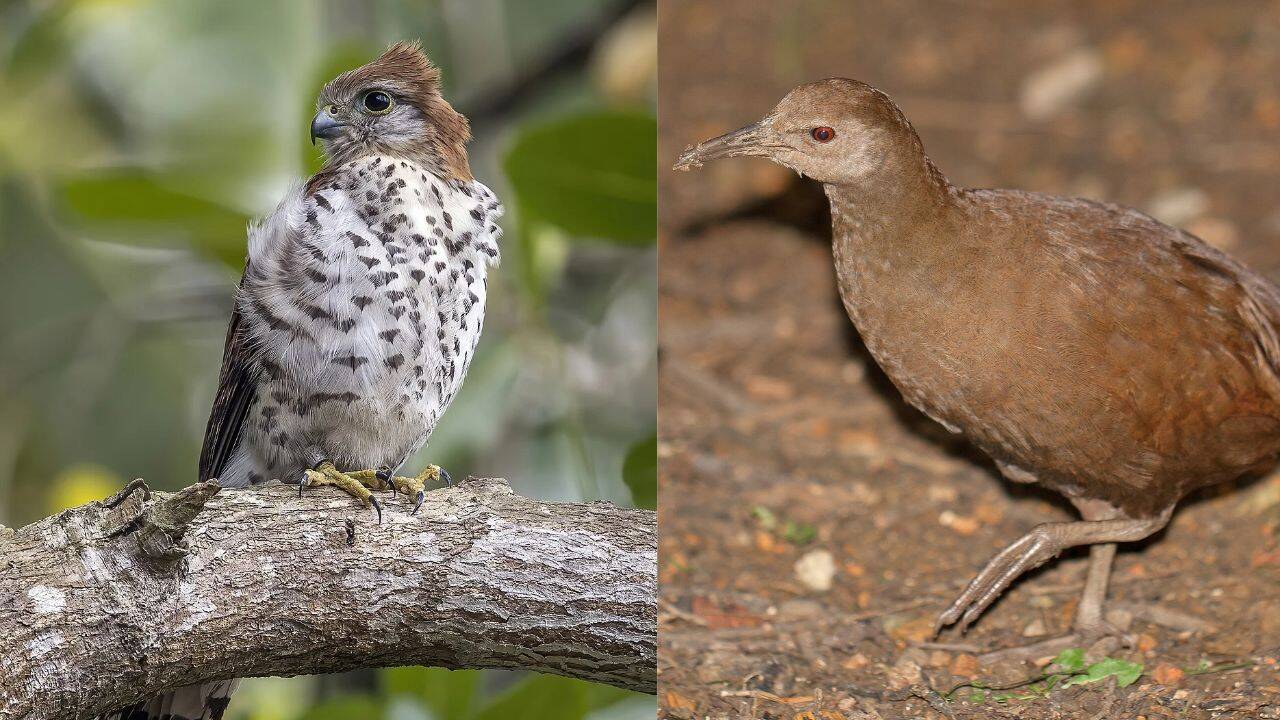
Species on the brink of extinction can still make a comeback with fewer than 50 animals remaining; a study of 141 birds and mammals finds that captive breeding and predator removal can make the difference between survival and extinction | - The Times of India
A new study looked at 141 species of birds and mammals that were close to extinction. Some recovered even when fewer than 50 animals were left in the wild. Researchers found that captive breeding and removing predators made the biggest difference. These steps helped many species survive instead of disappearing.

Structural agility of 2D crystals enables digital doping of graphene superlattices
Researchers studied graphene placed between two layers of boron nitride. Applying electric charge could rearrange the atoms into one of two stacking patterns. The device also took in electric charge in precise whole-number steps, which could help future electronics.

Rare sugar d-sorbose may help control allergic and autoimmune diseases
Researchers at Fujita Health University in Japan tested a rare sugar called d-sorbose. The sugar helps build regulatory T cells, which are immune cells that calm down overactive immune responses. In mice, it reduced allergic airway inflammation and kept most mice free of autoimmune diabetes, a disease where the immune system attacks the body. The results are promising, but the work has only been tested in cells and mice so far.

Patients in Indian clinic were well served by standard WHO-recommended HIV treatment, study finds
A McGill University study followed HIV patients at a clinic in Pune, India. Over 500 people were tracked for more than a decade. The standard WHO-recommended treatment, called TLD, worked well for nearly everyone. Changing treatment based on body weight or immune status did not help more.
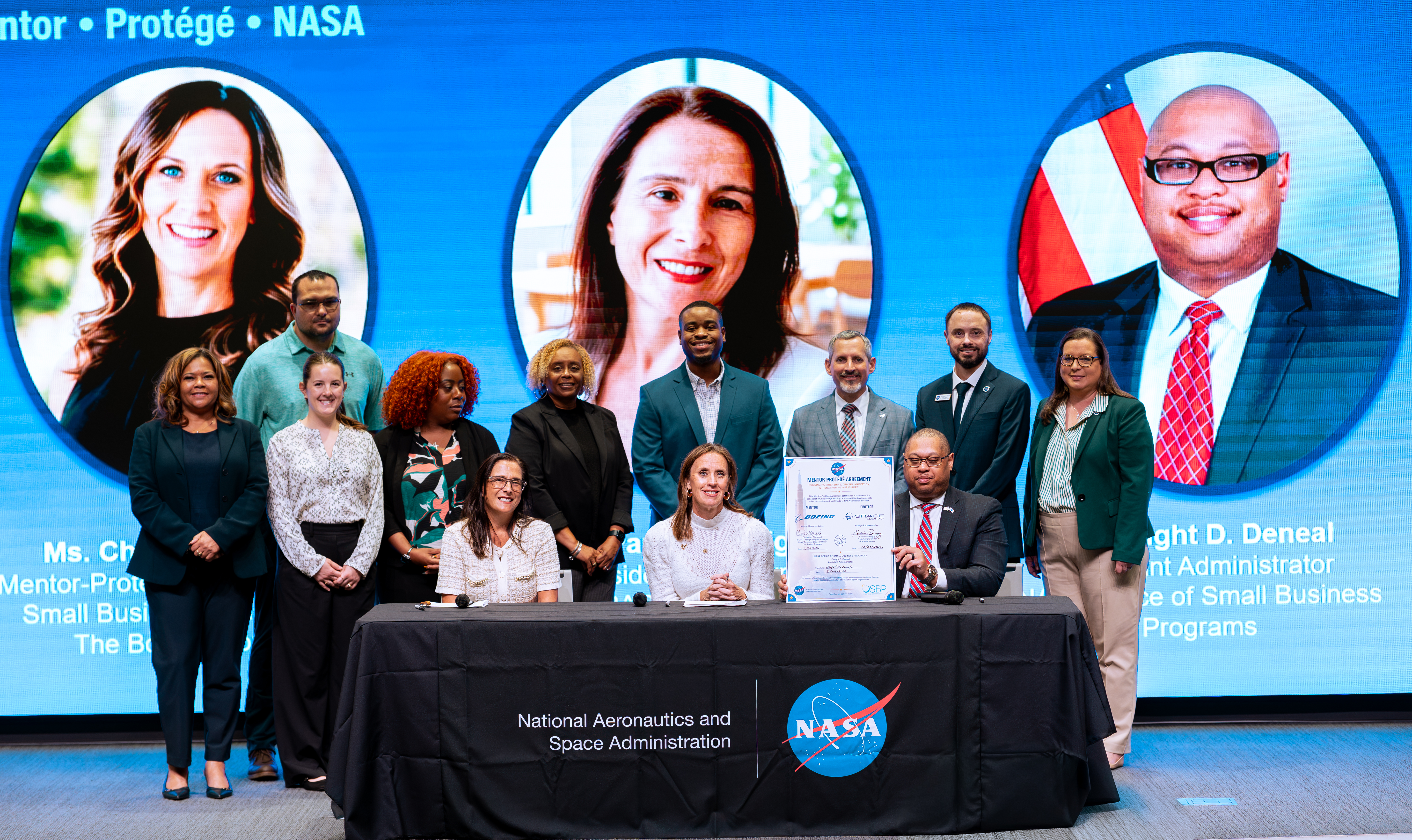
NASA Enhances Supplier Program, Announces Mentor-Protégé Agreement
NASA's Office of Small Business Programs hosted a signing ceremony for a Mentor-Protégé Agreement. In this program, a large company helps a smaller one grow. Boeing is the mentor and GRACE Aerospace, a small business led by Pauline Sevigny, is the protégé. The event took place on October 29, 2026, in Huntsville, Alabama.
Eight looping futures for three competing species
Researchers studied a model where three competing species change their numbers over time. Earlier work guessed such a model could have at least five repeating cycles. This paper builds a model with eight cycles and checks the result with computer-assisted proofs. The work is pure mathematics, so it does not focus on any place on Earth.

One network’s slowest mode and another’s most oscillatory one
Researchers studied how power grids with many renewable sources, such as solar and wind, recover after a disturbance. Modern grids use devices called inverters, which change direct current into alternating current. The team showed that two simple checks can reveal the grid's worst-case swinging and slowest settling. Their method makes grid performance easier to assess and gives guidelines for tuning inverters.

A data-center twin that learns a new grid from a few waveforms
Data centers need huge amounts of power, and sudden load changes can cause electrical disturbances. Accurate simulations of these disturbances are slow and costly. Researchers propose a digital twin, a fast computer copy of the system, built on GPT-2, a large language model. It adapts to unseen data center setups using a few sample recordings, without retraining. The paper's full results were not in the supplied text, so the performance claims remain unverified.
A swarm can find its map without sharing the whole map
Researchers studied how a group of connected devices, called agents, can estimate their own positions. Each device uses noisy distance readings to nearby neighbors. The team proposed a method that lets every device reach the best possible answer by talking only to nearby devices. The method works even when devices communicate at different times.

Nature Uses Only a Sliver of the Protein-Fold Possibilities
Proteins are chains that fold into 3D shapes to do their work in living cells. A new review paper on arXiv asks why nature uses so few of the possible shapes. The authors report that natural proteins adopt only a small fraction of all possible folds. They suggest that evolution, not just physics, limits which folds appear.

Uterine pressure guides head-to-tail axis formation in mouse embryos
Scientists have long wondered what tells a mammal embryo which end will become the head. A team led by Toshihiko Fujimori at the National Institute for Basic Biology studied mouse embryos inside the uterus. They found that the muscle wall of the uterus squeezes the embryo, and the head-to-tail axis forms along the direction of that squeeze. The work was published in Science Advances.
A leaner way to quiet the road—if the headline result holds up
Researchers describe a new method for active road noise control, which uses speakers to cancel unwanted car noise. The method splits the job into two parts: a simple linear filter and a set of specialist filters that switch on as needed. Compared with WaveNet-VNN, a well-known earlier approach, it cuts estimated inference cost by 96.3% and still reduces noise more. The results come from a preprint that has not yet been peer reviewed.

Brain organoids in space reveal new clues to Alzheimer's disease
Researchers at UC San Diego grew small brain models from stem cells. Some carried genes linked to rare inherited Alzheimer's disease. They sent them to the International Space Station for 40 days, with matching models kept on Earth. Different genetic forms reacted in different ways to spaceflight, which could help find more targeted treatments.