Latest News
Positive stories from around the world · Good news by country
Showing 217–240 of 37342 articles

Sweden tops global media freedom support rankings as international funding declines
Sweden has been ranked the world's leading supporter of international media freedom in a new index. It spent 1.01% of its aid budget on independent journalism in 2024. Across all 30 countries in the index, only 0.15% of aid went to media support, down from 0.16% in 2023. Finland also climbed nine places, helped by its role leading the Media Freedom Coalition.

Giant deer bones may push human arrival in Ireland back by 1,000 years
Researchers re-examined giant deer bones dug up from Ballynamintra Cave in County Waterford between 1878 and 1882. Two leg bones show marks that look like they were made by stone tools while the bones were still fresh. Radiocarbon dating places the bones at about 13,500 years old. The team says the marks still need more proof, but they could push back the first human arrival in Ireland by about 1,000 years.

Fermented milk may have held ritual power in Neolithic Denmark
Researchers examined 330 pottery vessels from Middle Neolithic sites in western Zealand, Denmark. Twenty-nine of the 31 vessels showing corrosion came from passage tombs. Experiments with reconstructed pots showed that fresh, unpasteurized milk left in a vessel created matching damage. The team concludes that fermented dairy likely had special symbolic value in burial rituals.
Chromosome ‘glue’ could boost fertility by stabilizing ageing eggs
Scientists tested a new system in mice that copies a protein. This protein drops off as eggs get older. By keeping eggs stable, the system could help improve fertility treatments in the future. The work is still at an early stage and has only been tested in animals so far.

How to prepare youth to respond to firearm injury risk
Firearm injury is the leading cause of death for U.S. teens. Yale researchers partnered with 4-H Shooting Sports, a national youth program, to build a training course. The course teaches teens to notice risks, like unlocked guns, and act to stop them. In a national trial, more than 400 teens in 50 clubs across 28 states took part.
Motorcycle rider who took stunning cricket catch found
Mehran Khan caught a cricket ball one-handed while riding on the back of a moving motorcycle in Mingora, Pakistan. He was passing a match of the Swat Premier League when the ball flew toward him. The video spread quickly online, and the tournament organisers gave him a prize of 10,000 Pakistani rupees, funded by the Pakistan Army. He returned the ball after the catch.
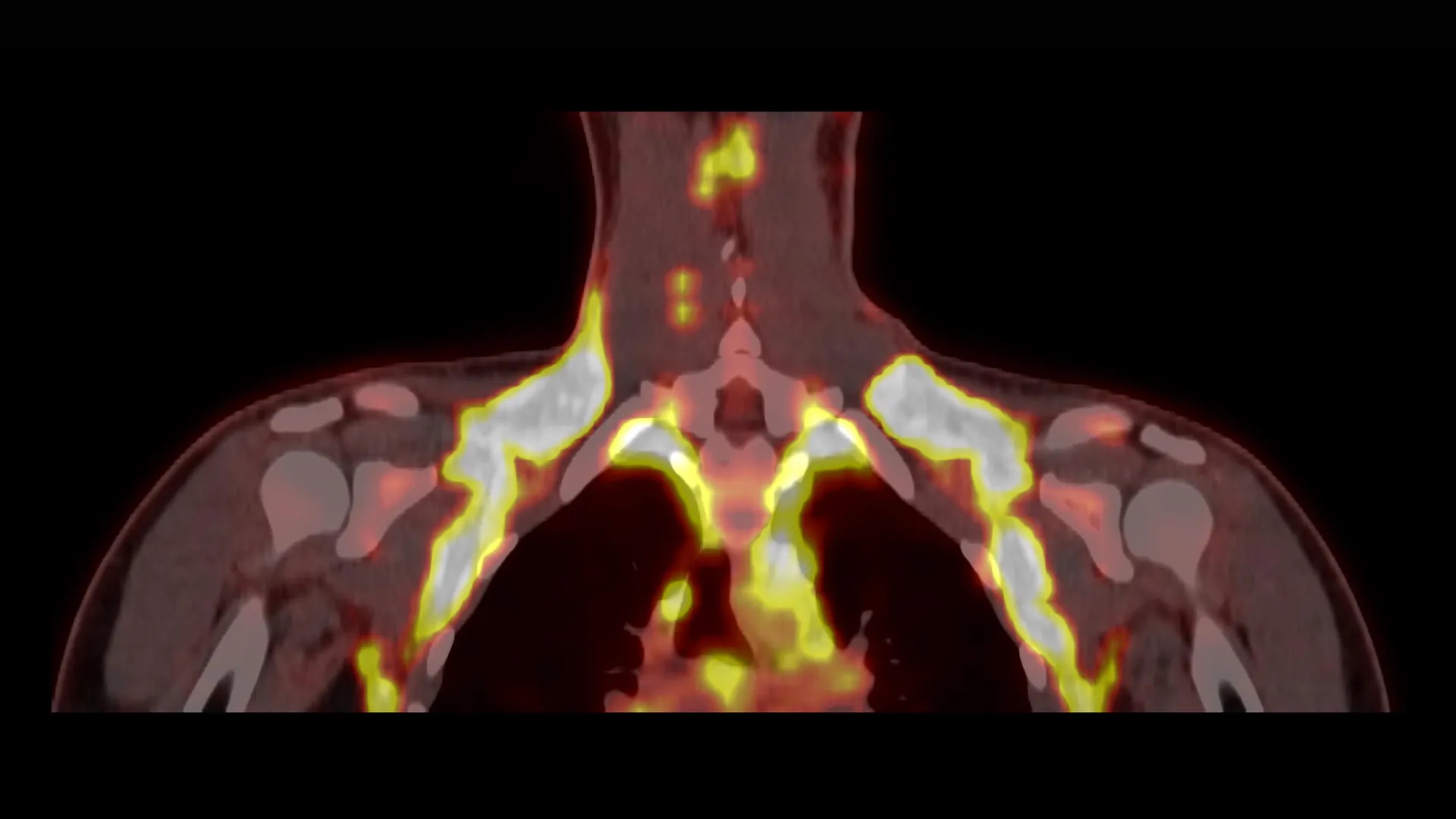
Scientists discover a surprising twist in how the body burns calories
Brown fat is a type of body fat that burns calories to make heat. Scientists at the University of Basel tested a drug called fenoterol on 11 healthy volunteers. The drug raised how much energy the body used, but scans showed brown fat was not clearly switched on. The results suggest that future obesity drugs may need to act on several signals at once.

ADHD meds in pregnancy not linked to developmental disorders in children
A large study from Scandinavia, published in The BMJ medical journal, looked at children whose mothers took ADHD medicine during pregnancy. The children did not face a higher risk of developmental conditions. These include autism, ADHD, intellectual disability and learning disorders. The results can help expectant mothers and doctors make safer choices.

Gut microbiome may shape blood sugar benefits of whole grains
People with prediabetes have blood sugar that is higher than normal. They are at very high risk of getting type 2 diabetes. A new study suggests that the bacteria living in our guts may shape how much whole grains help lower blood sugar. Better diet advice could follow from this finding.

Heart failure: Advances include earlier detection, treatment options, expert explains
Heart failure happens when the heart cannot pump enough blood for the body's needs. Cardiovascular diseases are the leading cause of death worldwide. Jose Nativi Nicolau, a heart doctor at Mayo Clinic in Florida, explains recent progress in finding the condition earlier. He also describes newer treatment options that can help patients.

Brasil avança em vacina contra o câncer e prevê início dos testes em 2027 – R7 Notícias
Brazil's Health Ministry is working with the University of Oxford to develop a therapeutic cancer vaccine. A therapeutic vaccine is meant to help the body fight cancer that already exists. The government expects human trials to begin in 2027.

Genetic information can improve prostate cancer risk assessment
A new study from Karolinska Institutet in Sweden, published in JAMA Network Open, looks at how genes can help. PSA is a protein made by the prostate that is measured with a blood test. A high PSA level can signal prostate cancer, but it can also rise for other reasons. Genetic information can give a more personal view of a man's risk.

Minecraft-like DNA cubes self-assemble into complex 3D nanostructures
Associate professor Petr Sulc and his team built a programmable building system from DNA. Think of it like Minecraft: small DNA cubes snap together on their own. The cubes form complex three-dimensional nanostructures, which are tiny structures far smaller than a grain of sand. The work could help future nanorobots, 3D electronics and new kinds of nanotechnology.

Membrane developed for dry eye treatment can improve symptoms
A study led by Aston University researchers tested a new treatment for dry eye disease. It uses a modified amniotic membrane, a thin tissue layer, placed over the eye for six days. The treatment gave lasting relief from symptoms for patients with moderate to severe dry eye, and most patients stuck with it well.
Terrible Pavlovic own goal gifts Lille shock win against Bayern
Bayern Munich lost their first Champions League match of the season. Lille scored twice in three minutes in the second half. One goal was an odd own goal by Aleksander Pavlovic of Bayern. The result is a big surprise for football fans.

Artificial photosynthesis uses waste CO₂ to grow protein-rich edible fungus in seven days
Scientists used artificial photosynthesis, a man-made version of how plants use sunlight, to turn waste carbon dioxide into food. The food is an edible fungus rich in protein. It grows in just seven days. Meat production needs huge amounts of land, water and creates greenhouse gases, so this could help feed a growing world.
China sends first foreign astronaut to ISS rival as it globalises space operations | China | The Guardian
China's Tiangong space station welcomed Muhammad Zeeshan Ali, the first Pakistani to reach orbit. He was greeted with a Chinese "space handshake" when he arrived. The mission shows China is opening its space program to more countries. It is a step toward a bigger role for China in space.
Partnership and perseverance | Mountain Views Star Mail
Healesville Sanctuary in Victoria, Australia, took in the last remaining members of a species that was at risk of dying out. This saved them from extinction. Meanwhile, an eight-year conservation project with many partners has wrapped up at the newly finished Haining Farm. The article is short, so details about the species are limited.

Novel hormone therapy significantly reduces risk of breast cancer recurrence
A new daily pill called giredestrant lowered the risk of breast cancer returning or causing death by 30%. The large international trial, called lidERA, followed 4,170 patients with early-stage, hormone-sensitive breast cancer. Half took the new pill and half took standard hormone therapy for five years. The results were published in the New England Journal of Medicine, a leading medical journal.

Dublin City Council announces new European Investment Bank partnership to build more than 500 homes - Irish Mirror
Dublin City Council has announced a new partnership with the European Investment Bank, a public lender owned by EU countries. The money will help build more than 500 homes in Dublin. One planned project is An Droichead Órga on Emmet Road in Inchicore, one of the council's largest housing and regeneration projects.

Stabilizing atomically thin metals with sandwich structures: Machine learning expands the search
Metals normally collapse into clusters when they are made only one atom thick. Researchers at the University of Jyväskylä in Finland solved this by placing metal between protective layers, like a sandwich. Using machine learning and a supercomputer, they tested more than a thousand combinations. They found over 300 stable structures, and the team has shared the full dataset openly.

RSV shots safe for older adults, alone or in combo, analysis finds
A large study of 18,252 American adults aged 60 and older looked at RSV vaccine safety. RSV is a virus that causes severe breathing infections, especially in older people. Fewer than 1% of people sought medical care in the week after their shot. The study also found it is safe to get an RSV shot and another vaccine in the same week.

Smartphone app uses AI to identify illegal wildlife products
Researchers at the University of Helsinki trained AI models on nearly 40,000 images of wildlife products. The work was done with the International Fund for Animal Welfare. A smartphone prototype flags suspicious items for experts to check. In practical tests, it reached 91.3% accuracy.

Brazil’s President Lula moves to recognize Chief Raoni’s Indigenous land
Brazil has moved toward officially recognizing the Kapôt Nhĩnore Indigenous Territory in the southern Amazon. The land covers about 362,000 hectares, or 895,000 acres, on the border of Pará and Mato Grosso states. It is home to the Mẽbêngôkre (Kayapó) and Yudjá (Juruna) peoples, who have fought for legal rights to it since 2004. Chief Raoni Metuktire, a well-known defender of the rainforest, was born there.