Latest News
Positive stories from around the world · Good news by country
Showing 433–456 of 37342 articles

Self-assembling nanocarriers show promise for delivering CRISPR to tumors and slowing growth
Researchers at the Institute of Science Tokyo built a tiny self-assembling carrier. It protects CRISPR gene-editing tools as they travel through the body. In mice, the carrier reached tumors and edited 37.2% of the target cells there, compared with 1.5% when the tools traveled alone. Tumor growth was also significantly slowed, which supports further work on CRISPR cancer therapies.

Named 'Maria,' a new species of amphibian pays tribute to the world's most popular name
Scientists found a new species of caecilian, a burrowing amphibian often called a "blind snake," in Brazil. The specimen was collected in 2015 in Serra dos Órgãos National Park in Rio de Janeiro. The researchers named it Siphonops maria, after the most popular female name in Brazil. The name also honors an enslaved woman named Maria who helped plant over 100,000 trees in the Tijuca Forest.

Quantum blueprint maps a practical path to testing unusual entanglement
Researchers Adrian Del Maestro and Rick Mukherjee turned a paper theory into a plan for real experiments. Entanglement is a quantum link where particles share a connected state, even when far apart. The team's work, published in Physical Review Letters, brings this unusual idea closer to being tested in a lab.

Flowers in Renaissance sculpture may reveal political ambitions of Florence's ruler
A new study looks at the flowers on Benvenuto Cellini's Renaissance statue Narcissus. The flowers are more than decoration. They show how plant science grew alongside rivalry between artists. They may also reveal how Florence's ruler wanted to strengthen his power.

A new reason for magic numbers: Scientists discover the secret behind an unusually stable molecular cluster
Scientists at Bar-Ilan University in Israel studied groups of glycine, the simplest amino acid. Clusters made of exactly six molecules are unusually stable, which is why scientists call six a "magic number." The team found the reason: the molecules change their shape when they come together. This change makes the group hold together far better.

Novel metric accurately distinguishes metastasis from an independent primary tumor
Researchers built a new score called the Clonal Relatedness Index (CRI). It shows whether tumors found in one patient started from the same original cancer cell. This helps doctors tell a spread of cancer apart from a second, separate cancer. The findings were published in The Journal of Molecular Diagnostics and matter for digestive and abdominal cancers.

How antibody therapy reverses type 1 diabetes in mice
Researchers at UC Davis Health in the United States studied an experimental antibody. The antibody reversed type 1 diabetes in mice. Type 1 diabetes is a condition where the body cannot make its own insulin. The team's findings, published in the journal Diabetes, could help future treatments for people with acute type 1 diabetes.

DNA at nuclear edges forms protective UV shield in developing roundworm embryos
Inside each cell, DNA is folded into tight clumps that are mostly switched off. These clumps usually sit along the inner edge of the cell's nucleus. Researchers studying roundworm embryos found how and when this packing forms during early growth. The DNA at the edge appears to act as a protective shield against harmful UV light.

Smarter EHR alerts increase use of first-line antibiotics for patients with penicillin allergy labels
Doctors often get warning pop-ups when they prescribe antibiotics to patients labeled as allergic to penicillin. Researchers at Vanderbilt Health in Tennessee changed these electronic health record alerts. The new design sent far fewer alarms to clinicians. More patients now safely receive cephalosporins, a first-line antibiotic family, even though their penicillin allergy was never tested.

The two ways rings are carved around a newborn star
Astronomers have long watched young stars to learn how planets form. Many early stars show rings of bright and dark areas spreading out from the center. The rings look like grooves on a vinyl record. Scientists think these patterns hold clues about how solar systems are built.
NASA+ Content Coming to Big Screen at Greenbelt, Maryland Cinema
NASA's streaming service, NASA+, has its first movie theater partner: The Greenbelt Cinema in Greenbelt, Maryland. The cinema will first show "The Europa Concept," a documentary about the science behind exploring Europa, an icy moon of Jupiter. Future shows may include Artemis mission events, where NASA plans to send people back to the Moon. NASA+ stays free to watch, with no ads, on the NASA app and website.

A common language for pistachio growth: Researchers develop a crop-monitoring scale
Researchers at the University of Córdoba in Spain built a standard scale for tracking how pistachio plants grow. The scale has 56 stages, from germination to leaf fall, and includes photos to help identify each one. It was tested on popular varieties in two orchards over two years. Farmers and scientists can now share data in a common language, which matters as pistachios spread to new areas with less winter chill.

Flexible simulations model how dark matter collisions may leave their fingerprints on the universe
Dark matter is invisible and cannot be measured directly. It is thought to make up about 85% of all matter in the universe. Researchers have built a flexible computer code that can test many possible forms of dark matter. The team hopes it will reveal "fingerprints" that could show which particles and forces hide in the dark sector.
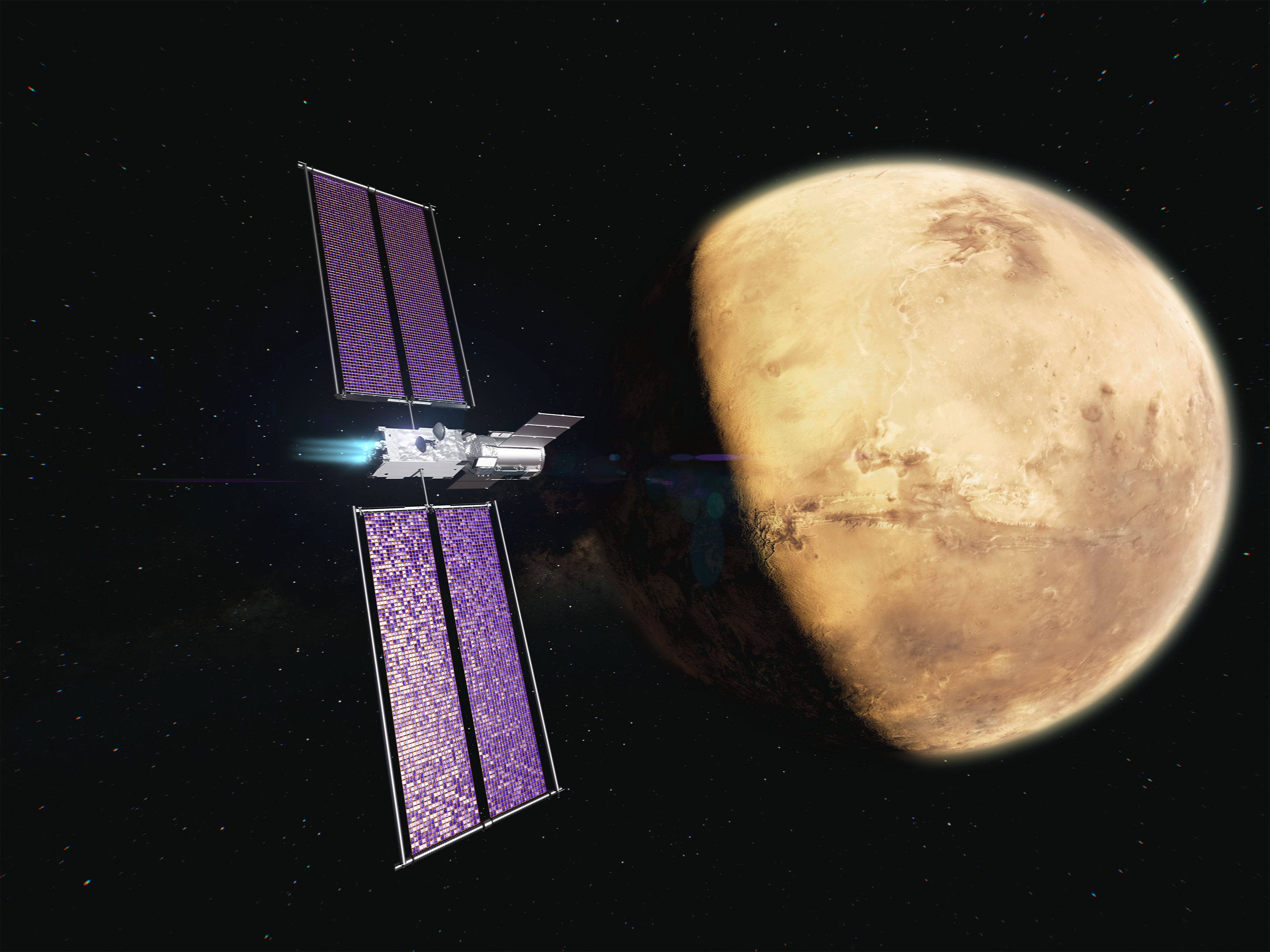
Teams Lock in Mission Architecture for NASA’s SR-1 Freedom
NASA finished a major design review for SR-1 Freedom, a spacecraft powered by a small nuclear reactor. It is planned to launch in late 2028. The mission will test nuclear electric propulsion, a way to drive spacecraft using nuclear power. It will also carry three helicopters toward Mars to study its geology and search for underground ice.

Evolution keeps returning to simple leaves
Most flowering plants, about 80%, have simple leaves with one smooth lobe. Researchers at the University of Oxford studied almost 9,000 plant specimens and found complex leaves keep turning back into simple ones. A computer model of leaf growth showed the same pattern, with about three-quarters of virtual leaves being simple. The team says the bias toward simplicity is built into how leaves develop.

Textile electrodes could bring wearable relief for menstrual pain and muscle soreness
Scientists have made a reusable pain-relief electrode from fabric. It can be sewn into clothes like underwear, sleeves, or leggings. Current pain devices, called TENS units, are bulky and need sticky gels that can irritate skin. In a small test with one volunteer, everyday lotions worked as well as gel for carrying the current.

Counting gut bacteria sheds new light on multiple sclerosis
Belgian scientists from VUB, KU Leuven and partners studied gut bacteria in people with multiple sclerosis (MS), a long-term disease of the brain and spinal cord. They counted bacteria cells directly, and adjusted for how fast food moves through the gut. This removed confusion from earlier studies. Some helpful bacteria were less common in people with MS, and one bacterial pattern matched a milder course. The results are links, not proof of cause, so more research is needed.
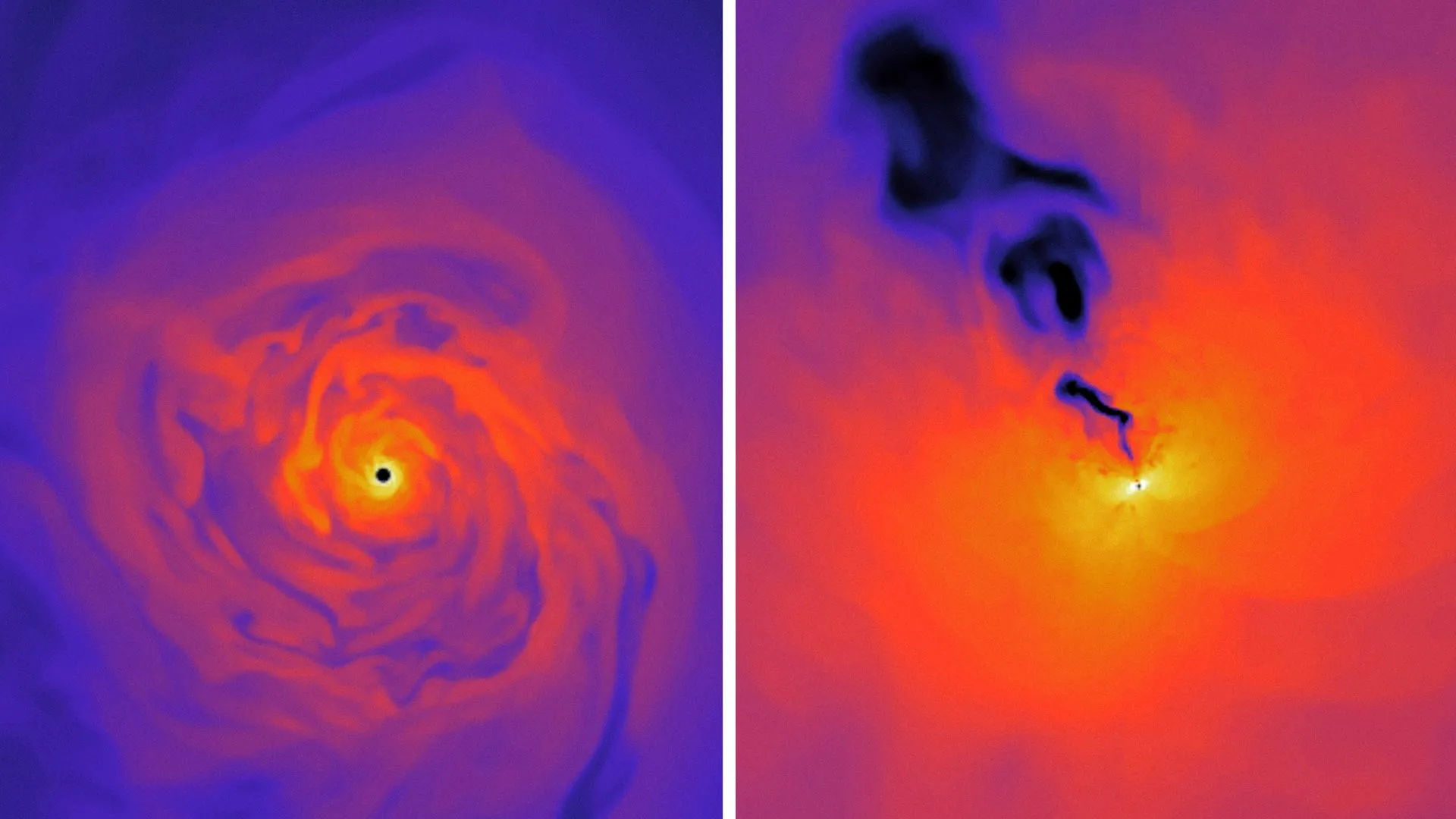
A black hole the size of an atom could destroy an entire star
Scientists at MIT and other institutions studied what happens when a very small, ancient black hole gets trapped inside a star like our Sun. Their computer simulations suggest the black hole could form a spinning disk, then trigger a explosion within seconds. The blast could give off bright light, X-rays, and gamma rays that telescopes might detect. This could help prove that primordial black holes exist and may explain dark matter.

Growing miniature tumors to help personalize cancer treatment
Doctors often find that patients with the same cancer respond very differently to the same treatment. A team led by Christopher Lucchesi uses tissue from surgery or biopsy to make tiny 3D models of a patient's tumor, called tumoroids. These models let researchers test many drugs outside the body. An AI platform helps pick which treatments to try first, so care can be more personal.

Vaporized rock reveals titanium oxide around massive young star for first time
Scientists spotted titanium oxide gas around Orion Source I, a massive young star in a dusty cloud behind the Orion Nebula. The star is bright enough to evaporate rock in its disk. This lets scientists study solid material in space without bringing samples back to Earth. The method may help compare other solar systems with our own.

How persistent inflammation reprograms the immune system to promote T-cell exhaustion
Researchers at the University of Würzburg in Germany studied how the immune system behaves during long-lasting inflammation. They found that constant inflammation changes dendritic cells, which are immune cells that signal other immune cells. These changed cells can push CD8 T cells, the cells that kill infected cells, into a worn-out state called exhaustion. Surprisingly, when the team removed these cells, the T cells caused severe tissue damage, showing that exhaustion can also protect the body.

Visible light powers new catalyst to turn carbon dioxide into industrial raw material
Rice University researchers in the United States found a way to split carbon dioxide using only visible light. Normally this takes furnace heat of 700 to 1,500 degrees Celsius, which often creates more emissions. The new catalyst turns carbon dioxide into carbon monoxide, a key ingredient for plastics and industrial chemicals. The system ran steadily for nearly four hours under blue light.

New Zealand’s tech exporters add 3,500 jobs as they boost global workforce | Reseller News
New Zealand's biggest technology exporters added more than 3,500 jobs in 2026. These companies sell their work to customers around the world. Their global teams grew, and pay rose for many workers. This happened even though the local economy in New Zealand has been hard.

Brighter signals, cheaper tests: Researchers team up to bring lab-grade detection to smartphones
Researchers at the University of Illinois Urbana-Champaign and the Indian Institute of Technology Kharagpur are working together on a new kind of test. They are combining two types of photonic crystals, which are materials that control light, with new nanoparticles, which are tiny particles. The goal is to spot single molecules using ordinary smartphone cameras. If it works, lab-grade testing could become cheap and available to many more people.