Latest News
Positive stories from around the world · Good news by country
Showing 1225–1248 of 37347 articles

Seven-spacecraft observatory to study plasma universe
The European Space Agency (ESA) has picked Plasma Observatory as its next medium-sized mission. Plasma is a gas of charged particles, and it makes up 99% of the visible Universe. Seven spacecraft will fly together and measure how energy from the Sun moves through Earth's magnetic shield. This will help scientists understand solar storms and auroras.

Mangrove forests were "drowning" for decades, but satellite images now show a quiet and unexpected rise from the coast up
Mangrove forests were long thought to be drowning, but satellite images now show them expanding along coastlines. About two-thirds of the growth happens as mangroves naturally spread onto new mudflats. These mudflats form from sediment near the Amazon River mouth and in northern Australia, where mangroves have grown steadily since the 1990s. The rest comes from restoration and regrowth in areas that were once damaged.

Switching off cellular recycling gene increases yields of hard-to-make drug target proteins
Scientists found that switching off a cell's recycling gene boosts protein production. Cells made significantly more of the proteins that drug makers use to find and develop new medicines. The method could speed up drug development and cut research costs.

One unusual tooth suggests Homo erectus shared southern China with another human species
Researchers, including scientists from the University of Copenhagen, studied nine fossil teeth found in two caves in southern China. The teeth are between 184,000 and 324,000 years old. That extends the known time Homo erectus, an early human ancestor, lived there by about 200,000 years. The findings were published in the journal Nature.

Brepocitinib yields improvements in cutaneous sarcoidosis
A new study published in JAMA Dermatology looked at brepocitinib, a pill being tested for cutaneous sarcoidosis. Sarcoidosis is a condition where small clumps of immune cells form in the body, and the cutaneous form affects the skin. Patients who took higher doses saw bigger, meaningful improvements in their skin. The results were shared at a major rheumatology meeting in Orlando, Florida.

Noninvasive deep brain stimulation improves subclinical depression, study finds
Researchers in China developed a new method of deep brain stimulation that does not need surgery. Deep brain stimulation sends gentle signals into the brain to change how it works. The method improved reward learning and eased depressive symptoms in people with subclinical depression, which means symptoms that are milder than full clinical depression. The team worked with Shenzhen University and other institutions.

Shrinking ruthenium catalysts boosts ammonia production rate up to 57-fold
Scientists shrank the tiny particles in ruthenium catalysts, which help make ammonia. This made ammonia production up to 57 times faster. Ammonia can store hydrogen safely and burns without releasing greenhouse gases, so it could become a useful clean fuel.
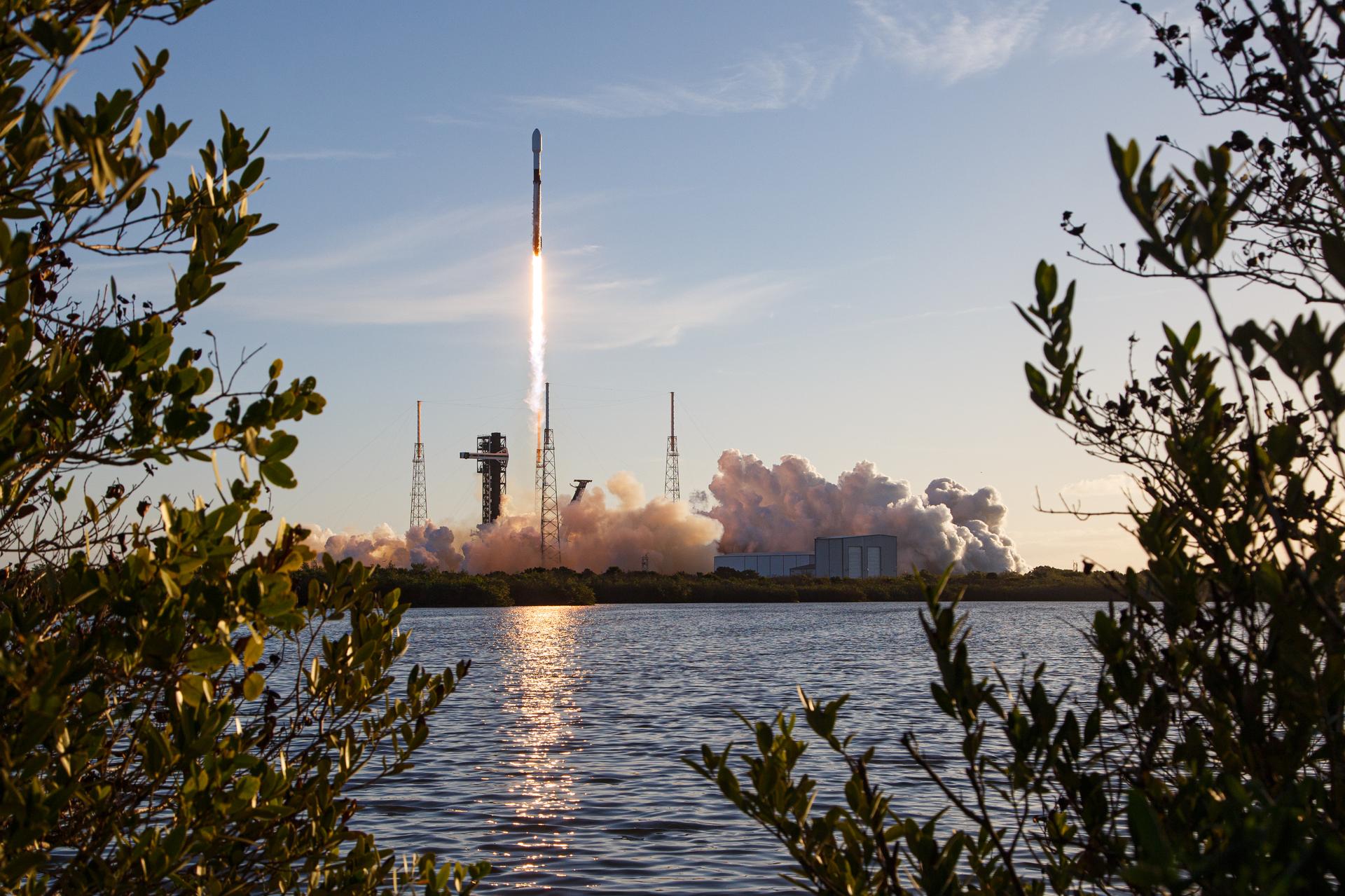
NASA Sets Coverage for Northrop Grumman CRS-25 Launch, Prelaunch
NASA, Northrop Grumman, and SpaceX plan to launch the CRS-25 cargo mission on Sunday, November 29, from Cape Canaveral, Florida. The Cygnus XL spacecraft carries about 11,000 pounds of science experiments, supplies, and equipment. Astronauts will catch it with a robotic arm on December 1. The experiments aim to improve cancer drug delivery, predict cancer spread, and help future long trips in space.
Buurman to Chelsea's rescue as they snatch late win against PSG
Chelsea beat Paris Saint-Germain 1-0 in a Champions League match. Veerle Buurman scored the only goal in the 87th minute. The win moves Chelsea to the top of the table. It puts them in a strong spot to reach the knockout stages.

Scalable photonic quantum computer provides new insights into the fundamentals that shape its performance
Researchers at Paderborn University in Germany have built the country's first scalable photonic quantum computer, named PaQS. It uses particles of light to sample complex patterns that would take regular supercomputers many thousands of years for large systems. The team is now studying which quantum resources, such as squeezed light and entanglement, matter most for performance. The system is fully programmable and is being expanded for more complex calculations.

FDA approves drug for infantile-onset Niemann-Pick type C after analysis finds longer survival
The U.S. Food and Drug Administration (FDA) approved a new drug for infants with Niemann-Pick type C. This is a rare brain disease that is usually fatal in young children. A large international trial found the drug helped patients survive longer. The work began about 20 years ago with research at the National Institutes of Health (NIH).

Where in Europe could electric‑powered ferries create cleaner travel routes?
Electric ferries run on batteries that charge from electricity at the dock. Their motors push the ship through the water with no fuel burned on board. On the right routes in Europe, low-carbon power could make sea travel much cleaner. That could make ferries a real option instead of flying.

Harvard devolve ao Brasil crânios de duas pessoas escravizadas após quase dois séculos em museu | VEJA
Harvard University in the United States has returned to Brazil the skulls of two enslaved Africans. They had been kept in the Peabody Museum of Archaeology and Ethnology for almost 200 years. One belonged to a man who took part in the Malê Revolt in Salvador in 1835. The return finished this week after four years of talks between Brazilian institutions and the university.

Targeting immune overactivity in Down syndrome shows promise in phase 2 clinical trial
Researchers at the Linda Crnic Institute for Down Syndrome in Colorado ran a first-of-its-kind clinical trial. They tested tofacitinib, a drug that calms an overactive immune system. The drug lowered signs of inflammation in the blood and helped inflammatory skin conditions. The results open new paths for research on brain health and Alzheimer's disease.

Spectral clues suggest hollow-core magnetic jet in brightest-ever gamma-ray burst
Scientists from China and Italy studied GRB 221009A, the brightest gamma-ray burst ever recorded. A gamma-ray burst is a huge flash of light from a distant explosion in space. They rebuilt how the light's colors changed over time. Their best guess is that the jet had a hollow core, held in shape by magnetic fields. This is a possible explanation, not a direct detection.

Acupuncture‑like treatment linked to sustained weight loss in new study
A small trial in China tested a form of acupuncture that leaves dissolvable threads under the skin. The study included 132 women, and each got six treatment sessions over 12 weeks. By 24 weeks, the women who got the real treatment had lost about 3kg more than those given a fake treatment. The results were published in the Annals of Internal Medicine, a respected medical journal.

Blood test may reveal which lymphoma patients will respond to immunotherapy
Researchers at Cornell University and Dana-Farber Cancer Institute studied 91 lymphoma patients who received CAR T-cell therapy, a treatment that uses a patient's own immune cells to fight cancer. They found that a pattern in cell-free RNA, genetic fragments floating in the blood, could show who would do well. Patients with high scores on this pattern had an 80% lower risk of their cancer progressing. The test needs only a blood draw, not a tissue biopsy.

Smart lighting technology enables remote color control
Researchers have developed a smart lighting technology that changes how objects look in color. It works by adjusting only the light shining on them. Objects do not need to be repainted or have their surfaces changed. The surrounding space keeps natural white light, and visitors will be able to see the effect in person.
England defender Carter joins Bay FC after Gotham exit
England defender Jess Carter has moved to Bay FC, a women's soccer club in the San Francisco Bay Area. She left Gotham FC as a free agent, meaning she was not under contract. Her new deal lasts until 2028, with an option for one more year. Carter has 56 England caps and has won the Women's Super League five times with Chelsea.

Brain changes in women during pregnancy may be key in finding MS cure
Doctors worried that brain shrinkage in pregnant women with multiple sclerosis (MS) meant the disease was getting worse. Researchers at The Alfred and Monash University in Melbourne, Australia, studied these brain changes to find out what they really mean. Their work may now point toward a cure for MS. MS is a condition where the immune system harms the brain and spinal cord.

Wild barley's genetic diversity opens up new avenues for research and breeding
An international team led by the IPK Leibniz Institute has mapped the genes of barley and its wild relatives. It is the first study to cover the whole Hordeum plant group. The work shows how these plant genomes evolved over time. Scientists hope it will help breeders grow stronger crops in the future. The results were published in the journal Nature.

Learning science one virtual escape room at a time
Seventh graders play a virtual escape room game where they help Albert Einstein's ghost get out of a science laboratory. The game asks students to solve science puzzles together. It shows that learning science can be fun and hands-on.

Video games may reduce rise in presurgery anxiety in children
A study from Yale's anesthesiology department suggests a racing video game may help children feel less scared before surgery. Anxiety often rises as kids get closer to their operation. In the study, children ages 4 to 14 played a driving-themed game right before going under general anesthesia, which puts a patient fully to sleep. The game appeared to reduce the rise in their presurgery worry.

Electrified fabric captures phosphate for potential recovery from wastewater
Phosphate from fertilizer often washes off farms and lawns into rivers and lakes. This feeds harmful algae that release toxins and use up oxygen fish need. Researchers at Northwestern University and Argonne National Laboratory built a reusable electrode that captures phosphate from water in laboratory tests. It could also recover phosphate, a valuable resource that cannot be renewed.