Latest News
Positive stories from around the world · Good news by country
Showing 3457–3480 of 37371 articles
Cutting-edge technique uncovers how the spine’s shock absorbers bear load
Researchers used a new imaging approach to study the soft discs between spinal bones. The method shows how these discs respond when squeezed. It captures changes at micrometre and nanometre scales, far smaller than a millimetre. The finding may help scientists better understand how the spine bears load.
Progress accelerates in Parkinson’s treatments
Nature reports encouraging results in Parkinson’s treatment research. Parkinson’s affects millions of people around the world. The brief provided text gives no trial details, treatment names, or results, so the exact advance cannot be assessed.
Conjugation-regulated self-assembled molecules for tandem solar cells
Researchers used carefully designed molecules that organize themselves into ordered, thin layers. These layers help make perovskite-silicon tandem solar cells, which combine two types of solar material. The study reports high-performance cells, but the brief article gives no efficiency figures or other measurements.
How the brain protects itself from Parkinson’s disease
The article describes the brain’s ability to resist damage linked to Parkinson’s disease. Researchers hope to understand these self-protective processes and use them to prevent or slow the illness. The brief does not name a specific treatment, trial, or proven benefit.
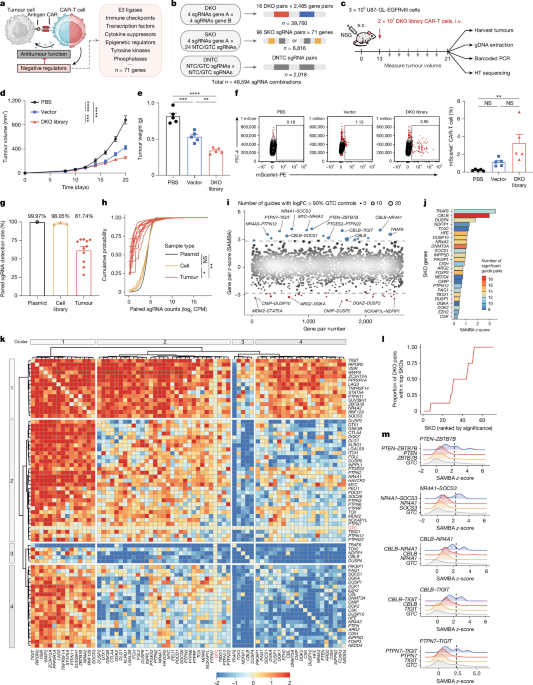
In vivo CAR-T double knockout screen maps synergistic antitumour gene pairs
Researchers used a large-scale test in living models to study CAR-T cells, immune cells changed to attack cancer. They switched off pairs of genes to find combinations that worked better against tumors. The findings point to possible ways to improve CAR-T treatment, but the short article summary gives no specific gene pairs or patient results.

Fine-tuning brain stimulation to fight Parkinson’s disease
A new brain implant is being developed to track movement and symptoms in people with Parkinson’s disease. The device aims to help doctors fine-tune brain stimulation for each person. The report describes work in progress, not a proven treatment or cure.
AI agents run this automated biology lab that sequences DNA and more
Researchers built an automated biology lab in China that AI agents can direct. A simple prompt can make the system store a message in DNA and read it back. The work shows how AI could help run complex lab tasks with less hands-on effort. The report does not give performance figures.
Accelerating commercialization and deployment of indoor photovoltaics
A Nature article reviews progress in indoor photovoltaics, which convert indoor light into electricity. It outlines ways to bring advanced lab cells into real products. The work highlights wide-bandgap materials, reduced energy losses, and redesigned modules. No specific deployment or performance numbers are given.
A two-dimensional reticular triaxial molecularly woven fabric
Researchers reported a two-dimensional molecular network built from ring-shaped molecules woven in a triangular pattern. The design adds a new structural dimension to how materials can be arranged. The authors say it could support the creation of functional materials, though the short report gives no specific use or performance results.
An AI-native experimental laboratory for autonomous biomolecular operations
Researchers introduced AutoDNA, an autonomous laboratory for biomolecular engineering. The system uses artificial intelligence to plan and run experiments across different lab instruments. It is designed to support several goals at once and serve multiple users. The report describes AI and lab equipment improving together in one workflow.
An open structure-guided RNA foundation model for generalizable prediction
Researchers introduced structRFM, a foundation model that learns from RNA sequences and structures. It was pre-trained on 21 million sequence-structure pairs. The model improves predictions of RNA shape and function, and can generalize to different RNA families without extra training. This could help researchers study RNA more broadly.
Infrared image detectors grown directly on read-out chips
Researchers used a method called monolithic in situ integration to grow lead sulfide directly on a circuit chip. The chip reads the material’s electrical signals, joining material growth and electronics in one step. The resulting sensor is highly sensitive to infrared light. The report does not name a research location.
Fruit, flies and getting frisky: how food odours trigger sexual arousal
A Nature report describes how food odors affect courtship in a fruit fly species that lives on a particular fruit. Males need the smell of food to begin courtship. The scent acts on specific mating circuits in the brain, linking an environmental cue to sexual behavior.

Six highlights from Parkinson’s disease research
Nature’s roundup covers six recent studies on Parkinson’s disease. Topics include targeting a newly studied brain network and addressing problems with walking. The brief article does not give study results or describe an approved treatment. It shows where research is exploring new ideas.
Hard X-ray attosecond metrology
A new method measures and controls extremely brief hard X-ray flashes. Researchers directly measured a pulse lasting 170 attoseconds, an incredibly short span of time. The technique could help scientists study how electrons behave in quantum systems.

Faint exoplanets detected using computational approach to remove glare from stars
A new image-processing method helps telescopes separate faint planets from the glare of their stars. It can detect planets below the stability limits that held back older methods. The advance may make it easier for future observatories to image Earth-like worlds.
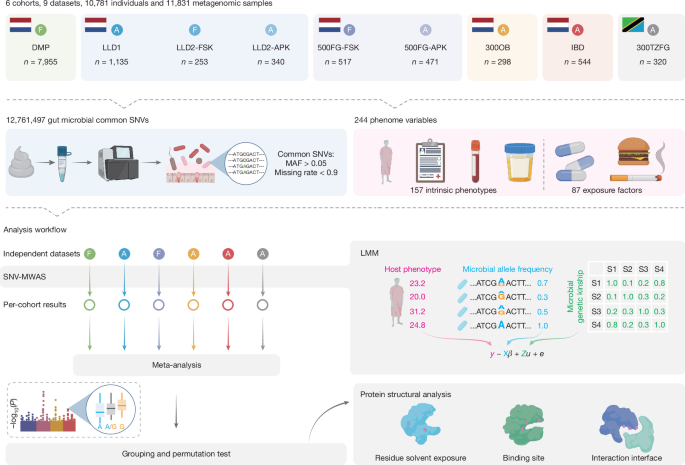
Microbiome-wide PheWAS links gut microbial SNVs to health and exposures
Researchers analyzed gut microbe DNA from 10,781 people across six cohorts in the Netherlands and Tanzania. They found 940 links between microbial gene changes and 69 human traits or exposures. Their method accounts for differences between microbial strains, helping reduce false links. The results offer a starting point for studying how microbes affect health.
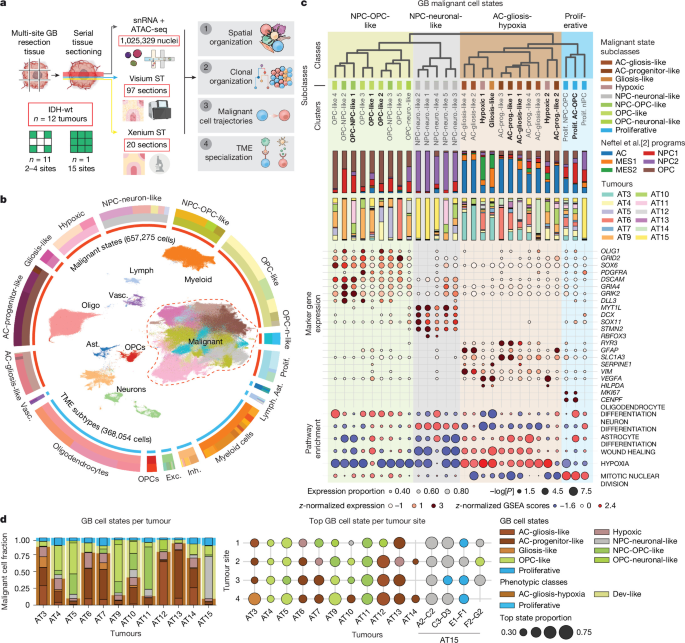
A spatiotemporal cancer cell trajectory underlies glioblastoma heterogeneity
Researchers studied 12 human glioblastoma tumors, an aggressive brain cancer. They combined gene activity, DNA control, and tissue-location data to build a large atlas. The atlas traces a shared path through which cancer cells shift into different states. This may help researchers find new ways to target the disease.
X-ray stopwatch can measure durations of just attoseconds
Researchers have accurately measured X-ray pulses that last just 170 attoseconds. An attosecond is an extremely short unit of time. Their optical system works like a stopwatch for these pulses. It may also help scientists track how electrons move inside atoms and molecules.
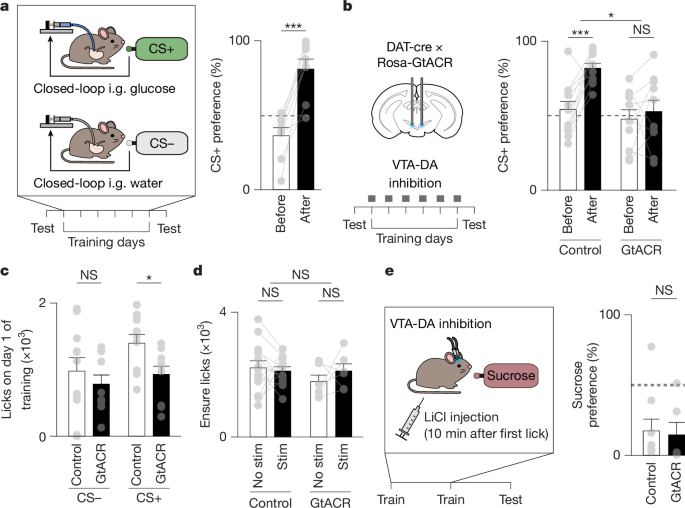
The neural basis of flavour–nutrient learning
A study reported in Nature identifies a dopamine pathway to the basolateral amygdala as necessary for rats to learn which flavours predict nutrients. Dopamine is a brain chemical involved in learning and reward. The result helps explain how nutrient feedback shapes food preferences, though it is basic research rather than a treatment.
Cancer-selective gene circuits via intrinsic ribosomal frameshifting
A Nature paper reports that cancer cells show unusual ribosomal frameshifting, where cell machinery reads genetic instructions in a shifted pattern. The team links this shift to pairs of genetic code units. The finding may help design gene circuits that switch on more selectively in cancer cells. The brief article gives no trial results or treatment outcomes.
Ecological and social cues orchestrate concerted courtship in <i>Drosophila</i>
A study in Nature reports how male Drosophila erecta coordinate courtship. Food odors first raise sexual arousal. Seeing other flies court then strengthens the response. Together, these cues help synchronize group courtship when breeding conditions favor reproduction.
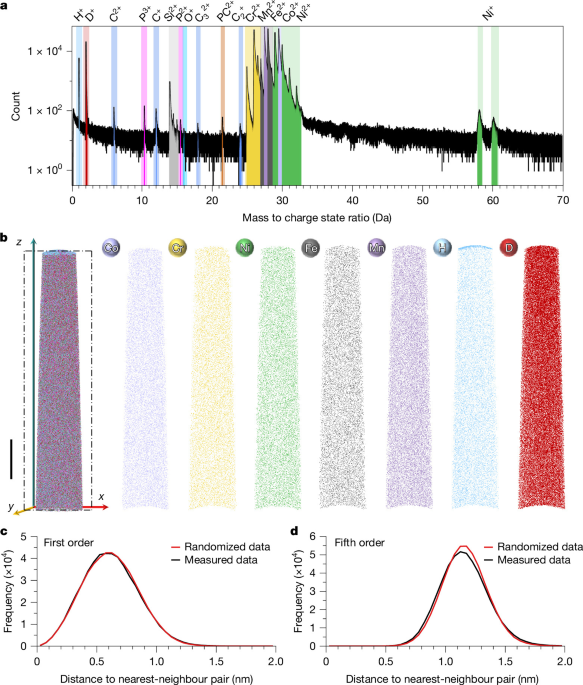
Towards observing interstitial hydrogen in solution in metal lattices
A team used deuterium, a form of hydrogen, to track hydrogen inside face-centred cubic metal alloys. Their atom probe method found evidence of hydrogen sitting between atoms in the metal lattice. This helps researchers study hydrogen storage and metal damage. The work also warns that sample preparation can create defects that affect readings.
AI agents enter the ‘wet lab’
An AI system coordinates laboratory instruments to run multi-step molecular biology experiments. It needs limited human help, moving AI beyond computer-only tasks and into hands-on research. The brief report does not name a lab location or give performance figures.