Latest News
Positive stories from around the world · Good news by country
Showing 3481–3504 of 37371 articles
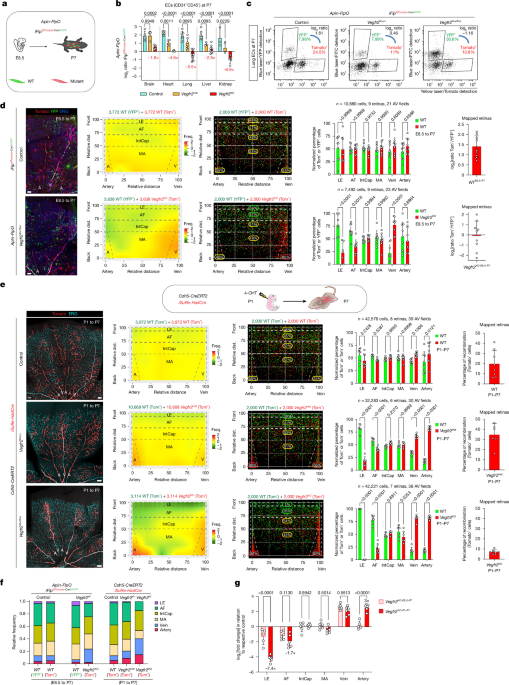
Venousization enables angiogenesis in the absence of VEGFR signalling
Researchers tracked blood vessel cells in mice after removing VEGFR2, a key signal receptor. The cells adapted and formed new vessels, especially from veins. They switched on other growth signals and venous genes. This may help explain why some tumors resist drugs that block VEGF.
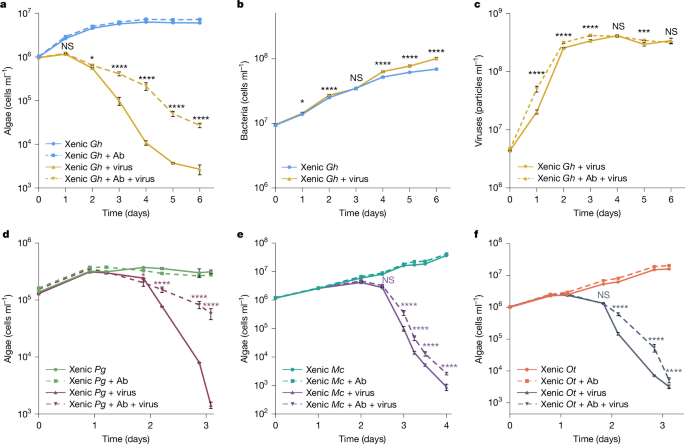
Synergy in viral–bacterial co-infection expedites algal bloom demise
A study of the bloom-forming alga Gephyrocapsa huxleyi found that bacteria can sharply increase virus-driven algal death. Antibiotic-treated cultures had up to 19 times less mortality than untreated cultures. The work used an alga isolated from a bloom near Bergen, Norway. It may help explain how blooms collapse and affect ocean carbon cycling.
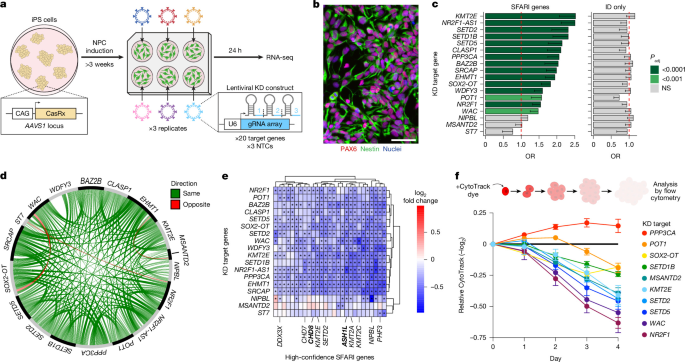
Transcriptomic convergence and the female protective effect in autism
Researchers tested 20 autism-linked genes in human neural progenitor cells, which can develop into brain cells. Most gene knockdowns changed hundreds of other genes, and many changes overlapped. The study found ZFX, a gene regulator active on both X chromosomes in females, may help explain why autism is less common in females. This is an early research finding, not a treatment.
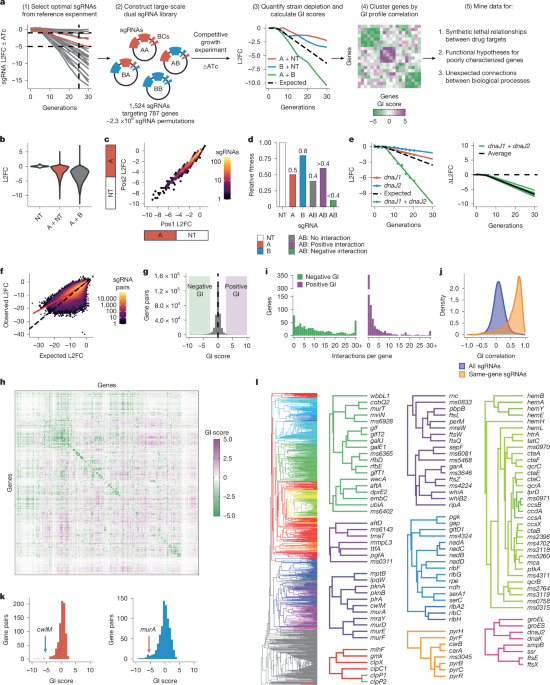
Comprehensive mapping of essential-gene interactions in <i>M. tuberculosis</i>
A new CRISPRi method lets researchers test how essential genes in tuberculosis bacteria affect one another. The team mapped gene interactions in Mycobacterium tuberculosis and a related species. The maps recaptured known links and revealed thousands of new ones. The findings may help researchers understand the bacteria and plan drug combinations, but they do not yet provide a new treatment.
Epileptic seizures nearly vanish after people receive experimental gene therapy in their brains
An early clinical trial found that epileptic seizures nearly vanished in three people who received an experimental brain treatment. The therapy used viruses to carry genes into the brain, alongside a drug. The result is promising, but it comes from only three people and needs much larger studies.
Decoding the regulatory programs governing glioblastoma plasticity
Researchers used several kinds of cell data to study glioblastoma, an aggressive brain cancer. They found that networks of gene activators and repressors help keep cancer cells in certain states or let them change. The work may improve understanding of how the disease progresses. It does not report a new treatment or cure.
Assessment of the effectiveness of restoration methods for mangrove ecosystems at Ramsar site 1017 in Benin | Discover Applied Sciences | Springer Nature Link
Researchers Isaac A. Quenum and colleagues assessed restoration methods for mangroves at Ramsar Site 1017 in Benin. The study is published in Discover Applied Sciences. The article details provided here do not include its findings, so no restoration method or outcome can be identified.

Asymmetric atomic structure improves sodium–sulfur battery performance
Researchers at the Chinese Academy of Sciences in Hefei changed the atoms around aluminum in a battery catalyst. They replaced 1 of 4 oxygen atoms with nitrogen, leaving 3 oxygen atoms and 1 nitrogen atom around each aluminum atom. This uneven structure helped hold battery materials in place and speed reactions. The team says the batteries stayed stable over thousands of charge cycles.

Finding the fingerprints of noisy distributions in random quantum systems
A team led by Matthew Duschenes studied how random operations and environmental noise shape quantum systems. Understanding this balance may help researchers test whether quantum devices can solve tasks that ordinary computers cannot easily manage. The study appeared in Physical Review A and received an Editors' Suggestion. It began during Duschenes' Ph.D. work at Perimeter Institute and the University of Waterloo.

How a gut virus hijacks mucus production to slip past the body's protective barrier
A UC Santa Cruz team found that astrovirus uses goblet cells, which make protective gut mucus, to help complete its life cycle and leave infected cells. Unlike some gut viruses, this method does not appear to rely on tissue damage. The finding could help researchers identify new treatment targets for childhood diarrhea, a major health problem worldwide.

New framework helps turn biodiversity goals into measurable action
A new framework builds on the STAR metric, which estimates how conservation actions could lower species' extinction risk. It guides groups from global data to locally checked evidence, measurable targets, and progress tracking. The approach was developed by Newcastle University and IUCN researchers. STAR was first used on the ground in northern San José, Costa Rica, to identify key local threats.

Cooking is a bigger source of harmful air particles than vehicle exhausts in London and Beijing
Researchers measured tiny air particles in central London and Beijing and found cooking released more direct particulate pollution over a day than vehicle exhausts. At midday and early evening, cooking made up large shares of emissions in both cities. Vehicle exhaust particle emissions in the UK fell 94% from 1996 to 2024. The researchers say better kitchen filters could help cut pollution further.

Body size, not competition, may kick-start evolution
Bryan Jennings of UC Riverside proposes a new way to explain how related species first develop different traits. He argues that changes in body size can alter features such as tails or beaks before species compete for food or space. Later, natural selection may refine those traits. The theory is based in part on research into Australian and New Guinean lizards.

Hidden ancestral links found in motor neuron disease and dementia could speed up gene discovery
Researchers studied DNA from 3,524 people with frontotemporal dementia or motor neuron disease. They found 793 related pairs, including many connections that families did not know about. The team used these links to build 73 new genetic family trees. These larger groups may help scientists find genes linked to the diseases.

Talk of the town: Virtual world gets stroke survivors talking
Adelaide University is developing VITAL, a virtual town with cafes, shops and other familiar places. People with aphasia can practice ordering coffee, asking questions and chatting in a safe setting. The team will study whether this approach improves confidence, social connection and well-being. People with aphasia and their families are helping design the experience.

Scarcer food may have pushed early humans to rework stone tools for longer use
Researchers studied plant waxes preserved in sediments at Florisbad and Lombard's Drift, South Africa. The evidence points to a wetter, greener landscape about 200,000 years ago, unlike the region today. At Florisbad, toolmakers retouched stone tools more when food was likely scarce or harder to reach. The extra work helped tools last longer and be reused.

Time to wake up MetOp-SG-B1 weather satellite
The MetOp-SG-B1 weather satellite arrived at Europe's Spaceport in French Guiana. After a short rest in storage, it was moved to a cleanroom. There, workers removed it from its transport container. The satellite is getting ready for launch to watch Earth's weather.

When should we listen for alien signals? Scientists turn to game theory
SETI researchers are testing whether distant civilizations might choose the same time and place to send a message. They searched the sky's anti-solar point with the Allen Telescope Array in Northern California. The pilot observations found no sign of alien technology. Still, this is the first search to test the idea and sets up a larger survey.

Stone Age hunters in northern Europe may have used poison arrows to hunt big prey
Researchers studied stone arrowheads from Mesolithic sites in Denmark. The smallest tips, from about 9,000 to 3,950 B.C., may have been used with poison to hunt large animals such as elk and aurochs. Poison itself does not survive, so the team inferred its use from tool size, prey and poisonous plants in the area. The finding is a theory, not direct proof of poison on Danish arrows.

Light-matter hybrids form supersolid quantum state at room temperature
Teams from the University of Warsaw, Poland's Military University of Technology, IBM Research Zurich, and CNRS observed a supersolid state in an exciton-polariton condensate. A supersolid combines features of a solid and a fluid. The surprising result appeared at room temperature, rather than near absolute zero. The work was published in Science Advances.

Health system analysis reveals shift toward less invasive heart valve replacement among younger patients
A health system analysis found a sharp rise in less invasive aortic valve replacement for younger patients. Among people under 70, annual TAVR procedures grew from 15 in 2014 to 134 in 2024, nearly nine times as many. Surgical valve replacement remained the most common approach across the age groups studied. Researchers published the study and presented it at TCT 2026.

Single-copy genes can be used as markers to distinguish between bacteria in the same family
Vibrio bacteria play important roles in the sea, but some can cause cholera, harm farmed seafood, or contribute to coral bleaching. Researchers propose using single-copy genes as markers to distinguish species in the same family. This could help scientists identify Vibrio more reliably in marine and estuary water samples. The supplied article excerpt does not include study details or results.

Photograph helps identify a West African bird not seen in 13 years
A Ghana cuckooshrike, a brightly colored West African bird, was photographed in Taï National Park, Côte d’Ivoire. Researchers had not seen the bird for 13 years. Stephanie Bartlett captured the image while Paulo Ditzel helped track its movements. The photo confirmed the bird’s presence in the park.

Conservation Efforts for Caucasian Leopards Show Promise - The New York Times
A three-legged Caucasian leopard was tracked making a remarkable journey in Armenia. The animal's movements suggest that conservation work may be helping the endangered species. The article frames the leopard's trek as a hopeful sign, though it does not prove the population has recovered.